


Havdalah:
A Complete Guide
Havdalah is a brief, beautiful ritual that concludes Shabbat and Jewish festivals, carrying a sense of holiness into the new week. With a cup of wine or grape juice, fragrant spices, and a multi-wick Havdalah candle, we bless the moment of transition and affirm the difference between sacred and ordinary time. Whether observed at home or with a community, Havdalah is accessible, musical, and deeply meaningful.
Throughout the globe, JDC helps power Havdalah celebrations — and other dynamic Jewish programming at camps, JDC-supported Jewish Community Centers (JCCs), and more — for those rediscovering their heritage and identity. Havdalah is just one way they express their love of Jewish life and commitment to their fellow Jews.
Celebrate Jewish life around the globe by staying connected to JDC.
What Is Havdalah?

The word “Havdalah” means separation. The ceremony takes place after nightfall on Saturday night, when three stars are visible, signaling the end of Shabbat. On holidays, a modified Havdalah marks the shift from a festival to a weekday, or follows the final day of a multi-day festival.
Its core purpose is to acknowledge boundaries in time. Through prayer, we bless the Creator who distinguishes between holy and ordinary, light and darkness, Israel and the nations, and the seventh day and the six days of labor. The ritual makes that separation tangible through tasting, smelling, seeing, and speaking.
Across centuries and communities, Havdalah has been cherished and often accompanied by melodies passed down in families and synagogues. It offers a gentle, structured way to leave sacred time while keeping its warmth. Many experience it as spiritual fuel for the week ahead, shaping Jewish rhythms of work, rest, and renewal.
What Do You Need for Havdalah?
You will need a cup of wine or grape juice, traditionally filled to overflow as a symbol of abundance; fragrant spices, commonly cloves or cinnamon, in a container or sachet; a braided or other multi-wick Havdalah candle; and a small plate or piece of foil to catch wax and extinguish the flame in the wine.
A Step-by-Step Havdalah Service
The order of the blessings are as follows:
Baruch atah Adonai, eloheinu melech ha’olam…
- Over the wine: … borei pri hagafen
- Over the spices: … borei minei v’samim
- Over the fire: … borei me’orei ha’eish
- Concluding blessing of separation: Hamavdil bein kodesh l’chol
Many communities add verses before and after, such as Hinei El Yeshuati, or the song Eliyahu HaNavi.
Here are some practical instructions to guide your service:
- Hold the full cup in your right (or dominant) hand, recite the blessing over the wine, but don’t sip yet.
- Pass the spice container so everyone can smell, carrying Shabbat’s sweetness forward.
- For the candle, hold your hands toward the flame and curl your fingers to see light reflecting on your nails, emphasising human-created light.
- Recite the concluding Havdalah prayer. Drink some of the wine, then extinguish the candle in the cup, or carefully spill a drop of wine onto a plate and extinguish the flame in that wine.
Short variants and timing notes: Families with young children may shorten the opening verses and focus on the core blessings. Communal settings often include harmonies or call-and-response. When a festival leads directly into Shabbat, Havdalah is deferred. When a festival ends into a weekday, a version without spices or a candle may be used depending on the calendar. Consult your local rabbi or community for date-specific guidance.
What Are Some Havdalah Customs and Songs?
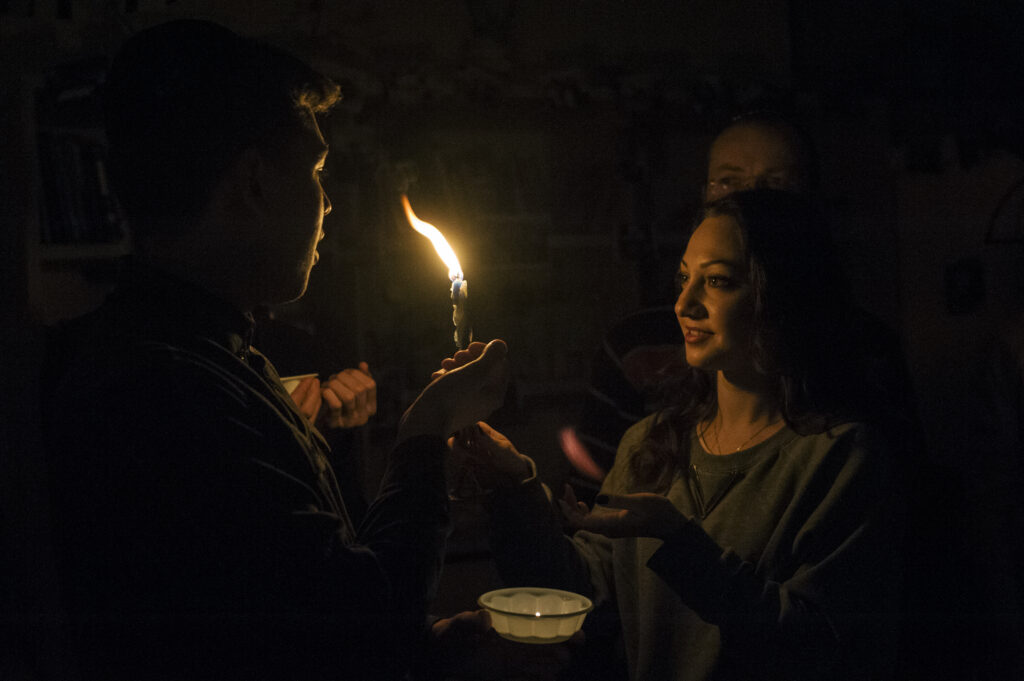
Each element of Havdalah carries rich symbolism. Wine or grape juice signals joy and sanctification. Spices comfort the soul as Shabbat’s extra spirit departs, inviting us to carry a pleasant aroma of holiness into the week. The multi-wick flame of the Havdalah candle highlights human creativity and the power to transform darkness, while the final Havdalah prayer names the boundary that gives shape and mindfulness to our days.
Customs vary by family and community. Some recite verses of blessing and good fortune before the ceremony, hold the cup at shoulder height, or look at candlelight reflected on their nails to notice refined light. After extinguishing the candle, people often wish each other a good week, or Shavua Tov.
Popular songs include Eliyahu HaNavi, Shavua Tov, and Hinei El Yeshuati. Simple refrains help children and newcomers join in. Recordings and song sheets from synagogues and community organizations can help you learn melodies. Choose a tune that feels welcoming, steady, and singable for your setting.
Havdalah ties practice to purpose. By gathering briefly, blessing, and singing, we turn transition into meaning and enter the week with intention, gratitude, and hope. With a shared cup, sweet spices, a glowing Havdalah candle, and the familiar cadence of the Havdalah prayer, this cherished ritual sends us into the days ahead with clarity and connection.
Partners


Give With Confidence


