

Global Jewish Reflections | The Origin of the “Wandering Jew”
Rabbinical student Sarah Livschitz teaches us that our diversity as a global Jewish people is one of our greatest strengths.
By Sarah Livschitz - HUC-JIR Rabbinical Student | November 19, 2025
Global Jewish Reflections is a recurring feature highlighting the spiritual wisdom of rabbis, Jewish educators, and others from around the JDC world.

In 1938, when my grandfather and his sister were expelled from school for being Jewish, my grandfather and his family realized their life in Hamburg, Germany, was over. They escaped to Italy, before taking a boat to Cape Town, South Africa. Despite their love of Europe, they were desperate to catch a boat going anywhere away from Nazism.
They landed in South Africa and decided to stay. But crime rates rose over the next 50 years, and in the mid-1990s, my parents, my sister, and I took a plane to New Zealand, following waves of emigrants pursuing a safer life. Life in New Zealand was almost as good as they say it is. But Jewish life was hard, with few opportunities for growth and no formal Jewish education. So, nearly five years ago, I caught a plane to Jerusalem and then to Los Angeles, pursuing opportunity and a bolder Jewish identity.
My family history goes back like this for generations, no two generations living in the same place and siblings often running in different directions. But my story isn’t unique within Jewish history. Wandering is an essential part of the Jewish experience. Of the genealogies I know at HUC Los Angeles, for instance, almost all of them include recent stories of emigration. Furthermore, nearly all of us had to move within the States to come to rabbinical school, leaving behind everything we knew in pursuit of a dream.
And well before that, our collective narrative begins with a story of wandering. In the Torah portion of Lech Lecha, God tells Abraham to:
לֶךְ־לְךָ֛ מֵאַרְצְךָ֥ וּמִמּֽוֹלַדְתְּךָ֖ וּמִבֵּ֣ית אָבִ֑יךָ אֶל־הָאָ֖רֶץ אֲשֶׁ֥ר אַרְאֶֽךָּ׃ –
Go forth from your native land and from your father’s house to the land that I will show you.
This command presumes a beginning (“from your native land”) and an end point (“to the land that I will show you”), and while we often think of these as the beginning and end of Abraham’s wandering, this is a misconception. In Genesis 11:31, we learn that the starting point of Abraham’s journey is already midway through an intergenerational trek. Terach, Abraham’s father, started the journey from Ur to Canaan, but ended up settling partway along, in Haran. Before Abraham even receives his personal call to lech (go), his family has a history of movement.
It is not just the beginning point that is actually midway through a journey. Abraham’s endpoint of Canaan is also a mere resting place on a longer trip. After moving to Canaan — a stay of only five verses —– Abraham journeys on to the Negev and then to Egypt. At Genesis 12:9-10, we learn that
וַיִּסַּ֣ע אַבְרָ֔ם הָל֥וֹךְ וְנָס֖וֹעַ הַנֶּֽגְבָּה׃
וַיְהִ֥י רָעָ֖ב בָּאָ֑רֶץ וַיֵּ֨רֶד אַבְרָ֤ם מִצְרַ֙יְמָה֙ לָג֣וּר שָׁ֔ם כִּֽי־כָבֵ֥ד הָרָעָ֖ב בָּאָֽרֶץ׃
Then Abram journeyed by stages toward the Negev. There was a famine in the land, and Abram went down to Egypt to sojourn there, for the famine was severe in the land.
Abraham and Sarah are not described as sad or disappointed to leave Canaan. They do not espouse regret. Emigration is noted as simply a reality of life, a response to the world as it is.
When we think of our ancestors and ourselves as emigrants, it does not always feel so simple to say that emigration is simply a reality of life, a response to the world as it is. Those of us who share a Holocaust story, those who have refugee ancestors, those who escaped economic or political or social strife to find a better place, know the heaviness that comes with that choice. And those who pursued a dream of a better life know the trepid optimism that comes with that journey. And amongst all those big emotions and scary choices, we and our ancestors knew that the journey had to be made.
Abraham’s choice to reside in Egypt did not mean he lost his identity as the future patriarch of monotheism. Instead, each of the sites through which he wandered — Canaan, the desert, and then Egypt — became a site of Israelite growth and habitation, connected by a common story and sense of peoplehood. And they remain Jewishly significant sites today! Be’er Sheva in the Negev features numerous times in the Torah and has a rich Jewish presence today. We all know how important Egypt was in the Israelite narrative — a whole book is dedicated to it. But it was also later the home of people like Maimonides, becoming a center of rich Jewish life. Even Haran is an important site in the biblical narrative, as the place where Rebekah draws up water for Eliezer’s camels is said to be nearby.
Rabbi Caryn Aviv, author of New Jews: The End of the Jewish Diaspora,says that the term “diaspora” tends to have a negative connotation of leaving behind a beloved homeland. Yet Abraham’s journey demonstrates that in our very foundation as a people, dispersal was simply seen as necessary. The rabbis go as far as saying that wandering can even be beneficial. Rashi tells us that God commanded Abraham not simply to lech lecha, but to lech lecha לַהֲנָאָתְךָ וּלְטוֹבָתְךָ (“for your own benefit and for your own good”).
The Talmud goes further. In tractate Rosh Hashanah 16b, the rabbis discuss ways in which an evil decree handed down during the High Holy Days can be nullified. Amongst those methods are changing one’s place of residence. The proof they offer is that Abraham’s emigration improved his fortune. As descendants of immigrants or immigrants ourselves, we might identify with the truth that emigration saved our families or improved their fortunes.
Like our ancestors, we remain a dispersed Jewish people. There are Jewish communities around the world, from big centers like Los Angeles and New York, to my home of Wellington, New Zealand, to my classmate’s home of Guatemala City, to another classmate’s home of Memphis, Tennessee, and so forth. Living in one of those small Jewish centers can be hard. And yet, Abraham’s story reminds us of the inevitability of this dispersal. And further, dispersal does not mean that we cannot remain connected as one people.
Abraham and his descendants were characterized by traveling to meet with their relatives. The Talmud was written with the help of emissaries that traveled between Babylon and Jerusalem. Later, the Babylonian sages wrote letters to communities around the diaspora to help them stay connected to one another. How will we stay in touch?
Drs Erica Brown and Misha Galperin, authors of The Case for Jewish Peoplehood, note that “Klal Yisrael is not a noun, but a verb.” Quoting a Talmudic verse attributed to Rabbi Yose, they emphasize that connection does not happen naturally. We have to work together to make it real.
As the leading global Jewish humanitarian organization, JDC embodies Klal Yisrael as a form of collective action. I first learned about JDC on a class trip to Lithuania and have since met or volunteered in communities in Poland, Australia, Singapore, Guatemala and Argentina through them. JDC makes sure Jews have access to life-sustaining resources, like food, medicine, and shelter, but also soul-sustaining access to Jewish materials and programming.
As the leading global Jewish humanitarian organization, JDC embodies Klal Yisrael as a form of collective action.
In Poland, I saw how JDC was supporting grassroots efforts to care for thousands of Ukrainian refugees. In Argentina, it was inspiring to see the abundant programing — cultural and religious — available to Argentinian youth. And in Guatemala, three classmates and I had the privilege of bringing Shabbat programming to a community that couldn’t afford a rabbi.
JDC has taught me how to enact Klal Yisrael, and through them, I have gained a better understanding of the richness of Jewish life around the world. I felt passionate about global Jewry before, but now I feel empowered to actualize that desire.
Similarly, I invite and challenge you today to take on the verb of Klal Yisrael, to recognize the inevitability of our dispersal and to take on the work of connecting Jews across journeys and geographic spaces. Maybe you can do a digital tikkun leil Shavuot with a community in El Salvador — the time difference is tiny. Maybe you can learn how to make moufleta with a Moroccan community. You are always most welcome to visit my community in Wellington for a Pesach or Chanukah trip (the weather will be excellent). Wherever you go next, remember that Klal Yisrael only exists as long as we continue to cultivate the connections between and within it.
May our generation of rabbis cultivate a wide, varied, rich and interwoven tapestry of Jewish life.
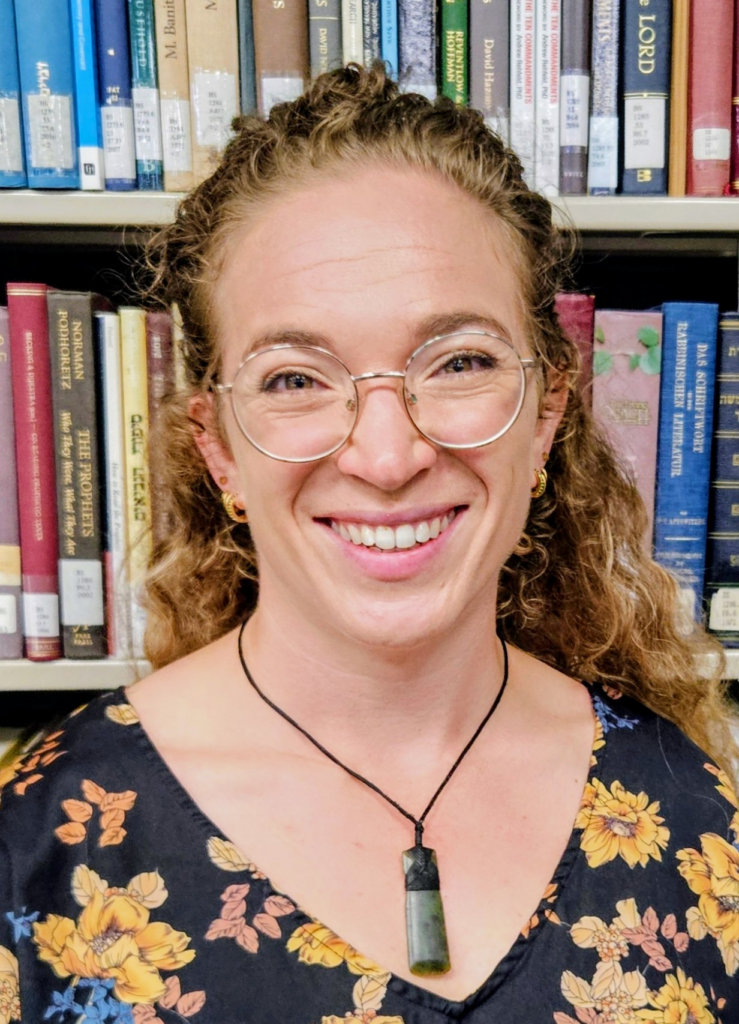
Sarah Livschitz is a fifth-year rabbinic student at Hebrew Union College (HUC) in Los Angeles. She is passionate about building and empowering joyous Jewish communities. Sarah is the rabbinic intern at Nefesh.
Sarah grew up in New Zealand and was involved in Progressive Jewish life from a young age, attending Beth Shalom in Auckland and joining Habonim Dror. Before starting at HUC-JIR, she worked as a policy advisor, writing apolitical research and advice.
She gave a version of this essay as a sermon at HUC Los Angeles in October 2025. Sarah, who will be ordained in May 2026, has traveled with JDC Entwine and received a microgrant and hopes to continue her relationship with JDC while working as a congregational rabbi.
Sign Up for JDC Voices Stories
Share


Share
Partners


Give With Confidence


