

Here’s How We Make Jewish Europe More Resilient
These days, Jews in Europe confront overwhelming challenges — but Steffi Czarny lays out reasons for hope.
By Steffi Czarny - JDC Manager for Community Development Programs | February 26, 2026
What is the future of Jewish life in Europe? Steffi Czarny — JDC’s manager of community development programs in Europe — has a robust answer to that question. Each and every day, Czarny helps European Jewish communities become more resilient, sustainable, and vibrant in the face of challenges, like rising antisemitism and the post-October 7 reality. In this reflection, Czarny explains JDC’s approach to two distinct communities and her motivation for doing this sacred and timely work.
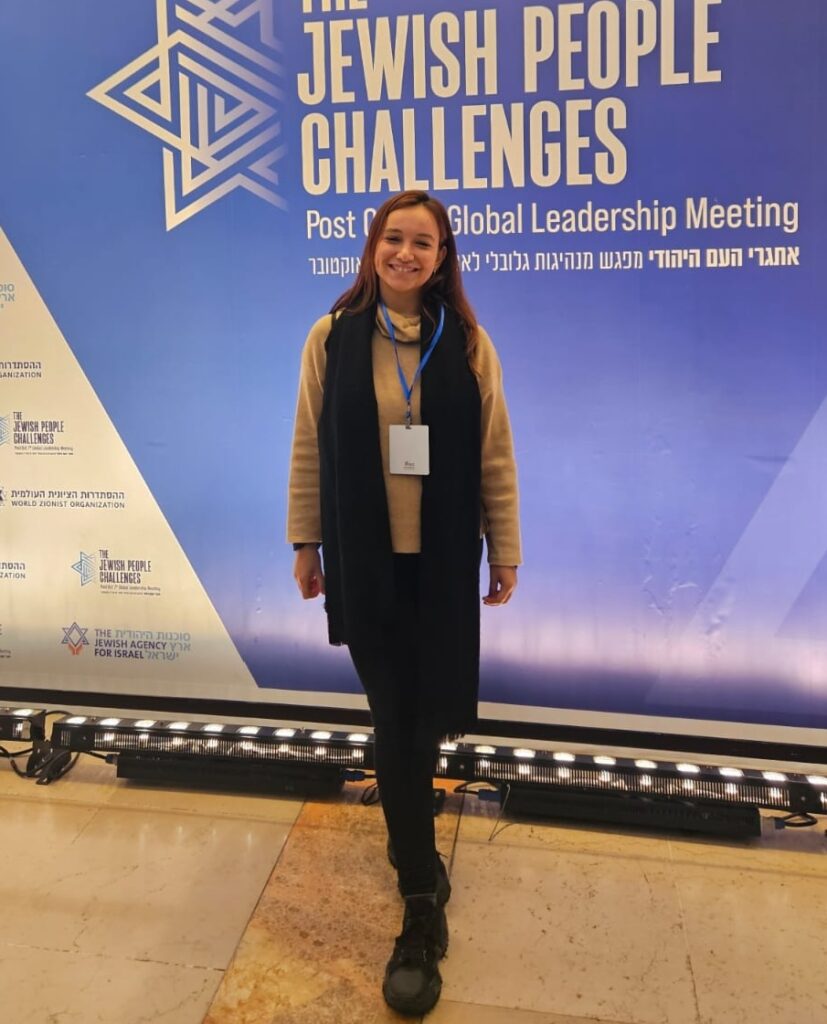
Today, Jews in Europe face a crisis — a dramatic rise in new vulnerabilities following the October 7 Hamas attacks in Israel. As I write this, European Jewish life is being reshaped — in terms of identity, infrastructure, and belonging — with rising antisemitism the backdrop for these changes. In the face of these challenges, my mission is to help these communities acquire the tools to navigate these changes and become more resilient.
This work is personal, and you could say it’s in my blood. After my great-grandmother moved from Europe to Argentina, her entire family perished in the Holocaust. She immigrated there to meet my great-grandfather, with whom she’d been exchanging love letters. He was working in agriculture in Argentina.
When my great-grandmother discovered her entire family had died, she decided to raise a Jewish family and celebrate Shabbat each Friday. She gave my family a solid foundation of Jewish identity and pride, and this was passed down from one generation to the next.
Her husband, my great-grandfather, started building the Jewish community in a small town called Rosario. He became its president and worked hard to make the community what it became. Like many Jewish communities in Latin America during periods of significant immigration, communities such as Rosario were strengthened through the partnership and support of organizations like JDC, which helped build communal infrastructure and absorb newcomers.
That’s why, decades later, joining JDC was a full-circle decision for me. You could say I’ve returned to my roots as a community-builder; it’s a part of my DNA.
I believe Jewish identity is formed primarily through healthy, early lived experiences — where the community is a key part of each person’s growth and life pipeline — rather than through stories alone. This is something I experienced firsthand and help build through JDC.
I brought to JDC years of experience in the nonsectarian world, at a Jewish NGO called Cadena — an organization representing the Jewish community in Latin America that responds to natural disasters, emergencies, and other crises. While there, I spent years working in other cultures — in Peru, Mexico, Malawi, and elsewhere. Over that period of time, I led 20 humanitarian interventions into complex emergency situations.
Today, as the manager of community development programs in Europe, my work involves navigating a different kind of complexity. Each community has their own specific needs. My role is to help them build a future that feels sustainable and relevant to their everyday lives.
JDC is unique because it doesn’t prescribe these communities a set of rules. In this rapidly changing world, we enter into dialogue with them, helping them keep one foot grounded in tradition and history, the other oriented towards what’s next. In other words, we help these communities create a roadmap to resilience: We’re discovering their collective future together.
This discovery is the most thrilling part of my job. JDC provides a platform for the community that gathers the resources, expertise, and above all, inspiration from the community. Right now, I’m helping to build that platform in two distinct Jewish communities: Bulgaria and The Netherlands.
The Bulgarian Jewish community has grown exponentially since the 1990s, right after the collapse of communism in the region, in concert with the fall of the Soviet Union. At first, JDC was there to build infrastructure and leadership pipelines — Gan Balagan preschool, Jewgaton summer camp, and other major programs and initiatives. Through Hadracha College — a leadership-training platform that became a foundation for long-term community sustainability — JDC supported the first cohort of madrichim (counselors) — bold Jewish leaders who are passing the torch to the next generation.
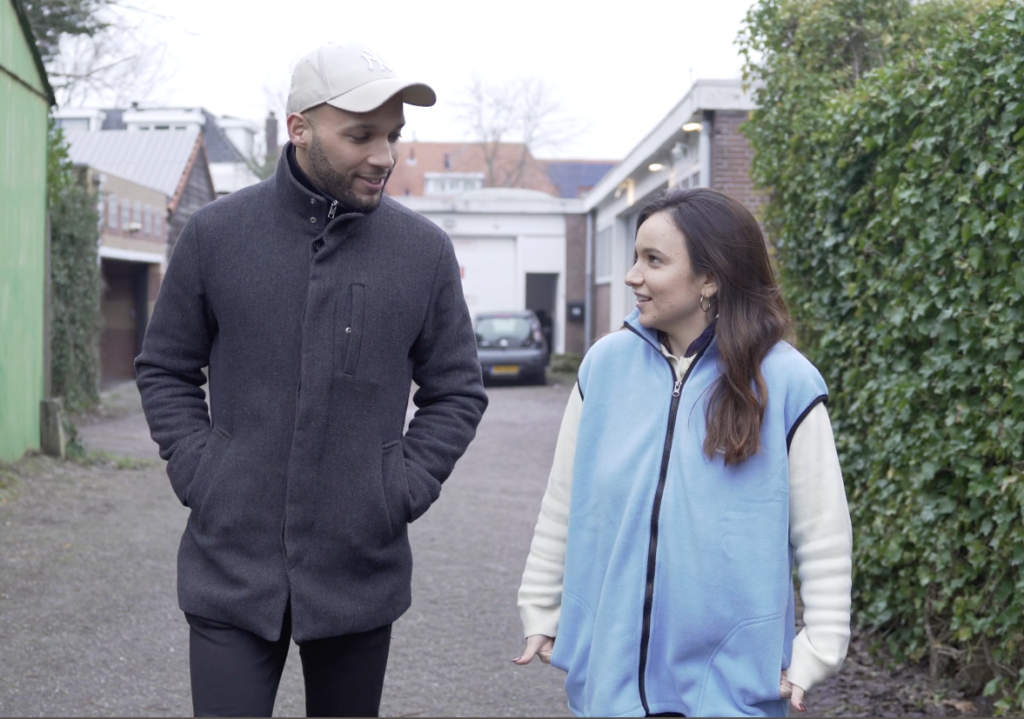
In a constantly changing world, stasis isn’t an option. Communities must continue to adapt in order to survive.
That’s why, more than 35 years later, our partnership with Jewish Bulgaria has evolved. Now the first generation of Jews who grew up advancing through the leadership pipeline are raising their own children. And these children have their own unique needs and live their Jewishness differently, shaped by a new global, national, and communal context.
That’s where JDC continues to add value. We work with the community to build platforms for Jewish life that emerge organically from this new generation and context — allowing the growth curve to continue at a particularly challenging moment.
Now that they have a longstanding foundation of Jewish life, they can afford to take risks, too. They can innovate and expand their infrastructure, all because JDC has been at their side for decades.
In The Netherlands, the community looks completely different from Bulgaria, and thus so does our work. Jewish communal institutions traditionally function as distinct entities, among them Jewish schools, welfare organizations, youth movements, student groups, and new grassroots initiatives representing emerging demographics — including a significant Israeli presence and Jewish migrants from across Europe.
In this complex situation, JDC brings a holistic approach to its partnership with the community to address the full ecosystem of Jewish community life. Drawing on its insights of regional trends, we help the community understand how demographic shifts and post–October 7 challenges affect different populations in different ways. Sometimes, we convene roundtables of important stakeholders; other times, by bringing a broader systemic view of needs.
This process is as important as it’s ever been. The October 7 Hamas attacks reshaped Jewish life, but in different ways for different populations.
In Amsterdam, that horrific day intersects with deep post-Holocaust intergenerational trauma. Right now, for instance, children have a range of new psychosocial challenges that we are addressing in partnership with Jewish day schools. After October 7, these schools were stretched beyond capacity, responding to an increased diversity of needs — welcoming students from public schools and children with disabilities, among other educational and psychosocial demands.
That’s why JDC is helping to ensure that teachers can be trained in how to offer trauma support. We’re strengthening coordination between schools and welfare services so that responses are integrated, aligned, and leveraged at the community level. And we’ve helped put in place a dedicated program for Israeli children to learn the Dutch language, culture, and support each other at this difficult time.
JDC doesn’t prescribe these communities a set of rules — we’re discovering their collective future together.
We’re also addressing the new vulnerabilities faced by the wider Israeli community. After November 8, 2024, when Maccabi soccer fans were attacked in Amsterdam, we partnered with Maccabi Netherlands to offer Israelis trauma support, medical assistance, and other vital relief. More than a year later, I’m working with them to launch an emergency preparedness protocol if, God forbid, another attack on Jews were to occur. This crucial partnership isn’t just an immediate response to a crisis — it’s rooted in long-term resilience and preparedness for whatever may come.
Across the continent, there’s still so much work left to do — after all, the future of Jewish life is always an open question. But in Bulgaria, The Netherlands, and elsewhere, I believe that JDC helps reduce that uncertainty, enabling these communities to leverage their rich past to imagine an innovative, durable vision for what comes next.
What motivates me is a profound sense of responsibility. I feel that I have a duty to give other Jews what my great-grandmother gave me — the courage to live a fearless, proud Jewish life. Nearly a century ago, she fled antisemitism in Europe to come to Argentina, where her son helped build a Jewish community from the ground up. Today, I am working to promote resilience in the very place she once fled.
The times have changed, and the circumstances are new, but this story is bound together by a single throughline — JDC. They were there in Rosario with my grandfather, they are there in Europe, and we will continue to be there for all Jews everywhere, no matter what comes their way.
Steffi Czarny currently serves as JDC’s manager for community development programs in Europe, working with several Jewish communities across the continent to strengthen their growth, long-term sustainability, and strategic funding support. She accompanies community leaders by offering tailored guidance, facilitating regional networks, and helping shape processes that reflect each community’s stage of growth.
Czarny previously coordinated humanitarian operations for CADENA, a Jewish humanitarian organization, where she led crisis-response efforts following natural disasters across Latin America, the United States, and Africa. She has also worked in the Jewish community of Buenos Aires for many years, directing the youth department, leading educational programs, and serving as an educational group leader on Israel journeys in addition to working for Hillel and Keren Kayemet LeIsrael (KKL) through identity-building, environmental, and professional initiatives.
Czarny holds a degree in psychology from the University of Buenos Aires and is deeply committed to creating meaningful Jewish life. She is passionate about community empowerment, youth leadership, and strengthening Jewish resilience worldwide.
Sign Up for JDC Voices Stories
Share


Share
Partners

Give With Confidence


