

International Holocaust Remembrance Day 2026: This Survivor Tells Her Story
Hasya Aizenberg experienced one of the worst atrocities in human history — today, she has some hard-earned wisdom to share.
By Hasya Aizenberg - JDC Client | January 26, 2026
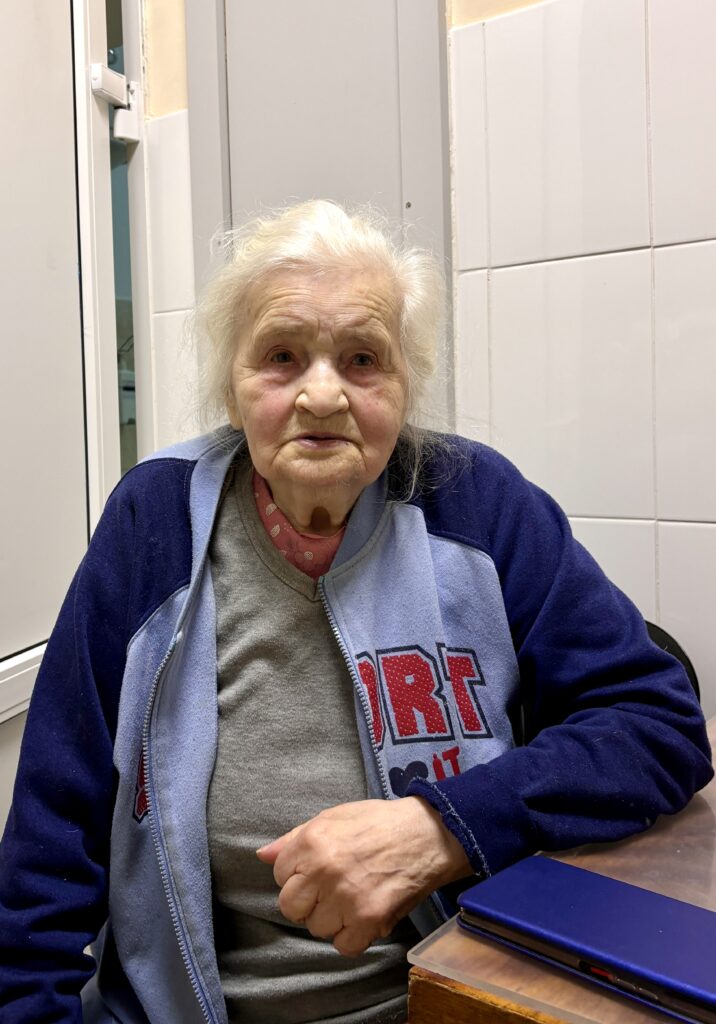
Holocaust survivor and JDC client Hasya Aizenberg has faced challenges most people would find difficult to imagine, nevermind endure. Today, Hasya is homebound, hard of hearing, and alone, having lost both her husband and her beloved daughter. But she has one steadfast source of care and joy — the JDC-supported Hesed Ester social service center in her hometown of Nizhyn, Ukraine.
This International Holocaust Remembrance Day, we’re privileged to learn from one woman whose resilient spirit is a testament to the strength of Jews everywhere. Here’s Hasya, 96, in her own words.
When the Nazis invaded our community, I was forced to flee my home.
The whole process, and our urgent decision to leave, was complicated. I was young, but I remember it all clearly — my mother, my sister, and I escaping together, deserting our home and all our belongings, not knowing if we’d ever return.
We weren’t moving toward anything known, only away from danger, hoping to find a safer place somewhere else.
During the journey, especially on the train to Central Russia, we were weak and malnourished. Hunger stalked us everywhere. Somehow, my mother managed to find a small piece of bread. Even now, I believe that this piece of bread saved my life. But it was scary, never knowing if today’s dinner would be your last meal.
Fear overwhelmed me. We were unsure of what awaited us, whether we’d survive, or where we’d end up. That uncertainty stayed with me a long time.
Upon returning home after the Second World War ended, we found our house totally destroyed. So, we started our lives from scratch. That’s why, since I was young, I’ve had to work to make ends meet and make contributions to my family.
The Nazi invasion is the most extreme example of antisemitism I’ve ever faced, but later in life, I encountered antisemitism in more subtle ways. Because I didn’t look the way they thought Jews were supposed to look — with my blonde hair and blue eyes — I wasn’t immediately perceived as Jewish. At times, this led people to give me disapproving looks and treat me disrespectfully.
Because of this discrimination, I wasn’t able to go to university. Feeling rejected, I wanted more information about my Jewish identity and why people around me seemed to hate Jews so much. I read hundreds of books about the history of our people and Israel’s founding, and after wrapping up my research, I still had no clue why antisemitism was so widespread. What had we done to deserve this? Why us?
Despite the rampant prejudice and Soviet repression, my family never once forgot we were Jewish. In secret, we tried observing our traditions as best we could, lighting Chanukah candles, holding Passover Seders, reciting prayers, and hoping to be heard and seen by our God.
Outside the home, I focused on developing my abilities to the highest level. Through hard work and perseverance, I proved myself, and people eventually showed me the respect I shouldn’t have had to earn in the first place.
Like a warm shelter built against the cold, the JDC-supported Hesed Ester social service center was the place where I could rediscover my Jewishness. And I found them by accident, back in the 2000s, when a neighbor casually mentioned that I should check them out.
Decades later, I can’t imagine my life without JDC and Hesed Ester. They are everything to me, and each day I pray for and give thanks to all who make their mission possible.
I worked hard all my life, and my pension is just a few dollars per day. It’s impossible to plan my budget. Heating bills, food, and medicine: These necessities are getting pricier by the day.
Adding to my difficulties is the isolation I feel constantly. My husband passed away, and then I lost my beloved daughter, too. I have so much free time, and it’s all occupied by memories of them. I can’t leave my apartment, nor can I answer phone calls because my hearing is so poor. In the silence here, I feel imprisoned in my own world with no way out.
I can`t even remember the last time I walked freely outside my home.
Thank God for Nina, my JDC homecare worker. She cooks me nutritious meals, brings me food and medicine, does household tasks I’m unable to complete, and most importantly, stays with me when I need company. What doesn’t she do?
She knows everything about me — my likes and dislikes — and responds to my needs immediately.
For many decades before and even now during the crisis in Ukraine, JDC and the Claims Conference — the organization’s partner in caring for Holocaust survivors like me — have supported survivors like me even more, which I didn’t think was possible — more food, more visits, and more care. We know that we can call them at any hour of any day and they`ll show up. Just knowing they’re there gives me strength.
I truly believe I’ve lived this long because of their support.
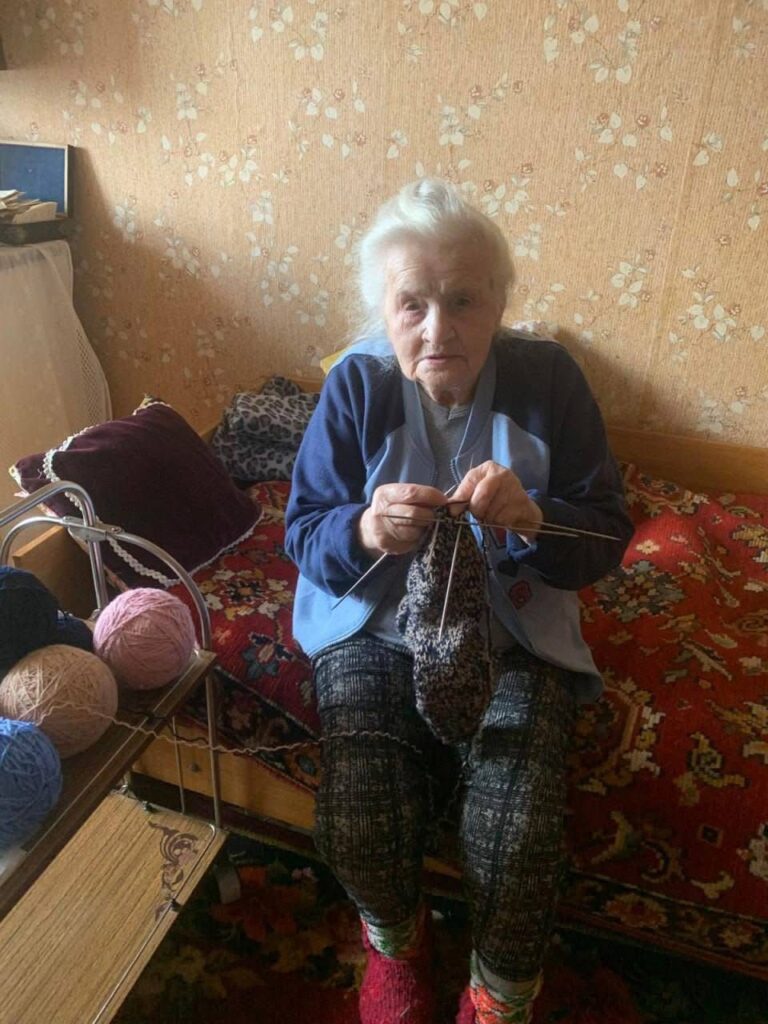
But they’ve given something else that’s priceless, too — the chance to feel useful, the chance to give back. After my mother and I had fled our home, she knitted socks and distributed them to Jews in need: refugees, the homeless, and other vulnerable people. She showed me how to knit, and it’s long been my hobby.
Recently, it’s come in handy. Throughout this difficult situation, I’ve felt a strong need to make a meaningful impact on my fellow Jews. So, following in my mother’s footsteps, I’ve begun knitting more actively and distributing my socks through Hesed Ester, which then delivers them to needy recipients.
To reach out and lift others up, to know you’ve improved someone’s life, to be needed — this is the opposite of loneliness, and it keeps me sane and engaged with the world.
To reach out and lift others up, to know you’ve improved someone’s life, to be needed — this is the opposite of loneliness.
Perhaps God wants me to live, and that’s why I’m still here. Being alive for nearly a century is an immense blessing, but for me it can feel more like a burden, even a curse. I have no close people by my side, and sometimes I wonder what the point of such an existence is.
When I start to forget why I’m here, I remember the strength, hope, and joy of my Jewish community. I picture the joyous holiday celebrations at Hesed Ester, and how we Jews have endured — thrived, even — with defiance.
Though so much has been taken from us, so much remains. No matter how challenging our lives may become, we Jews always have each other. That’s what my mother taught me. That’s what my community shows me each and every day. And that’s the secret to our collective resilience.
It’s the reason we’re here.
Hasya Aizenberg, 96, is a JDC client in Nizhyn, Ukraine.
Sign Up for JDC Voices Stories
Share


Share
Partners


Give With Confidence


