

International Women’s Day 2026: Boosting The Health and Dignity of Women in Ethiopia
Advocate, healer, and expert — these three words describe the groundbreaking work of Dr. Mahlet Shimelis Bekele.
By Dr. Mahlet Shimelis Bekele - JDC Medical Program Coordinator; Addis Ababa, Ethiopia | February 25, 2026
Dr. Mahlet Shimelis Bekele is in a league of her own. An expert in the field of public health, she is one of about 8% of women to achieve tertiary education in Ethiopia — and one of even fewer women to become a medical doctor. Today, Dr. Mahlet serves as JDC’s medical program coordinator in Ethiopia, where she helps manage healthcare programs for those in need and oversees the construction of the organization’s National Spine Center in Addis Ababa — the first of its kind in Ethiopia.
As we celebrate International Women’s Day, Dr. Mahlet opens up about her passion for medicine — and how JDC is transforming lives in Ethiopia and across the region.
The Place I Come From
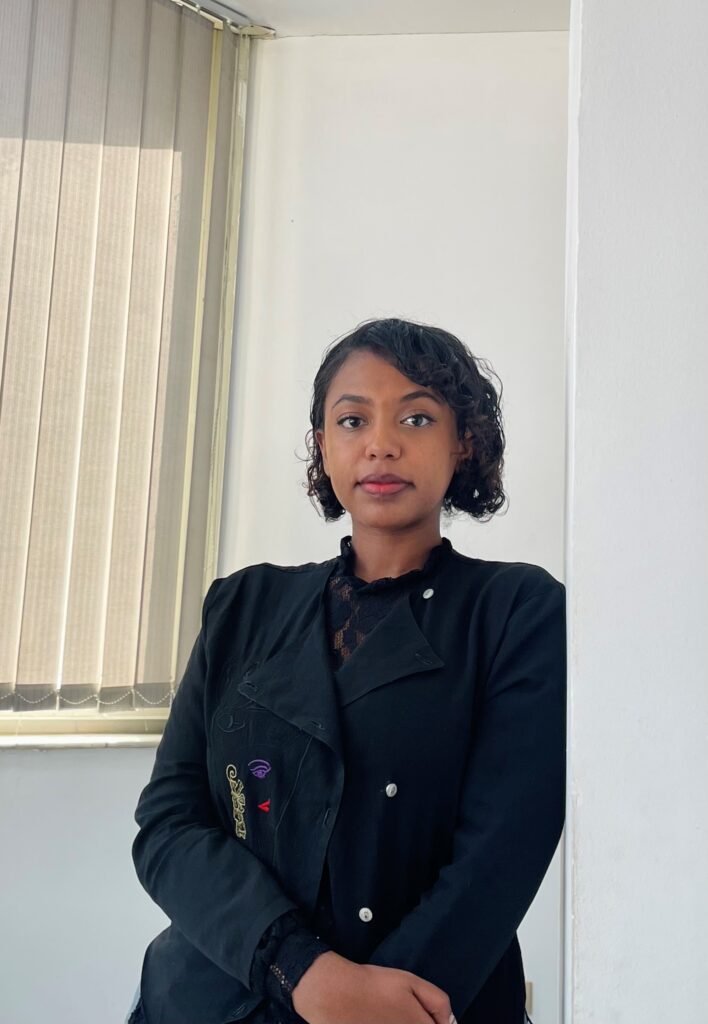
I often tell my friends that March 8 is not just for women — it’s a chance for society as a whole to commit to celebrating and advancing women.
We women, however, should celebrate ourselves every single day, especially those of us who dare to challenge those who have long sought to confine us within a narrow world. People come up to me and say, “Happy Women’s Day, Mahi,” and my answer is always the same, “Every day is March 8 to me.”
I was fortunate enough to be among the mere 8% of Ethiopian women privileged to attain higher education. Sadly, I have witnessed, with my own eyes, countless women with extraordinary potential who are forced to dim their lights simply to survive.
As a child, I spent much of my youth hiding behind books because I refused to stop asking questions, and when those questions went unanswered, I retreated back to them. I read books on science, philosophy, and religion, along with stories from faraway places, because the world outside my window often felt unsafe for someone who dared to think differently.
By age 16, I had already realized that in order to help others, I first had to move past the barriers that held women back.
My Route to JDC
As a woman committed to helping others, pursuing medicine was a natural choice. And years later, I emerged with an MD, and later an MPH, along with skills in humanitarian health, refugee medicine, and disaster care.
I helped found Sisterhood Ethiopia, a group committed to advancing women’s equality and dignity. I joined women’s rights ’ groups as a volunteer. Every step was fueled by one unwavering truth: Women deserve far more than what they currently have.
In my country, 40% of women aged 20-25 are married before the age of 18. That was the same age I entered medical school and faced harassment, and one-third of Ethiopian women still experience sexual violence. That’s part of my story, too.
And when it comes to health, only 7% receive high-quality delivery care. Many walk for hours to reach a clinic, only to watch their babies die because help was too far away.
JDC is often the last hope for many of these women.
That’s exactly what brought me here in the first place — to an organization whose mission mirrored the fire I carry: restoring dignity, rebuilding health systems, and giving women a chance to live the life they deserve.
Our Impact Today
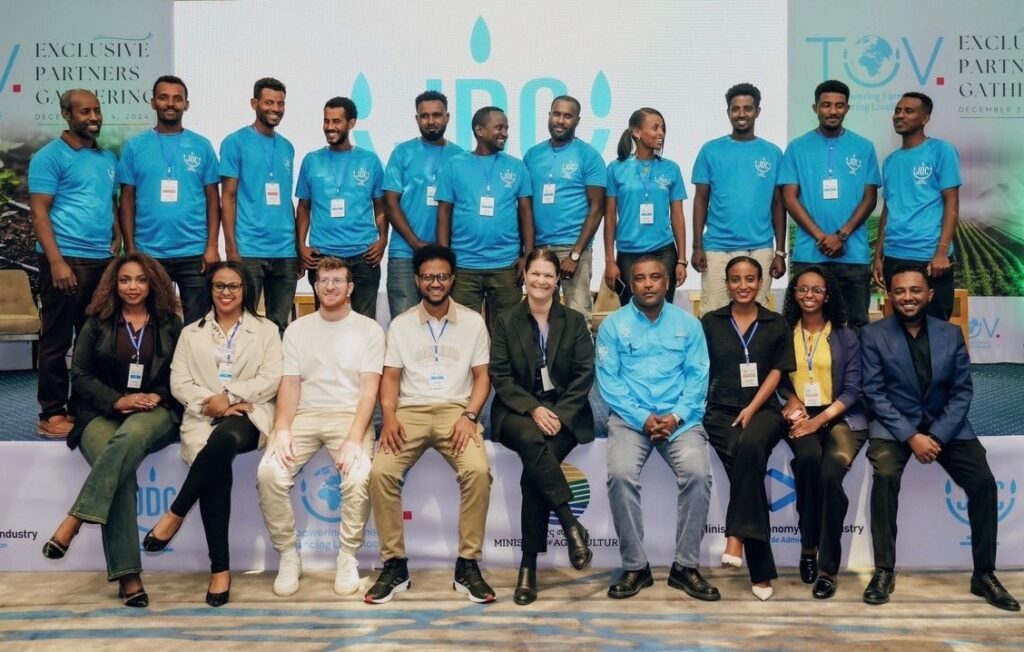
JDC’s global mission extends across 70 countries, including my home. Currently, I’m helping to oversee the construction of Ethiopia’s first spine center and coordinating various healthcare projects that benefit those communities affected by lack of medical access.
Throughout my time at JDC, I’ve witnessed this work firsthand. Before JDC intervened, childbirth in Ethiopia was as dangerous as living in a disaster zone. I have been to hospitals with buildings but no equipment — and I’ve also seen women in refugee camps raising children alone find dignity through JDC programs helping them build businesses and uplift others.
The JDC Spine Program, the first and only one in Ethiopia, is transforming the lives of young people who once had no hope.
Ethiopia has an incredibly high rate of spinal deformity. But tor the last two decades, the JDC Spine Center has helped meet this overwhelming need, all under the visionary leadership of Dr. Rick Hodes. Each year, we receive more than 500 patients, and since we launched the spine program more than two decades ago, “Dr Rick” — as he’s known to his colleagues and patients — has treated more than 1,500 children with spinal deformities.
One story illustrates our profound impact. Recently, I met a young woman whose spine deformity gradually stole her breath. She walked into our clinic determined to fight for her future. After a surgery supported by JDC, she can breathe again, walk again, and hold her head high. She told me, “I achieved a life goal I thought was impossible.”
She is now a proud aircraft technician.
But JDC’s work extends far beyond the field of medicine. I’ve seen small-scale farms that appeared to be managed by thousands of workers but are actually operated through cutting-edge Israeli technology, feeding thousands of families. I’ve heard from farmers, including many women, who could not stop smiling as they watched their families and communities flourish as a result of these efforts.
Behind every one of those stories is another possibility — a world where all women are educated, children live and grow, where health systems serve with abundance, and everyone can dream boldly.
Behind each of these stories is another possibility — a world where all women are educated, children live and grown, and everyone can dream boldly.
The Future We’re Building Today
Being entrusted with the management of the construction of JDC’s National Spine Center was both a profound privilege and a significant responsibility. Once completed, this center will offer hope to untold numbers of patients with spine conditions by enabling them to receive life-changing surgical care within their own country.
For those who support our work, the change you make possible is immeasurable. We extend our deepest gratitude for your unwavering commitment and invite you to see the impact of your generosity for yourselves; you will find fulfillment in the lives you’ve touched and the hope you’ve renewed.
My story is still unfolding — and JDC’s work in Ethiopia is still expanding. At JDC, I am surrounded by colleagues and mentors who work tirelessly to make the lives of others better. The inspiring colleagues I am proud to call friends have given me drive and boundless hope, and the proud, ambitious, confident Ethiopian women I see in healthcare, business, and media assure me that my work is not in vain.
And the women and children we serve? They are a reminder of what one young girl with the dream of being a doctor can achieve. On International Women’s Day — and every day of the year — they inspire and uplift me and I hope I do the same for them.
If there is anything my journey and JDC have taught me, it is that struggle can be transformed into purpose, but that there is still so much more to be done. This is the world I long for, this is the work JDC is building, and I believe this is only the beginning for us both.
Dr. Mahlet Shimelis Bekele serves as JDC’s medical program coordinator in Ethiopia. Trained as a physician and public health professional, Dr. Mahlet is dedicated to advancing women’s rights and strengthening health systems in Ethiopia. She pursued medicine and public health to address deeply rooted social and health inequities affecting women and underserved communities. She has worked in humanitarian health programs and disaster response. In her current role she oversees the construction of Ethiopia’s first national Spine Center and works on planning and overseeing activities, aligning partners and resources, and ensuring that healthcare service are effectively implemented.
Sign Up for JDC Voices Stories
Share


Share
Partners


Give With Confidence


