

“Not on the Margins”: The Beauty and Resilience of Jewish Kyrgyzstan
The Jews of Kyrgyzstan are a small but mighty community — and Marina Karpova is evidence of its strength and vitality.
By Marina Karpova - Coordinator, Hesed Tikva; Bishkek, Kyrgyzstan | September 2, 2025
What’s it like to be Jewish in Kyrgyzstan? There’s no better person to ask than Marina Karpova. When the Soviet Union collapsed, Karpova joined Jews across the region who were rediscovering their heritage and identity. Today, she serves as coordinator at the JDC-supported Hesed Tikva social service center in the country’s capital, Bishkek. In this reflection, she credits JDC for providing an entry point into Jewish life and one program in particular for strengthening her capacities as a leader.
Here’s her story.
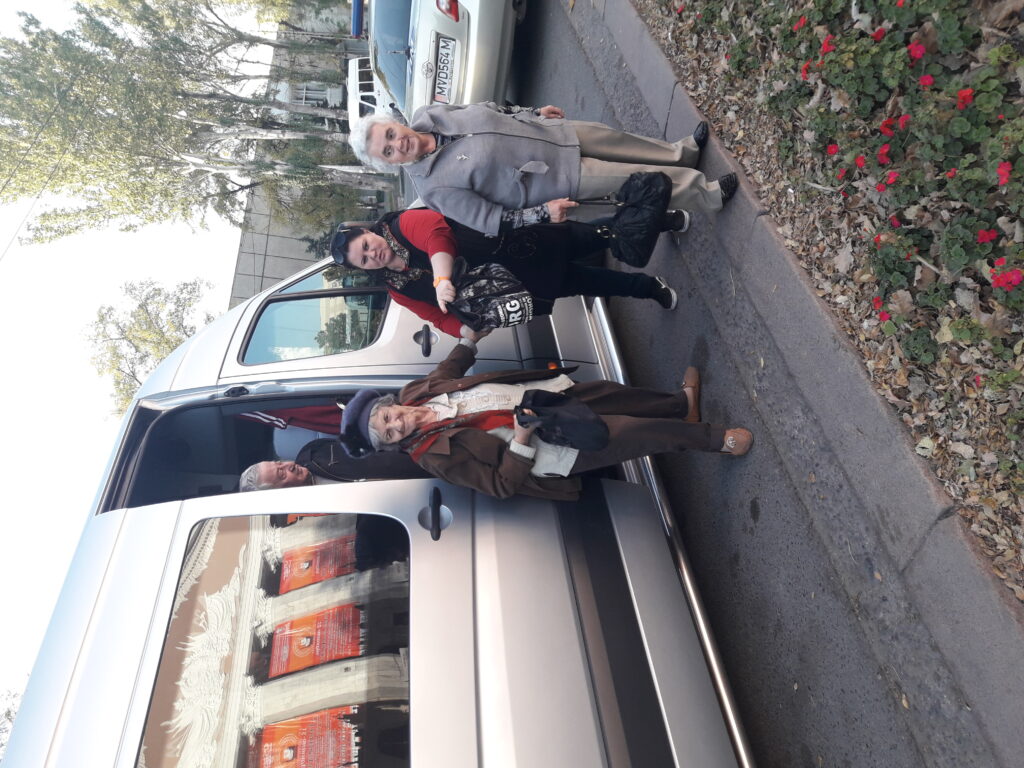
Jewish life in Kyrgyzstan exists at the intersection of quiet and depth. There are no big crowds here — but there is genuine closeness. Many people know each other by name. The memory of our past is preserved not in museums, but in family stories, gestures of care, and shared holidays and Shabbats.
Here, every event matters, every person is irreplaceable, and every effort is sincere.
I only found out I was Jewish when I was 16, but I have a memory that I now see is connected to my Jewish story.
I was three-and-a-half years old that fateful afternoon my parents left me at my grandmother’s house. I was a curious child, and whenever I got bored, I’d explore everything around me — especially rooms and corners I hadn’t been to yet.
That day, my attention was drawn to the space beneath my grandmother’s bed. There, I found a box, opened it, and saw what I thought were neat stacks of cushioning pads for candy — the kind of paper you find in chocolate boxes to protect the sweets. I tried to take one out, but it broke. The paper turned out to be strangely brittle and edible. I took a bite.
“Don’t touch!” I heard a voice yell behind me. “It’s for the holiday!”
My grandmother pulled me out from under the bed. She didn’t explain anything.
Only years later did I learn which holiday she meant. My connection to Jewish tradition found me in a roundabout way — through that taste, the prohibition, and the mystery that, over time, revealed itself in knowledge and awareness.
Underneath my grandmother’s bed, I tasted my first matzah.
My Jewish journey really began in 1996, when I went to my friend’s office just to keep her company. She was working in the Jewish communal space, and I didn’t think this visit would change my life.
I explored the room. There were strange books on the shelves, and announcements, photos, and posters covering the walls. One sign advertised a youth club gathering to welcome Shabbat.
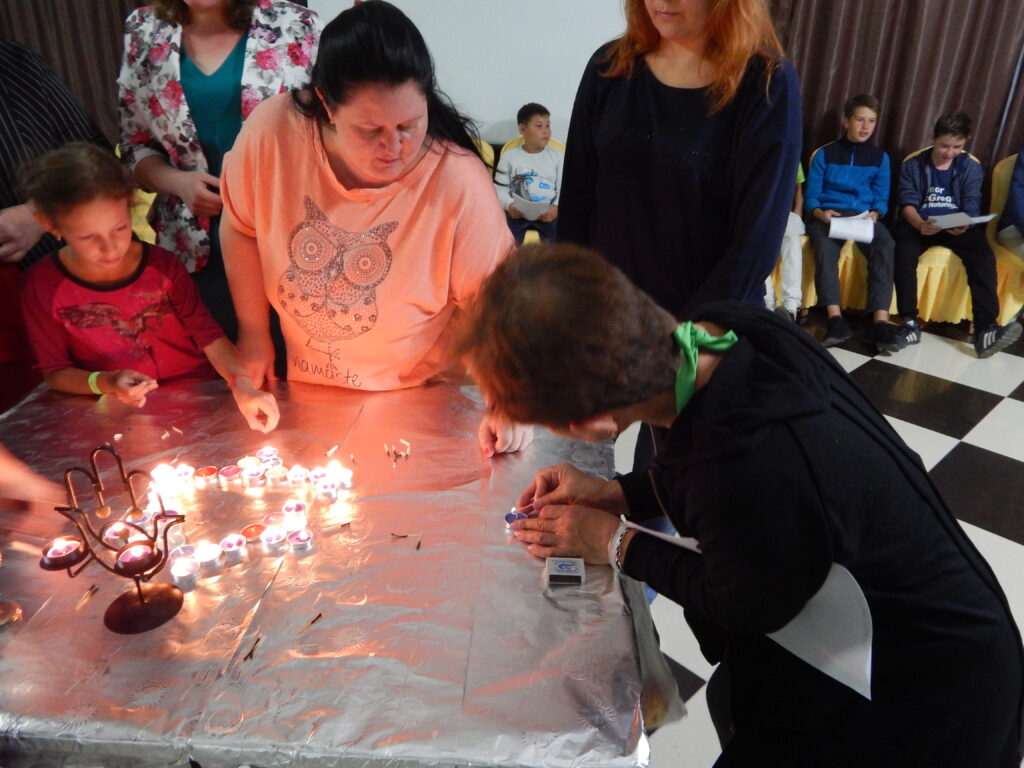
Shabbat? Who was Shabbat? And why were we welcoming them?
Later, I’d find the answer at my true Jewish home — the JDC-supported Hesed Tikva social service center in Bishkek. Six days a week after school, I spent time with the youth club, learning about Jewish traditions, history, language, and culture. I read all those “strange books.” That’s how three rich years went by.
During that time, I graduated from the madrichim (youth leaders) school and began facilitating sessions. I wanted to share everything I’d learned — from books, mentors, and lived experience.
We organized holiday performances, packed food parcels for elderly clients, unloaded medical equipment, and helped with Jewish cultural festivals. Basically, we volunteered and helped the community in every way we knew how.
At Hesed Tikva, I got to know multiple generations of Jews — the most elderly members of the community and the youngest. I became the coordinator of community programs, and I’ve continued this work to this day.
Nearly a quarter-century after taking this job, I see that my work isn’t just about coordination and organization. It’s about building strong relationships. It’s about connecting those who need assistance with those ready to help. And it’s about conversations that reveal powerful stories, and small steps that lead to something real and meaningful.
There’s a Jewish saying: “In every generation, there is mortal danger and miraculous salvation.” This can be understood literally, as a reminder of tragic periods in Jewish history and moments of miraculous deliverance. But I understand it differently: For me, it’s about the ever-present danger of losing connection to our Jewish identity, people, and traditions.
At the same time, in every generation there are those who become the saving force — people who take responsibility to ensure we don’t suffer again. Maybe I risk sounding too bold, but I truly believe I’m one of those who accepted that sacred mission.
But I can’t do this alone.
That’s what motivated me to apply for JDC’s Kaplan Leadership Initiative. Kaplan helps train and empower Jewish communal professionals across the former Soviet Union, Europe, and Latin America. For someone like me who’s from a far-flung place, Kaplan’s extensive network of Jewish movers and shakers makes me feel included, supported, and inspired.
I also gain perspective. Kaplan has taught me that, though each community faces unique challenges, we also have so much to learn from each other. Kaplan fosters a global dialogue that helps develop not only my professional skills but a deeper sense of belonging to the Jewish world as a whole — a single yet multifaceted family.
Here in Jewish Kyrgyzstan, every event matters, every person is irreplaceable, and every effort is sincere.
What has meant the most to me is the sense of trust: JDC is not just an organization, but a true partner — one that believes in the potential of local leaders and helps turn ideas into living, impactful change.
Here at Hesed Tikva, I see this impact each and every day. I sometimes feel like I’m tying together the pieces of a shared quilt — programs, people, and generations — and holding it all together. Through a broad range of clubs, programs, classes, celebrations, and outings, I’m trying to make the community feel warm and alive.
Given everything Jews face here in Kyrgyzstan, I know the stakes of this work are high.
Our biggest challenge is assimilation and a feeling of distance that’s not just geographic, but cultural and emotional, too. Sometimes it feels like you’re standing at the edge of the global Jewish map, and each day you have to carve out a path again — toward tradition and a sense of belonging to something greater.
But here in my community, you truly feel the value of each person. Every event, every gathering, every lit candle is a miracle, the result of care and hard work.
We don’t just preserve traditions. We actively choose, each day, to create Jewish life for ourselves.
I want the world to know that even in the farthest corners of the map, there is light. There are Jews, there are holidays, and there is a sense of responsibility for each other. We are not on the margins — we are part of the whole. And it’s in places like this that you begin to understand what it really means to be Jewish.
Marina Karpova is the coordinator at the JDC-supported Hesed Tikva social service center in Bishkek, Kyrgyzstan.
Sign Up for JDC Voices Stories
Share


Share
Partners


Give With Confidence


