

On the Border with JDC, Spiriting Ukraine’s Jews to Safety
When her Jewish brothers and sisters in Ukraine needed her most, TInatin Ciciszwili dropped everything and went to their aid.
By Tinatin Ciciszwili - JDC Volunteer; Warsaw, Poland | August 20, 2025
Spurred by her commitment to Jewish life, Tinatin Ciciszwili didn’t hesitate when she heard Ukraine’s Jews needed help. Soon after the Ukraine crisis began in 2022, she went to the border and joined JDC’s life-saving refugee response. In this reflection, Ciciszwili, 33, paints an in-depth picture of JDC’s work on the ground and relates the journey that led her to these humanitarian efforts.

There’s a timeless quotation from Pirkei Avot: “If not now, then when?” For me, this line means that if you can do something good for others, then just do it. If you have the skills, the opportunity, and the resources, then only you are stopping you. It’s that simple.
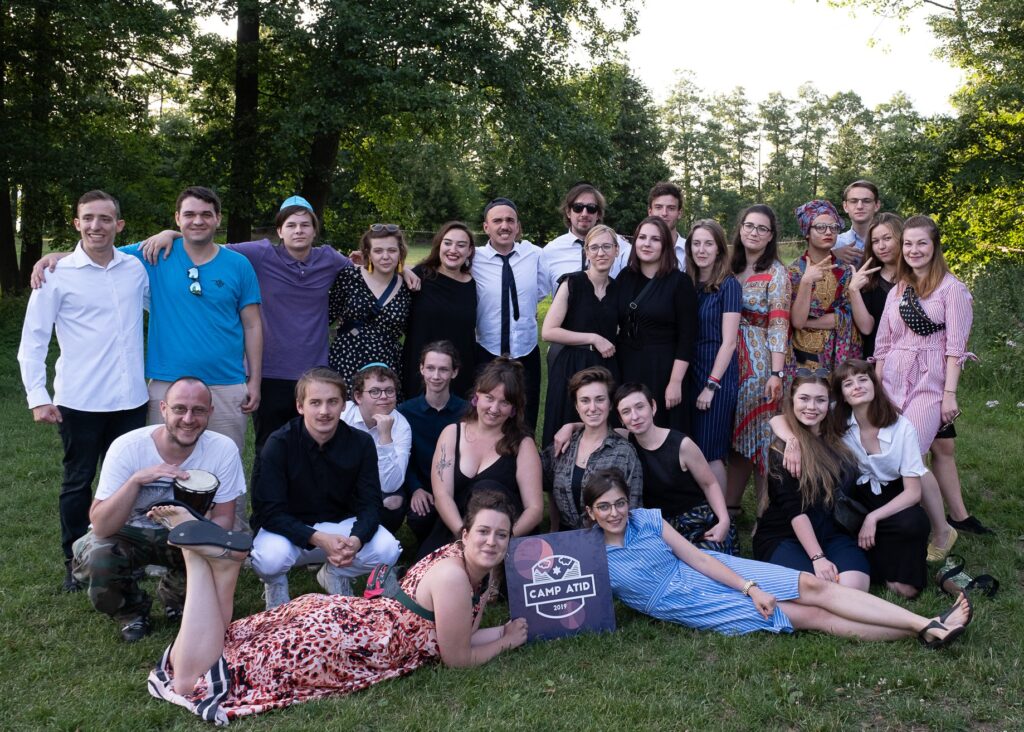
I discovered my capacity for good while growing up in the Jewish community of Warsaw. Each year, I’d attend Atid, our local JDC-supported summer camp. I spent 19 summers doing that, and every autumn, without fail, I’d get more involved in the community and have more friends.
The most enriching part was experiencing Jewish life. I understood things from my past that hadn’t made sense, like the apple, honey, and nut mix my Georgian Jewish grandmother made with matzah each spring. Before I knew what Passover was, I thought this was just another tradition from her childhood.
No, these were clues to my identity. Through these programs, I embraced my Jewish identity more openly than my parents or grandparents were ever able to during the Soviet Union or communist times here in Poland. I connected the dots and saw my true Jewish self staring back at me.
I speak for many other Jews when I say that no place played a greater part in my Jewish awakening than Szarvas, the JDC-Lauder international Jewish summer camp in rural Hungary.
Szarvas is a global camp. Kids and youth come from all over Europe — from Serbia, Bulgaria, Ukraine, Romania, Poland, Lithuania, Estonia, and so many other countries — and around the world. From breakfast until late at night, you live as one Jewish family: You play together, you cry together, you laugh together. You discover traditions and customs that become core to your Jewish self.
Thanks to Szarvas, I grew into a confident leader. I wound up serving as a unit head and taking a group of 40 kids to Hungary for two weeks. Sure, I yearned to return to camp, but I also wanted to give back to the community that had given me so much. There was a whole generation of kids walking down the path I’d once journeyed. Many of them had no idea what it means to be Jewish — Szarvas was their place to explore, and I was their guide.
That’s the power of Szarvas. You realize there’s a global network of Jews — and that we can lift each other up, even and especially during times of crisis.
That became apparent on February 24, 2022, the day the nightmare in Ukraine began. The morning it all started, I thought of my Szarvas friends in Ukraine. I had no idea what they were enduring or how they were feeling. I tried calling and monitoring social media.
Soon, a friend reached out. She was based in Prague, but her sister was in Ukraine and was trying to flee. Once they’d made it to Poland, I picked them up and let them stay at my house for two nights.
After that, I knew I could do more. That’s when I got a call from a longtime friend who works for JDC.
“Tina, listen,” he said. “We’ve known each other for a long time. I know you have the skills we need here at the border. Can you come?”
He was asking me to assist with Jewish refugees at the Ukrainian border.
“Of course,” I said.
To me, it wasn’t even a question. I’d just gotten a new job, but I still took my days off and left for a week. I was determined to help as much as I could. If I wasn’t ready then, when would I be?
I don’t know what I’d imagined, but the border wasn’t like what I’d seen in the news. It wasn’t a quiet line of people waiting patiently to cross. It was often madness — streams of refugees coming in, some with belongings, some without. There were so many buses and tents. You could find help for dogs, help for kids, help for elderly, and more.
I was doing everything all at once, and each situation was different. It’s not like I met a person and knew exactly what to do — everyone had a unique story and unique needs. They could be stressed, shocked, sad, or any other type of emotion and physical state. Amidst the utter chaos, I had to be able to adjust quickly to the situation.
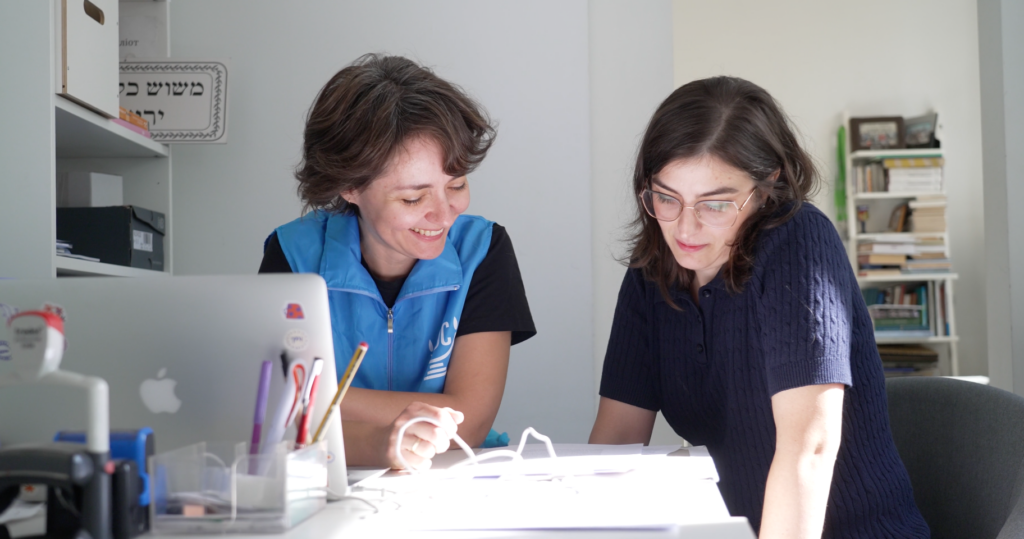
Here’s an example: I’d get a call that a group of Jews were coming from a city in Ukraine. They were due to arrive at 1 a.m. But that timeline, we soon learned, was optimistic. The lines were incredibly long, and who knew what obstacles they’d encounter on their journey out?
So, I waited. I waited and waited and waited and waited. I learned that I could wait 20 hours.
But that wasn’t all. While waiting, other people needed help, too. There’d be seven families requiring urgent support, so I’d have to figure out where they needed to go, how I was going to get them there, and who to connect them to once they arrived.
These were all human beings — mothers, daughters, sons, brothers, fathers, grandfathers, grandmothers, and on and on. Each one of them was scared, lost, and often didn’t understand what was happening. For me, it was frustrating and scary at the same time.
It was all worth it, though. The most rewarding part was feeling that I’d actually helped someone.
I’d receive a message saying, “Thank you, Tina. I’m safe. I’m warm. I have food. I have a roof over my head and I’m feeling safe.” Finally, after I don’t know how many days of fleeing the crisis, the person and her whole family could just sit on a couch.
Finally, they could breathe.
All told, I slept roughly 12 hours the entire week. There was no time for rest because people were in need 24/7. I didn’t even know which day was which, when the day had ended, or how many people I’d helped. I was just too exhausted — exhausted, but fulfilled.
These were all human beings — each one of them was scared, lost, and often didn’t understand what was happening.
As meaningful as this work has been, I never could’ve done it on my own. There was something much bigger supporting me, and it had been with me long before I’d ever set foot on the border.
I’m talking about JDC. I’ve known about them for more than 20 years — more than half my life — and there’s never been a single instance where I couldn’t trust them. With JDC’s resources and know-how, I knew I wasn’t on my own. Knowing they were standing behind me boosted my confidence and allowed me to give more of myself to the Jewish refugees.
In short, JDC is a foundation for building something new. I’m from Poland — my Jewish community has its own tragic history. If not for JDC, we wouldn’t be here today.
Every life is important and of equal value. Having the chance to honor that life in the throes of a catastrophe is something utterly priceless. JDC gave me that.
There are thousands of Jews like me. We are ready to do good for our brothers and sisters at the drop of a hat. And with Ukraine’s Jews still enduring this awful catastrophe, there’s so much more work to be done. Because, if we’re not for each other, then who are we?
And if not now, then when?
A longtime and active member of the Jewish community of Warsaw, Tinatin Ciciszwili served as a JDC volunteer at the start of the Ukraine crisis. She lives in Warsaw, Poland.
Sign Up for JDC Voices Stories
Share


Share
Partners


Give With Confidence


