

“The Arev of the Jewish World”: Celebrating JDC’s Work around the Globe
Andrew Belinfante got a firsthand look at JDC's nonsectarian efforts in Ethiopia — here's what he learned.
By Andrew Belinfante - Co-Interim Executive Director, JDC Entwine | August 6, 2025
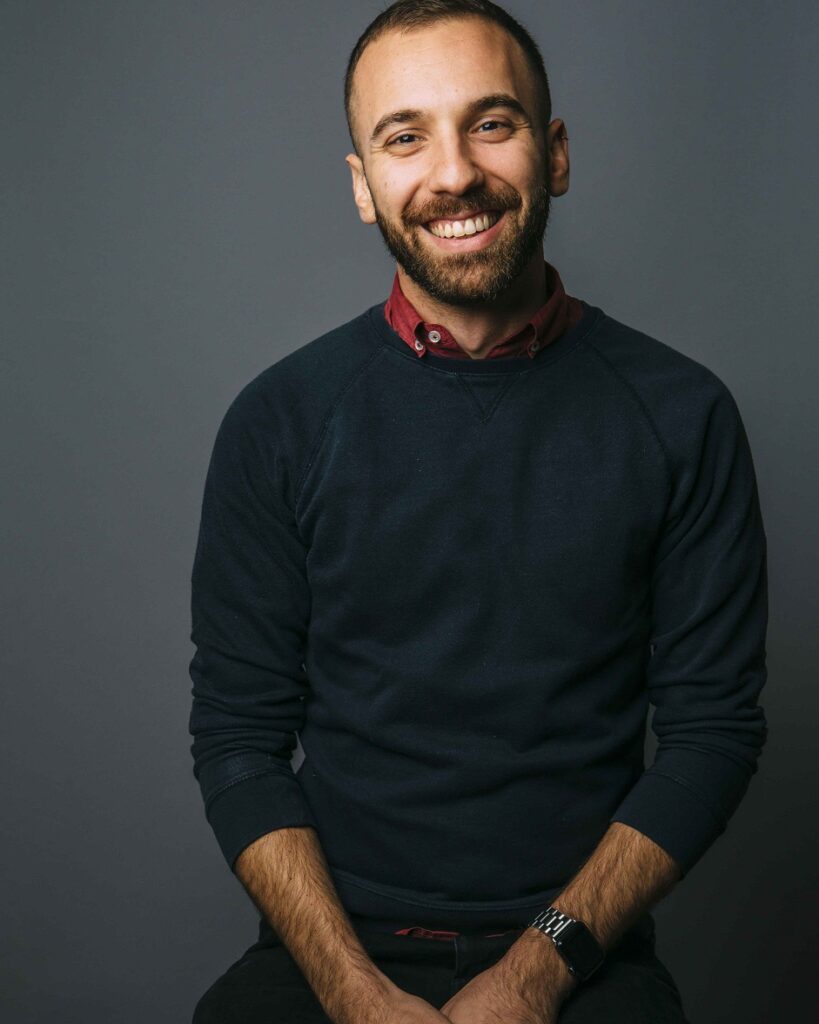
Through his work at JDC Entwine, Andrew Belinfante fosters and strengthens relationships between young Jews and Jewish communities worldwide. On a recent JDC Entwine Insider Trip to Ethiopia, Belinfante got to witness our nonsectarian efforts, too. He came away from this journey with keen insights about JDC’s mission, summed up in the image of the tillah (umbrella).
Here’s his story.
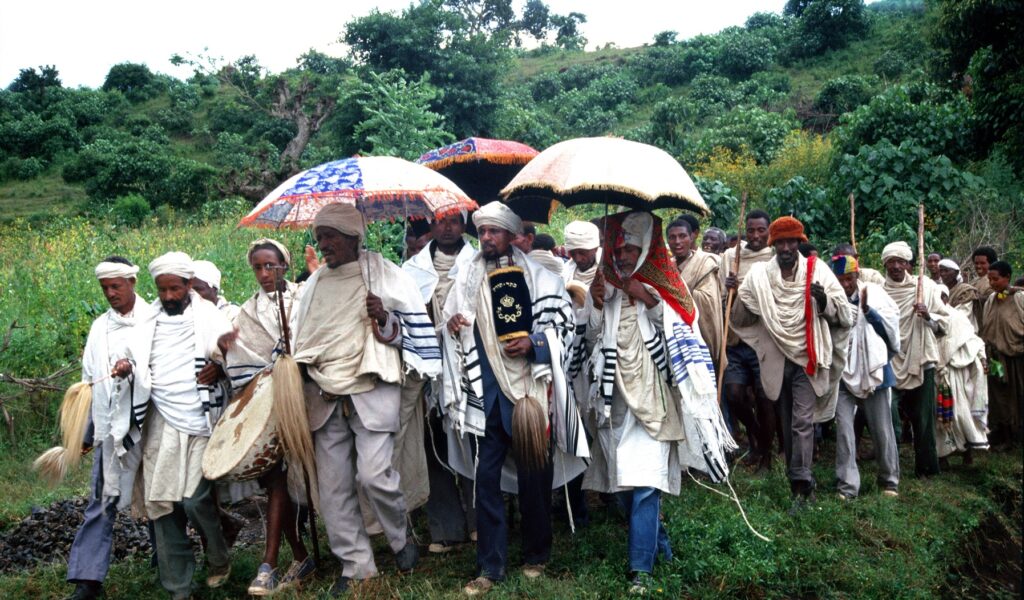
Looking at photos from JDC’s rich history in Ethiopia, you might notice a pattern. Umbrellas fill almost every picture. Rain or shine, they’re there, constant companions in the everyday rhythm of Ethiopian life. In Ethiopia, umbrellas are so central to daily life that they’re woven into the language itself: Tilla is Amharic for umbrella, tilahun means “he will be a shelter,” and yeshitilla means “1,000 umbrellas”— names that carry prayers for protection and the hope that someone will always be there to provide safe cover when storms come.
I found myself thinking about those umbrellas while leading JDC Entwine’s most recent trip to Ethiopia — a trip where I witnessed firsthand the life-saving work that JDC has been doing in the country since 1919, where we have built relationships and strengthened communities.
During our trip, we visited a JDC health clinic in Addis Ababa run by Dr. Rick Hodes, JDC’s medical director in Ethiopia. When we walked in, we were met by a mother sitting with her 12-year-old daughter who suffers from spinal tuberculosis. In that encounter, she learned that surgery for the disease, something she has been optimistically waiting for, would not be possible this year. In that raw moment of vulnerability, watching this mother’s pain unfold before us, I found myself asking: What does it mean to heal when you can’t fix what’s broken?
That moment reminded me of a favorite passage of mine where Rabbi David Wolpe writes about the Rabbi of Kotzk’s reflection on Deuteronomy 6:6. He shares that:
Deuteronomy 6:6 reads, ‘And these words which I command you this day shall be on your heart.’ The Rabbi of Kotzk, a 19th-century teacher, asked why the Bible states ‘on your heart’ when it really wishes to be ‘in your heart.’ His answer is that hearts are not always open. But if you place the words on your heart, when the heart is more receptive, they will sink in and there unfold their deeper meaning. This is true of all great messages in life.
Witnessing this mother’s vulnerability cracked my heart open a little, allowing the learning to sink in in deeper ways. Our group of 15 Jewish leaders from around the world found deeper meaning by being with her in that impossible moment — not trying to fix or solve, but simply being present to her pain and her love.
One of my favorite teachers, Bryan Stevenson, often speaks in his work about the power of proximity, how getting close to people who are suffering allows us to hear stories we might otherwise never encounter and challenges the narratives we carry about pain and resilience. In that presence with this mother, something shifted for us about what it means to show up when fixing isn’t possible.
Through our work at Entwine, we educate the next generation of Jewish leaders, we take action in our communities, and we push participants in our programs to meet people at their lowest lows and their highest highs in a way that goes beyond having an impact. This work at its core is fundamentally about the relationships and community that are central to our collective story. It’s about learning that sometimes simply witnessing is the spark that transforms us into advocates for global communities.
The umbrellas in all those photographs now represent something else for me. They’re not just about weather protection. They’re about the human instinct to provide shelter, to show up, to hold space. They’re about the sacred work of being present in someone else’s storm.
And this reflection on shelter has stayed with me — not just in Ethiopia, but as I think about JDC’s work around the world, especially right now in Israel. Just as we offer care and presence to vulnerable communities in Ethiopia, JDC has mobilized to provide critical support to thousands of Israelis displaced and traumatized by ongoing attacks. I’ve been deeply moved to see our colleagues respond to evacuees, helping them with basic needs, psychological care, and even moments of communal respite like Shabbat dinners — all acts of providing shelter in a storm. They are among more than 1 million Israelis we have aided since October 7.
JDC serves as an umbrella for the Jewish world. In all Entwine programs we talk about what it means to be an arev. An arev is a guarantor, a co-signer who steps in when the primary person cannot act. JDC is the arev of the Jewish world, offering not just metaphorical umbrellas but serving as the safety net that ensures no Jewish community stands alone in the storm. And this also extends to vulnerable communities in the developing world or disaster zones who we aid on behalf of the Jewish people.
The umbrellas in these photographs represent something else for me — they’re about the sacred work of being present in someone else’s storm.
I’ve learned that our ability to provide shelter for others exists, not in spite of our brokenness, but because of it. We carry our umbrellas knowing that we can’t control the weather, but we can control our response to it.
We show up not because we have all the answers, but because presence itself is an answer. And in witnessing moments like these, we become carriers of stories from all over the world, responsible for telling them with the same tenderness with which they were shared with us.
But we are more than storytellers. We are agents of change responsible for turning those stories into meaningful action. Through our presence, our advocacy, and our work aiding others and lifting them up, we transform suffering into hope, brokenness into connection, and isolation into community.
Andrew Belinfante is a community builder and activist living in Los Angeles. As the Co-Interim Executive Director at JDC Entwine, he travels the world connecting global Jews and building awareness around humanitarian aid and disaster relief work. He has dedicated his work towards how we can better expand, and make more inclusive, the Jewish community we live in. Andrew has appeared in Huffington Post and Tablet magazine writing about the intersections of body positivity, grief, and disability through a Jewish lens. His ELI Talk, Reconciling My Body With Tradition, has been viewed over 25,000 times. He currently serves as a board member for both Jewish Queer Youth (JQY) and You’re Just My Type.
Sign Up for JDC Voices Stories
Share


Share
Partners


Give With Confidence


