

The Courage to Persist, The Will to Dream: A Rosh Hashanah Story from Georgia
Eteri Natliashvili's story is a testament to Jewish resilience — this Rosh Hashanah, she walks us through her extraordinary journey.
By Eteri Natliashvili - JDC Client; Tbilisi, Georgia | September 2, 2025
No one can deny that Eteri Natliashvili has grit. Raised in the shadow of World War II, Eteri scraped by on her own as a young girl, braved the harsh steppe to see her imprisoned mother, and even wrote directly to a now-infamous world leader — all before she was even an adult.
In short, Eteri, 80, has much to teach the global Jewish community about courage in the face of catastrophe. As Rosh Hashanah approaches — and we celebrate new beginnings — Eteri credits JDC with her ability to hope and thrive and dream, even and especially as an elderly Jew.
Here’s her remarkable story.
A World Undone
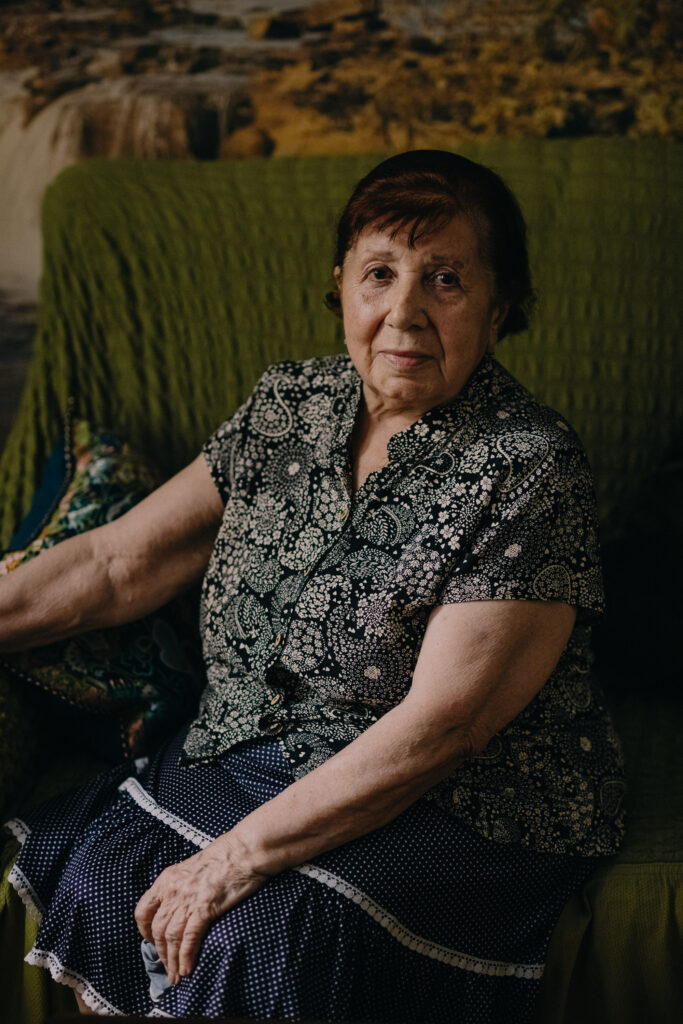
My strength comes from within. I gave it to myself. And it’s been with me since I was a young girl, when I risked everything for the people I love most.
I grew up in Tbilisi. My grandmother lived behind a synagogue, and on Rosh Hashanah, all my relatives — my uncle, mother, brother, everyone — would gather in that house. We would come from the synagogue with a lit candle and place it right on her enormous table, then sit and wait. My uncle led the prayers, and only then did we eat.
In 1941 — when I was just 6 years old — the war began. Soon after, my father was taken to the front. When my mother heard the news, she picked me up from kindergarten, and we ran home.
I don’t remember much about my father. I recall he used to carry me in his arms and buy candy for me and my brother. Now all that was over — we were on our own.
How did we survive? Well, we lived in a courtyard with a true community feel, and on Saturdays and Sundays, our neighbors would gather and take things to sell for a little money.
My mother, for her part, would cook these little pies filled with lobio (red beans), put them in a pot, and sell them to market vendors. My brother and I would walk behind her, holding hands, carrying the pot together in a bag, helping our mother.
Then, everything collapsed.
The Chaos Intensifies
A family friend told us my father was on an armored train that had been bombed. All the soldiers managed to jump off and save their lives, but my father couldn’t; he had to guard the train. He was responsible for the other soldiers.
He died on the spot. Later, someone who’d known my father said to my mother, “I buried your husband myself and planted a tree over his grave.”
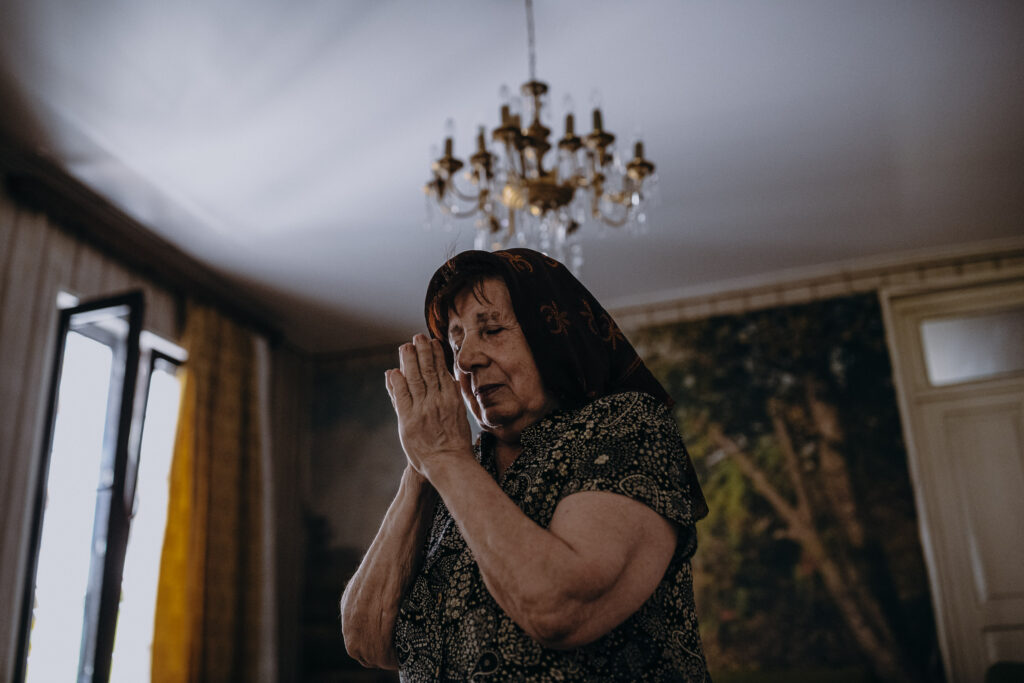
My mother journeyed all the way to Krasnodar, the place my father had been laid to rest, but couldn’t find the tree. She came back with nothing.
Then, a different tragedy struck. One morning, before my mother went to sell her homemade pies, a neighbor asked her to bring a bag along for her, too. When my mother arrived at the market, there was a raid, and she was arrested. She was sentenced to five years of hard labor in a faraway part of the Soviet Union.
Now both my parents were gone — the situation couldn’t get worse, I thought.
But it did, because at that very moment, my brother was also taken to the front. I was left completely alone. I was in sixth grade then. I came home and basically banged my head against the wall, saying, “I can’t live anymore. I don’t want to.”
Across the stairwell lived some neighbors, an Armenian family. The second they saw me, they started helping. I became like a member of their family. Later, I even started speaking Armenian and Azerbaijani quite well — I picked up languages fast.
“Don’t be afraid,” they told me. “We won’t leave you. You’ll stay with us.” And they meant it. When they ate, they always invited me over. They called me balik.
Balik — Armenian for “kiddo.”
Crossing the River
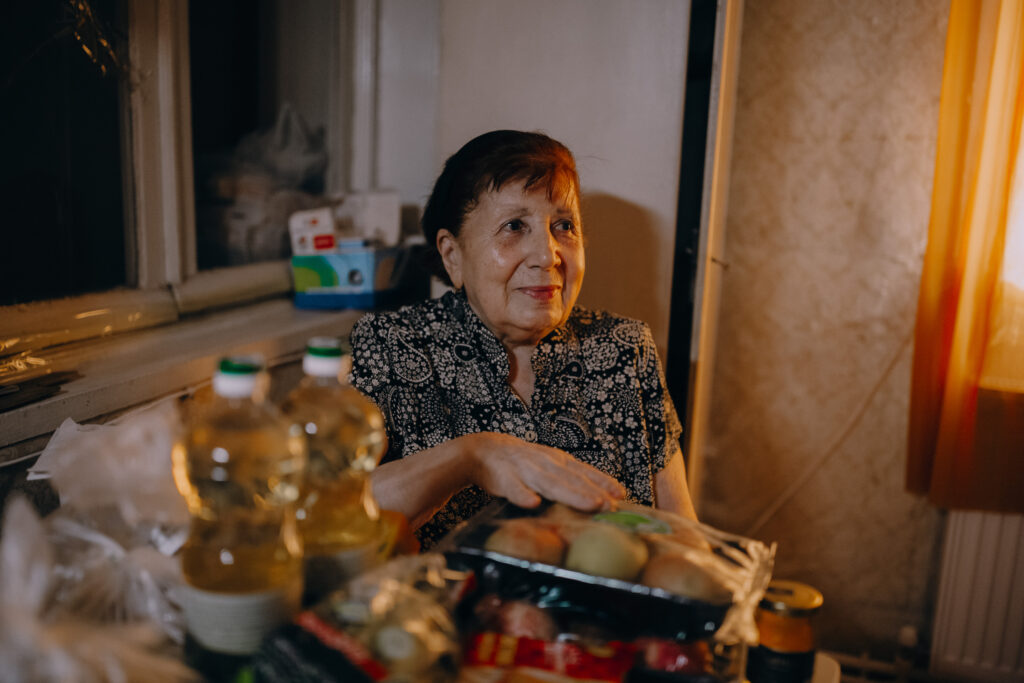
Years passed. I was in the eighth grade when I finally couldn’t take it anymore; I had to see my mother. I decided I’d find a way to go to her myself.
Barely a teenager, I was hired to work in a warehouse, carrying shoes and organizing them on shelves. With the 31 rubles they paid me — 38 cents today — I saved up for a train ticket. I boarded the train not knowing that the greatest obstacle was ahead.
To get to the village where my mother was imprisoned, I had to cross a river on foot.
Before I crossed, I said, “God, please help me brave this river — help me to see my mother and then return home.” I had nothing on my feet, so I waded barefoot. I made it to the other side.
The work camp was in the middle of the steppe; no one lived around there. I went inside, and some people called my mother, saying, “Your daughter has arrived.”
My mother saw me, and it was a meeting that more than 65 years later I still can’t describe. I just had to know she was alive. But no sooner had the visit begun than I had to leave. I returned alone, retracing my steps across the river and back to the train station.
One day passed, then two, and I started going to school again. But then I decided, “No, I have to have my mother transferred here.”
I wrote a request and sent it straight to Moscow — directly to Joseph Stalin.
“I live alone,” I wrote Stalin. “I have no one to help me. I want to study. Please allow me to work and study while having my mother here in Georgia, so that I can see her sometimes.”
I thought he might understand.
Liberation Day
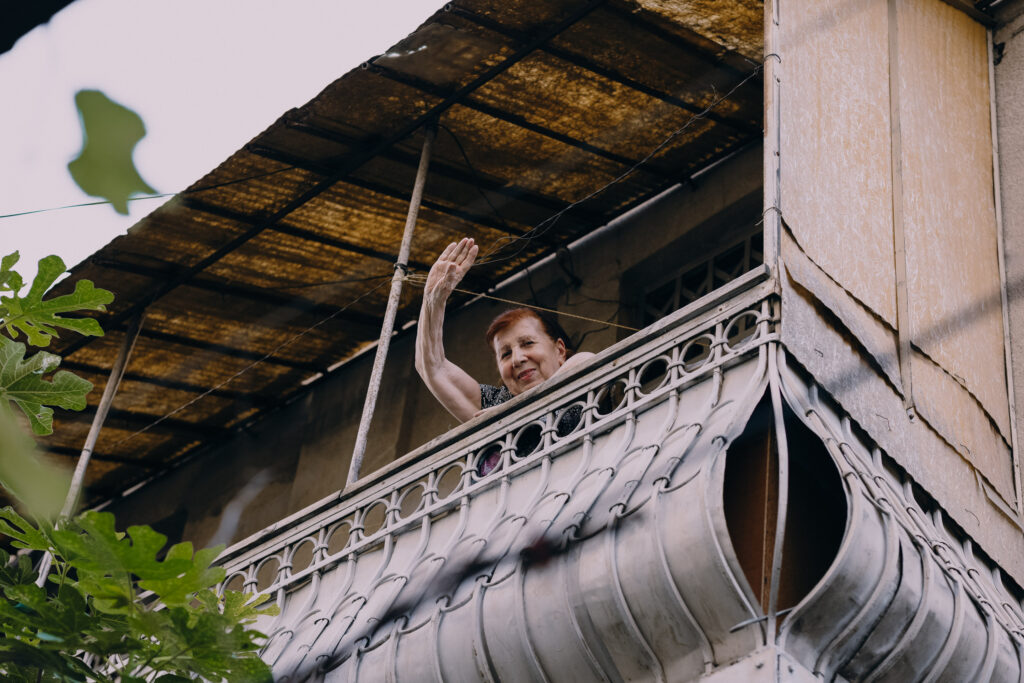
Persistence pays off. That’s the lesson I learned in the eighth grade.
Not much time passed before my mother was transferred back to Georgia — just a stone’s throw from me. She didn’t even stay detained for very long, because amnesty was soon announced for many of the prisoners, and she was released, too.
Everyone thanked me, saying I’d accomplished something remarkable — that I, basically a little girl, had written the request, helped my mother, and thanks to that, she’d not only been transferred but also freed.
Had Stalin read my letter? I’ll never know. But that’s not the point. I’d found a courage, strength, and tenacity within myself I never thought possible.
I could shape the world for the better. I could change the future, not only for myself, but for others, too.
This insight carried me forward. I was only in the tenth grade, but I was working full time, staying up at night studying because I was determined to get into university. I could do whatever I put my mind to, I decided.
I worked there for four decades. But over the years, I grew exhausted. I thought to myself, “When it’s time to retire, I must stop working. I need to rest.”
After all, I had my pension.
A Whole World Lost, A Jewish Family Gained
When I finally retired, my boss didn’t want to let me go. But my pension was set at 132 rubles, and back then, I could survive on that.
But then the Soviet Union collapsed and the Georgian economy went into a tailspin. My pension shrank to just a few dollars a day — basically nothing. Who could I turn to for help?
I’d found a courage, strength, and tenacity within myself I never thought possible.
There was only one place — JDC.
From a young age, I got involved with the JDC-supported Hesed Elihau social service center here in Tbilisi. When my mother was ill, they provided her with food, medication, and other essentials. And when my brother got sick, JDC helped him, too.
Today, I’m alone but never lonely because I have JDC, too. Whatever they can do to help, they never hold back. I can’t walk much, so it’s hard for me to go out and buy what I need. But my homecare worker helps me with all of these things.
Through JDC, I know that the global Jewish community is truly my family, and I know they will never abandon me.
Rosh Hashanah is a time when everyone looks forward to something new, something good. I pray that God helps all those who help us — whatever JDC and its supporters do for us, I hope they receive a thousand times more in return.
May this Rosh Hashanah bring good health, peace, and well-being for everyone — not only for all Jews, but for the whole world.
Because when the world lives in freedom, then we, too, will have peace.
Eteri Natliashvili, 80, is a JDC client in Tbilisi, Georgia.
Sign Up for JDC Voices Stories
Share


Share
Partners


Give With Confidence


