

The JDC Archives: A Window into Polish Jewish History
When he began telling the story of Jewish Poland, Kamil Kijek embarked on a journey that would lead him to JDC — and back to his family's history.
By Kamil Kijek - Assistant Professor, University of Wrocław; Wrocław, Poland | August 20, 2025
Kamil Kijek has explored Jewish Poland from multiple angles — as a sociologist, a historian, and as a participant in JDC-supported camps and seminars throughout the country. Kijek, who serves as Assistant Professor at the Taube Department of Jewish Studies at the University of Wrocław in Wrocław, Poland, credits the JDC Archivesfor nourishing his research. Diving into their vast collection of artifacts, he discovered much more than ever bargained for — a history both fascinating and incredibly personal.
Here’s his story.

There are three threads running through my life — my Jewish story, Polish Jewish history, and the legacy of JDC. In my research, I’ve tried braiding these threads together into a coherent whole.
The seeds for this research were planted long ago, when I was a young child visiting my grandparents each summer at their home in Odesa, Ukraine. My grandfather was born in 1918, my grandmother in 1921. They both knew Yiddish and were the ones who told me my family story.
These visits were my only connection to Jewish life, a mere glimpse of my heritage. But even these brief moments were enough to ignite my curiosity.
When I was 15, I started high school in my hometown of Dzierżoniów, Poland. It’s now largely forgotten, but after 1945, Dzierżoniów was one of the major centers of Jewish renewal in post-Holocaust Poland. There, I met a friend whose family was helping to build the country’s Jewish future.
That’s how I got involved in a Polish Jewish youth seminar in Śródborów, organized and supported by none other than JDC. Jewish Poland thus became my entire world. Throughout high school, I made lifelong friends in the Polish Jewish community, and in the late 1990s, I regularly participated in JDC-supported youth seminars and camps.
At the dawn of the new millennium, I started my university studies. Though I was beginning a new chapter of life, I wanted to continue what I’d started back in Śródborów. That’s why I became a madrich (counselor) in JDC youth seminars and summer camps in Poland.
This was around the time my younger brother began attending Szarvas, the JDC-Lauder international Jewish summer camp in rural Hungary. Inspired by his experience, I joined him first as a madrich (counselor) of the camp’s Polish group and then as a unit head leading other madrichim.
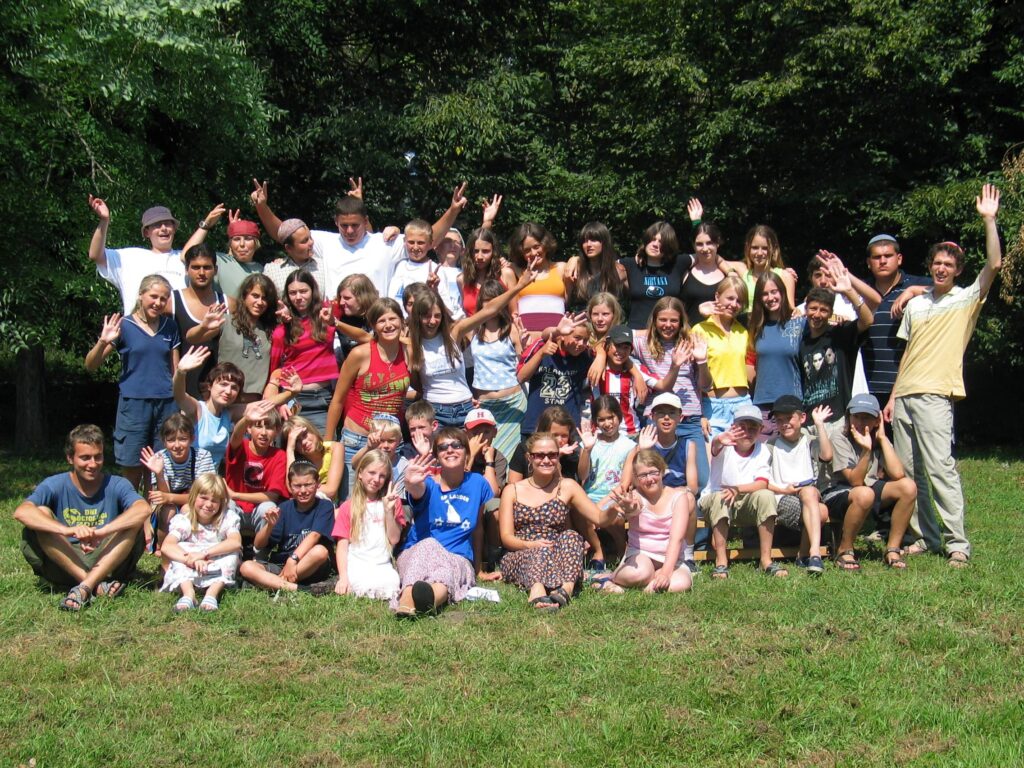
Szarvas was a unique experience. It deepened my identity and exposed me to both the unity and diversity of the Jewish world. Above all, I made unbreakable bonds there that have lasted until this day — indeed, I still visit old camp friends in Israel, Hungary, and beyond.
But Szarvas is so much more important than my own individual story. Polish Jewish culture, so decimated by the Holocaust and its aftermath, couldn’t have been reborn without the deep, global connections a place like Szarvas fosters.
At Szarvas and other JDC-supported programs, I felt like I was making Jewish history. And though I was helping to build Poland’s Jewish future, I became interested in the country’s Jewish past, too.
In 2003, I took two year-long courses in Jewish history, literature and culture. These courses enriched my madrichexperience, and more importantly, helped me gain Jewish knowledge. At the same time, I participated and lectured in JDC Jewish leadership and madrichim seminars in Poland, Hungary, Lithuania, Estonia and Ukraine.
When I received my MA in sociology, I already knew which academic path I wanted to take. I was interested in 20th-century Polish Jewish history and the history of the State of Israel. I started my doctoral studies and went for a one-year doctoral fellowship at the Hebrew University of Jerusalem.
But there was a problem. Basically, I was a poor student from Europe. I could only stay in Israel and sustain myself for so long. When I did find work, it was more meaningful than I could’ve imagined — a position at JDC’s Jerusalem headquarters managing the Buncher Community Leadership Program.
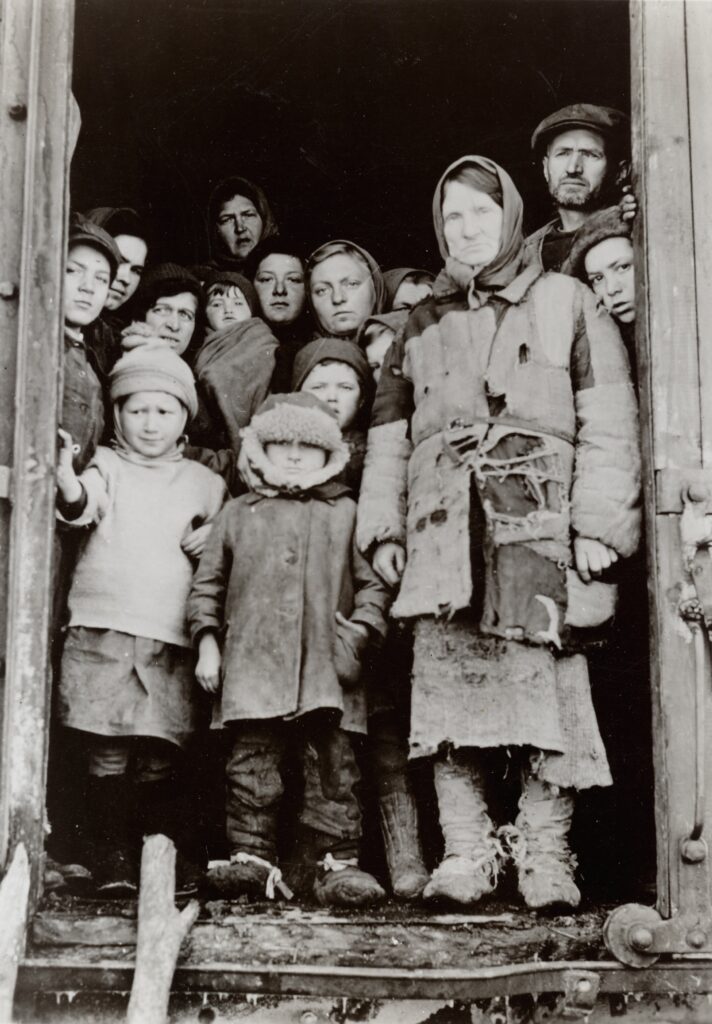
The Buncher initiative helps build the future of European Jewish life by empowering rising leaders across the continent. On their team, I was helping to continue a legacy that had shaped my own life and identity.
With this experience under my belt, I returned from Israel as committed as ever to being a Jewish Studies scholar. My research took me everywhere. I did an additional two years of fellowships in Israel, half a year in London, and post-docs at the Center for Jewish History in New York and in Washington DC at the United States Holocaust Museum.
Finally, in 2015, I received the position I have now — Assistant Professor at the Taube Department of Jewish Studies at the University of Wrocław in Wrocław, Poland.
Today, my research focuses on the modern history of Jews in Poland and Eastern Europe, with an emphasis on their relationship to the rest of the globe. Before the Holocaust, Poland was a major center of Jewish life, shaping — and shaped by — many other communities around the world.
So what happened after 1945? That was the subject of a large historical exhibition I was privileged to co-create at the POLIN Museum of History of Polish Jews titled “1945. Not the End, Not the Beginning.”
The JDC Archives was a key partner in this project. They loaned works for the museum display and hosted a four-part online mini-course I helped lead, entitled, “American Jews Extending Their Hand to Brethren in Poland: The JDC in Poland, 1914–1950.”
The JDC Archives is unparalleled in its depth and scope. Their rich, expansive trove of Jewish artifacts, documents, photos, and more, has been an invaluable resource, strengthening my scholarship. They are truly an archive of the Jewish world and offer an unrivaled view into 20th-century Jewish history.
The JDC Archives is unparalleled in its depth and scope. They are truly an archive of the Jewish world and offer an unrivaled view into 20th-century Jewish history.
They also brought my research — and my life — full circle.
I learned that, when my mother’s family moved to Poland in 1981, they were engaged in the Refusenik movement — the 30-year effort to free Soviet Jews from oppression. From the early 1970s until 1990, all my aunts, uncles, cousins and finally my grandparents emigrated from the Soviet Union to Israel.
JDC helped make this happen. In Vienna and Rome, JDC developed programs to assist transmigrants, Jewish refugees in transit to other countries. This support included care and maintenance, assistance with housing, cultural programs including English language instruction, Jewish holiday events, and more.
My family was among the tens of thousands of Jews JDC helped spirit to a better life. Unbeknownst to me, I’d always been a part of the story I was writing.
JDC was the thread tying this story together, my story. Through them, I discovered my own place in Jewish history — and my role in building that bright future we all need and deserve.
Kamil Kijek is Assistant Professor at the Taube Department of Jewish Studies at the University of Wrocław in Wrocław, Poland. He received his doctorate from the Institute of History of the Polish Academy of Sciences, Warsaw. Kijek is the author of Modern and Radical: Politics, Socialization of Jewish Youth in Interwar Poland and the forthcoming The Last Shtetl in Poland? The Jewish World, The Cold War and the Jewish Community of Dzierżoniów.
Sign Up for JDC Voices Stories
Share


Share
Partners

Give With Confidence


