

The Miracle in Moldova: A Holocaust Survivor’s Chanukah Story
How have Jews persisted for so long, against all odds? Rozanna Tkachyova has the answer, and it all ties back to the themes of Chanukah.
By Rozanna Tkachyova - JDC Client; Chișinău, Moldova | November 17, 2025
Rozanna Tkachyova was born into one of the most challenging moments in human history. After enduring hunger, antisemitism, and the uncertainty of the post-Soviet years, she reconnected to her Jewish heritage at the JDC-supported Hesed Yehuda social service center in her hometown of Chișinău, Moldova.
In this Chanukah reflection, Rozanna, 82, shares her wisdom about overcoming hardship.
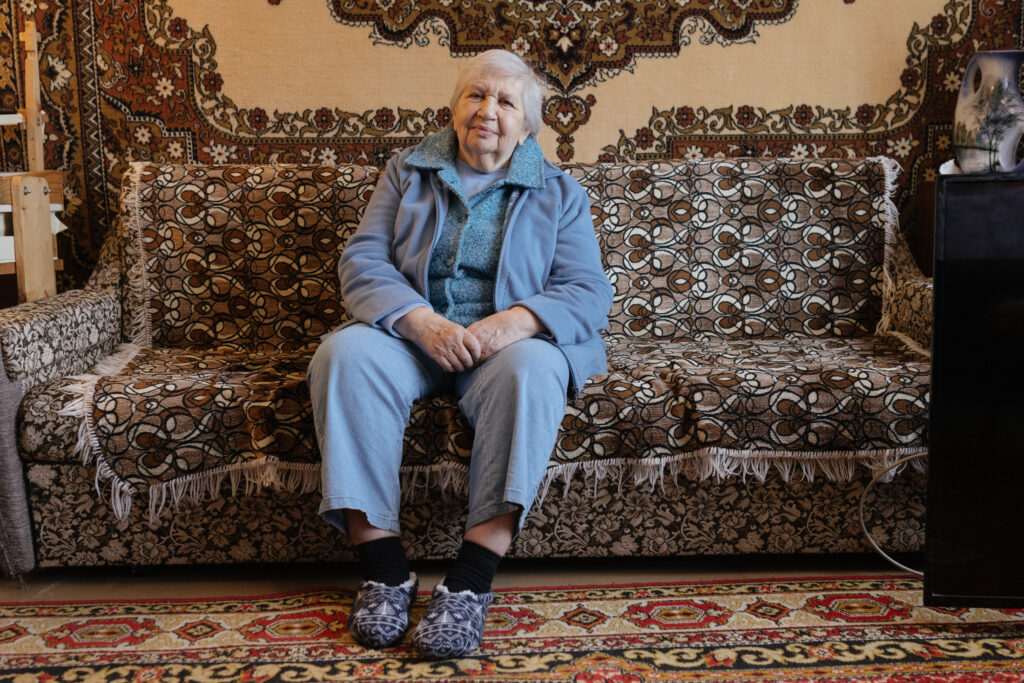
How do you build a life in the middle of a catastrophe? When I look back at my more than eight decades on this earth, I find the answer in the difficulties I’ve faced.
I was born in Leningrad (now St. Petersburg) during the city’s infamous siege, an earth-shattering event that claimed an estimated 1.5 million lives. Throughout that time, my mother didn’t stop working, instead knitting socks and mittens for the front. When she needed to go out to get yarn, she’d leave me alone, still a baby, and fetch it herself.
We barely made it. There were bombings, and it was forbidden to walk outside. My mother somehow managed to break through and return home to me. When spring came, she removed the bodies of those who’d died of starvation from the streets.
We narrowly avoided starvation ourselves. We received rations, but they consisted of a small container of dubious soup that looked like motor oil with a few peas floating in it and just a bit of bread per day for both of us.
That’s how my mother managed to survive, together with me. That’s how we lived through it.
But when this hardship was finally over, another began. After the war, we moved to a village, and my life there was a nightmare. I carried my father’s Jewish last name — Stein — and because of this, I faced contempt and discrimination.
As I grew up, I also felt like an outsider at my job. I worked at a refrigerator factory for 38 years, and when I was nominated for an award, I didn’t receive it — all “thanks” to my father’s last name. Though I didn’t earn the accolade I deserved, I kept my integrity intact, refusing to pretend I wasn’t Jewish.
After surviving the Second World War and rampant antisemitism, the final hardship I’ve endured is the one we all confront if we are lucky to live long enough — old age. What’s hardest is that you don’t feel like you’re the person you once were. You can no longer do physical work or go places as you used to.
On top of that, you lose the people you love most. I had lived a joyful life with my husband for many years. Unfortunately, he passed away eight years ago. Since then, I’ve been alone.
When you work and earn a salary, that’s one thing. But when you’re retired and have a miniscule pension, all on your own, it’s impossible to survive. I worked hard for nearly four decades, but my pension is only enough to cover heating — that’s it. There’s nothing left for food or other essentials, and I certainly can’t go out.
Winter is a disaster, too. The walls are cold — everything freezes. I walk around the house in felt boots and wear two jackets just to keep warm. At my age, my body no longer seems to heat up. The toughest part is just making it to spring. That’s my one objective.
Under these conditions, my one bulwark against despair is the place I know will never abandon me — JDC.
When JDC came into my life, it became my Jewish family, too. I used to go to Hesed Yehuda and spend time at their day center, a space where Jewish seniors can meet and socialize. I really enjoyed it there. Before that, I didn’t know anything about Jewish holidays or traditions.
These days, though, it’s difficult for me to even leave my home.
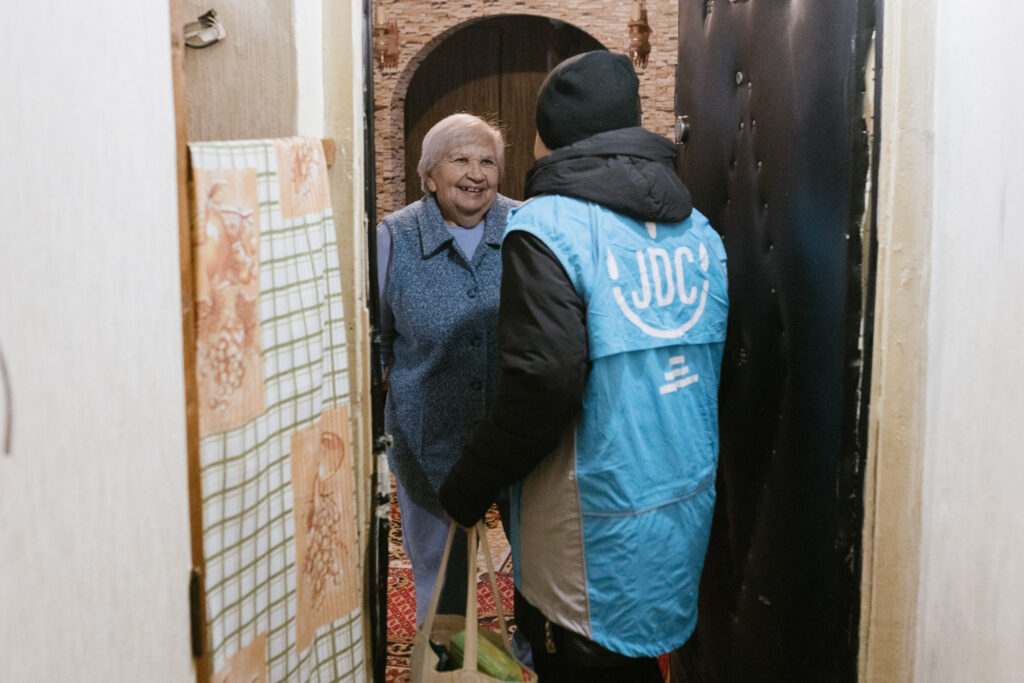
That’s why I’m grateful for Larisa, my homecare worker. Larisa is truly a godsend. She’s kind, considerate, calm, and hardworking. She helps me with everything: cleaning, shopping, and anything that needs to be done around the house. She’s like my family, and I can share anything with her.
When JDC came into my life, it became my Jewish family, too — before that, I didn’t know about Jewish holidays or traditions.
I also walk with Larisa. Sometimes, we even go to the city and stroll in the park. My world is so much larger with her, and I can’t even imagine how I would have survived without all this help.
I want to live. I want to do something meaningful with the time I have left. I embroider, take care of my flowers, and spend time in my garden. It brings me great joy, and I know these moments are only possible because JDC and the Claims Conference are always there. They’ll catch me if I fall.
From the Second World War to the brutal postwar years to the challenges I face today, I now see that there’s only one way to survive a catastrophe — the care and support we extend to each other as Jews. The miracle is that, in the midst of great desperation, when it appears that we have nothing, we give each other life. We are each other’s miracle.
JDC is also a miracle, a great miracle. It’s happening here and it’s happening all around the world. And this Chanukah, I wish everyone who supports them the peace, health, and light they deserve.
Rozanna Tkachyova, 82, is a JDC client in Chișinău, Moldova.
Sign Up for JDC Voices Stories
Share


Share
Partners


Give With Confidence


