

This Internally Displaced Jew Finds New Roots in Zaporizhzhia
After fleeing rocket-fire in eastern Ukraine, Antonina Kazva discovered the supportive Jewish community she'd always wanted.
By Antonina Kazva - JDC Volunteer & Client; Zaporizhzhia, Ukraine | July 21, 2025
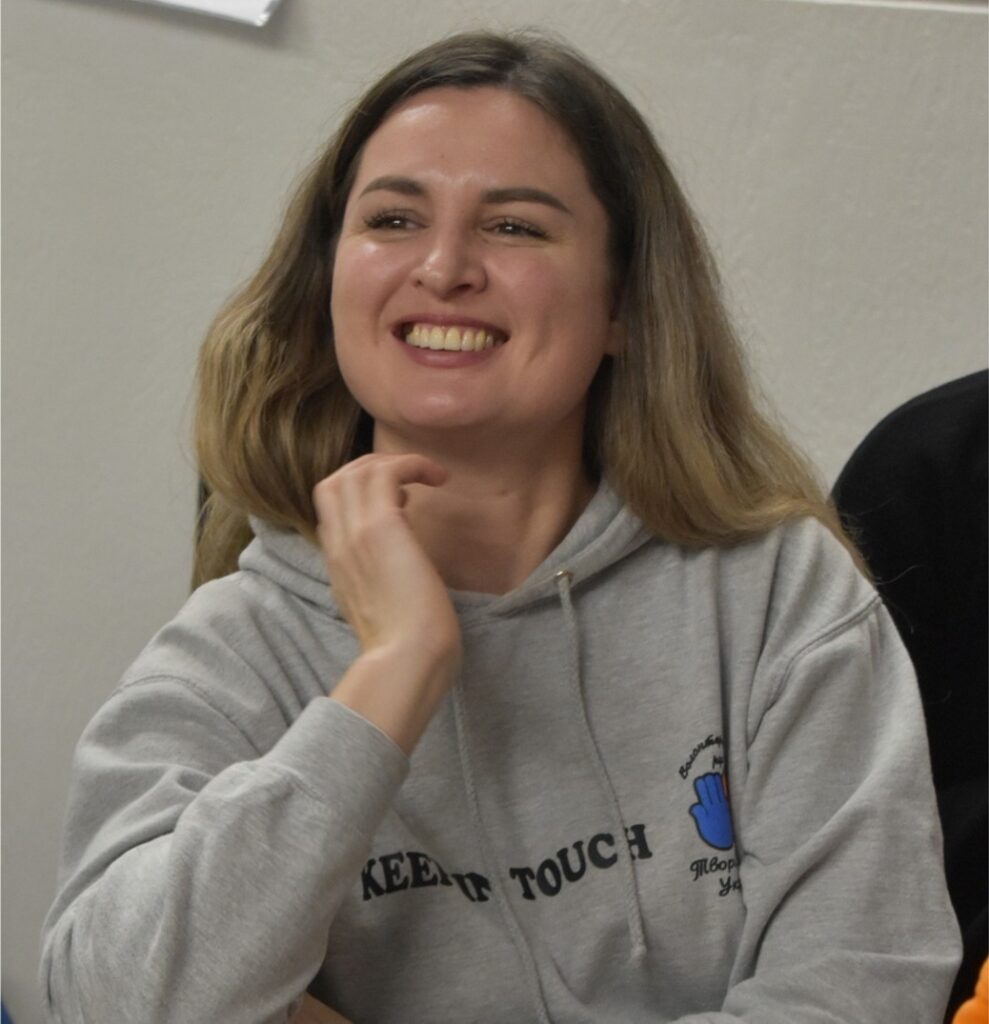
Antonina Kazva’s journey out of eastern Ukraine was long and treacherous. When the Ukraine crisis began, Kazva and her family left everything behind and became internally displaced people (IDPs), finding safety in Zaporizhzhia. There, Kazva soon connected to the JDC-supported Hesed Michael social service center and Mazal Tov Jewish Community Center (JCC) — institutions that soon became a source of strength. Her life was never the same again.
This is her story.
The Voyage Out
We escaped hell on March 21, 2022, but that was only the start of our ordeal.
After leaving our hard-hit city in eastern Ukraine, we arrived in a nearby village. Cars had lined up in front of a roadblock for as many as four days in freezing temperatures. We joined a queue which grew longer each day, and we went searching for our acquaintances and friends.
We were fortunate that one family, an elderly woman and her grandchild, invited us into their home. I will always remember how, for the first time in three weeks, we crossed the threshold of a heated house, took a hot shower, and ate fresh bread.
When it was time to leave, we wanted to go to Zaporizhzhia but were met with yet another roadblock. We were among 500 to 600 vehicles that spent the night in a field, struggling against the cold, some with babies and elderly relatives in tow. Gunfire punctuated the silence.
A few days later, when we were painfully close to our destination, cluster munitions fell on the road ahead of us.
I said goodbye to life. But when the car in front of us stopped, we were saved.
Arriving in Zaporizhzhia, I tallied the time our journey had taken. A trip that normally took two hours had lasted nearly three weeks. We had felt trapped the entire time — only our desire to live pushed us forward. Fortunately, the worst was over.
A Soft Landing
Zaporizhzhia was entirely new to us. We had no friends or family there. A few days after our arrival, a staff person from our local Hesed back in eastern Ukraine located my mother-in-law. She invited us to Hesed Michael and the Mazal Tov JCC.
The warm welcome we received was life-changing. It felt like stepping into a relative’s home we hadn’t seen in a long time. After our long and difficult journey, after dodging death, it would’ve been enough just to feel that sense of Jewish kinship, but we received so much more.
Embraced by our adopted community, JDC helped us settle into our new environment, providing us with essential aid —- food, accommodation, and other crucial resources. And thanks to individual sessions with a psychologist, my daughter stopped crying at night and overcame her nightmares.
After landing safely on our feet, we could think about what we wanted to do with the new life we’d been given.
Paying It Forward
I didn’t wait long for an answer: I knew I had to give back. So I joined a volunteer project called “Do Good, Ukraine” and assisted other IDPs with their documents to receive aid. Eventually, I began supervising and handling the distribution of assistance myself. Later on, I took on the task of writing grant applications.
More than three years after our harrowing journey, I’m still here. Helping others gives me a sense of reward and the strength to continue.
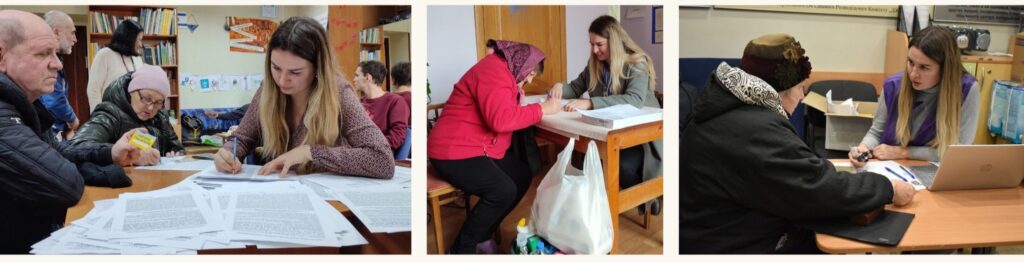
In my role, I’m not just filling out paperwork; I’m building Jewish community. Every day, I get to meet Jews from all walks of life. They teach me something new and help me view life from a fresh perspective.
Each person is an entire universe — a collection of dreams, losses, and hopes. Their experiences remind me that no one chooses to be displaced. What we can choose, though, is how to respond to those in need.
The Next Generation
Initially, my daughter had some trouble adjusting to her new life here. After moving to a new town, getting used to online learning, and having no friends or acquaintances, she felt isolated.
In the fall, she was invited to join Active Jewish Teens (AJT) — the JDC youth network in the former Soviet Union in partnership with BBYO. I encouraged her to give both herself and the group a chance. She stuck with it, and this paid enormous dividends.
She found new friends, new hobbies, and a sense of purpose. She’s also learning a great deal about Jewish traditions and culture. Many of her friends are even studying the Torah — a Jewish renewal impossible to imagine just a generation or two ago. Along the way, they’re gaining social skills and building deep connections that span cities and even countries.
I’m grateful my daughter’s come alive again. And having just become a madricha (counselor), she’s now a leader in her own right —- an example of strength and resilience to her younger Jewish brothers and sisters.
Each person is an entire universe — a collection of dreams, losses, and hopes.
Finding Our Roots
It’s crucial that Jews like me volunteer on behalf of Ukraine’s Jews. As an IDP, I understand the struggles of those I help like no one else. I’ve literally walked in their shoes.
Based on my personal experience, I can say that the greatest challenge IDPs face is finding the strength to go on. After enduring profoundly traumatic circumstances, they have to create a whole new life from scratch. Put another way, IDPs are like flowers that have been uprooted from their pots, shaken free of their soil, and left to endure the harsh rays of the sun.
JDC provides the shade and nourishment for their roots to grow strong in their new home.
Here in Zaporizhzhia, I’ve found my roots in a different sense, too. As a child, I remember my grandparents lighting candles on Fridays. I didn’t understand the significance of this tradition at the time. It was only later that I learned they were Jewish.
Volunteering with JDC and Hesed Michael, and fully immersing myself in holidays and celebrations, I’m not just giving back. My daughter and I are living the Jewish life my grandparents could only have dreamed of.
The history of the Jewish people is one of exile, persecution, and forced migration. This difficult story allows us to understand the pain and resilience of those who must leave everything behind in search of a better life.
Thankfully, we have the tools to deal with this predicament — the Torah. In that most sacred book, we learn that offering hesed (loving-kindness) to each other is our obligation as Jews, and that no one else will help us but ourselves.
It is our moral obligation to refuse to be indifferent to the suffering of others. Through JDC, I haven’t turned away. I’ve run towards my Jewish family, offering an outstretched hand on our long road to safety, belonging, and a hoped-for peace.
Antonina Kazva is a JDC volunteer and client in Zaporizhzhia, Ukraine.
Sign Up for JDC Voices Stories
Share


Share
Partners


Give With Confidence


