

Together in Motion, Together in Strength: One Israeli Father’s Love Letter to Jews Everywhere
Omer Rafaeli is a healer, educator, and parent — and he's transforming the lives of his fellow Israelis.
By Omer Rafaeli - Community Resilience Builder; Gvulot, Israel | March 17, 2026
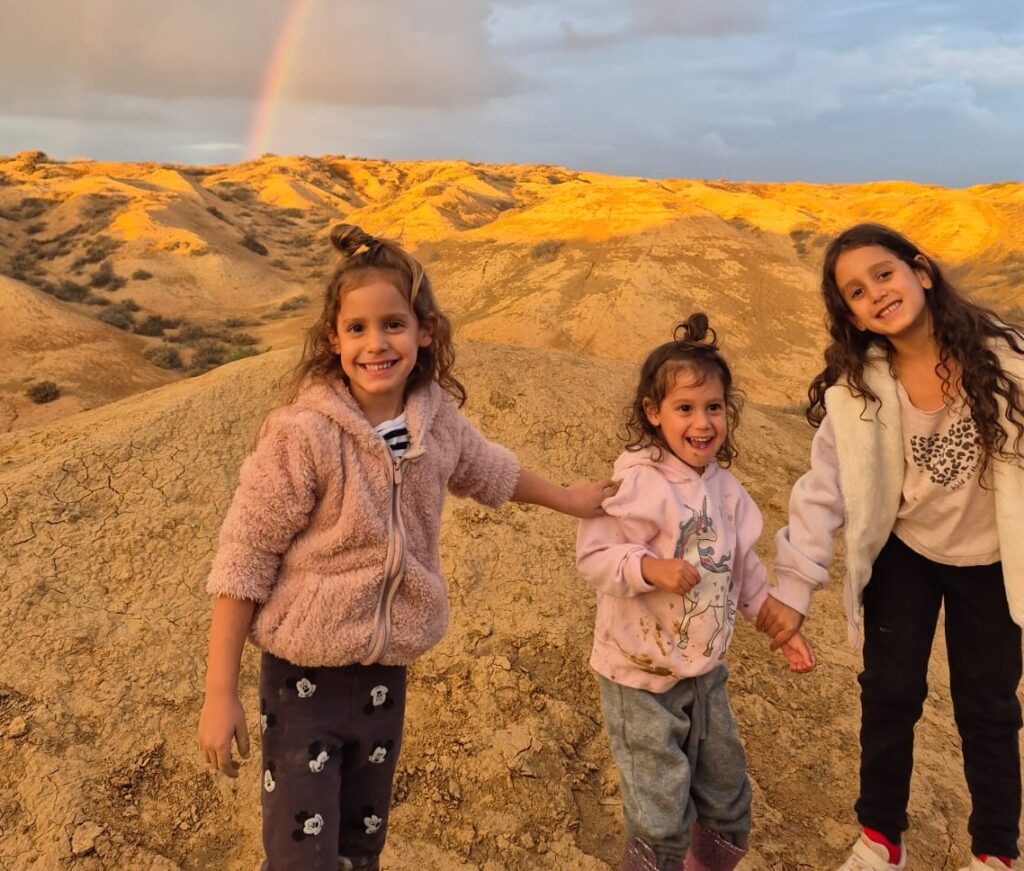
“We don’t survive because we are strong. We survive because we stay together.” That’s what Omer Rafaeli wrote just days after Israelis suffered the most severe bombardment they’d seen in nearly a year. As rockets fell, he shepherded his young daughters — ages 6, 4, and 3 — to safety and posted messages on social media expressing his fears and his hopes for the future.
For Rafaeli, 37, resilience isn’t measured by one’s ability to overcome profound challenges but how one adapts when they arise. In this reflection, he walks us through the first few days of the current Israel-Iran war and how one JDC program has helped him and his community move forward.
I was taking my daughters to pick strawberries when a siren pierced the air — that’s when we knew that rockets were being fired from Iran.
I’ve lived through rocket strikes before. It feels like the end of the world. Everything gets blown to pieces. Four years ago, a rocket from Gaza fell right near me, and then last June, I was in Be’er Sheva when a rocket landed close by again. In both cases, my very bones shook.
I’m a grown man. Imagine what it was like for my daughters that Saturday. My middle one, 4, is sensitive. She started crying and panicking. My littlest one, 3, was calmer — she’s only ever known war. Though I was scared, too, I smiled and told my girls that everything would be OK. And then we went to the shelter.
This was on Purim, the day when Jews celebrate our triumph over the evil Haman. Between each siren, we left the shelter and tried celebrating. My girls even dressed in costumes. Then, when the alarm went off once more, we again fled to safety.
In the middle of the barrage, I drafted this social media post. I needed to convey my real-time feelings about my community and Jews everywhere:
An hour ago, a state of emergency is declared and the siren goes off.
We smile at our daughters.
“Look, it’s like the teacher calling everyone to circle time.”
And we simply walk. The siren is not the enemy. It’s a guardian.
It calls us into the safe room when someone wants to harm us, and we respond with responsibility, not panic.
Rockets. Drones. Antisemitism.
This is our current reality.
Someone wise once said:
“You can’t stop the waves, but you can learn to surf.”
We don’t control the waves.
We control how we stand in front of them.
That’s the difference between fear that controls you and leadership that steadies a room.
Resilience is not the absence of waves.
It’s the way you explain a difficult situation to your children.
It’s your tone when your heart is racing.
It’s the smile that teaches them: We know how to handle this.
Mind.
Body.
Community.
Meaning.
Action.
That’s how resilience is built.
At home.
In business.
In a nation.
Am Israel Chai.
For us in Israel now, an alarm is never just an alarm. It takes us back to October 7, 2023. That was the horrific day when terrorists stormed our kibbutz and I had to shield my young daughters from them. We were then evacuated to Eilat, cut off from our homes and everything familiar.
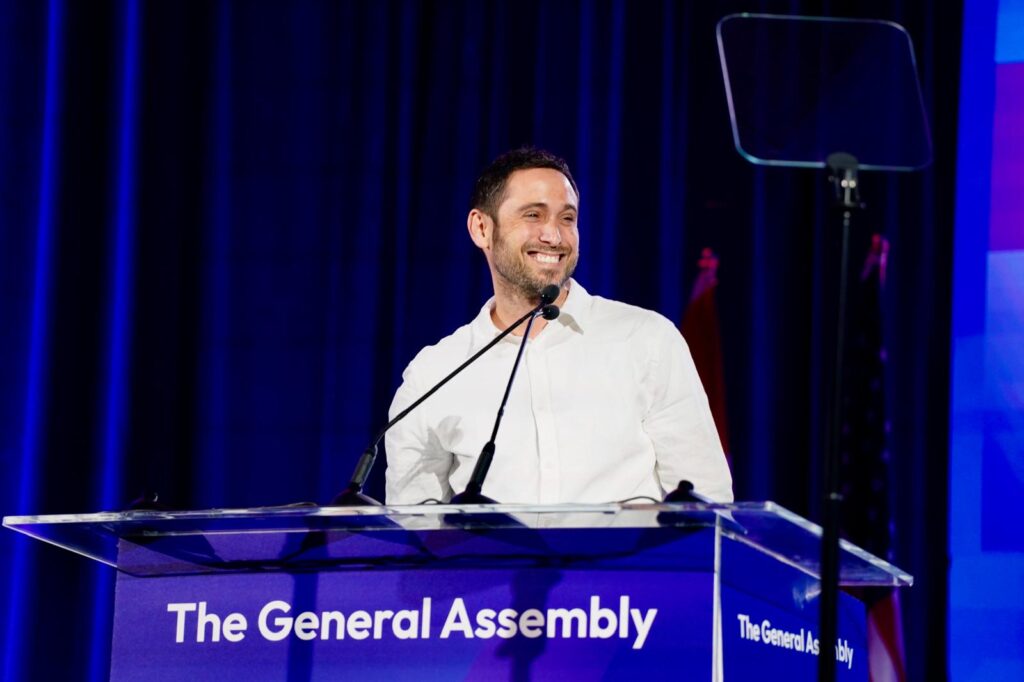
When I returned to Gvulot, I couldn’t go back to my teaching career. I’d lost too many students I loved so much. So, in the months after October 7, I just sat on my couch, traumatized — ashamed that I survived and too bereft to teach.
Then I received a message from JDC — like an angel extending its hand. They told me about a program they’d developed called Back on Track.
Through Back on Track, I turned my passion — physical fitness — into my life’s work. That’s how Balance Gvulot was born, founded in memory of Yotam Haim z”l, a resident of Kibbutz Gvulot who was taken hostage and then died in Gaza.
Yotam dealt with mental health issues, but he used physical activity to treat himself. In that spirit, Balance Gvulot is a fitness center that helps build resilience through physical activity.
I felt called to do this, and when I opened the studio, I saw how one person can help an entire community and how that community goes on to help each other. It’s a superpower. Today, everyone here is working out, from children as young as 6 to adults in their late 90s.
When you are responsible for somebody else, you forget your own fear and pain. And when you’re in a state of action, you can move forward. The first night of the most recent attacks, I understood I was being called again to help.
That’s why, the night of the first rocket attacks, I didn’t close Balance Gvulot — I adjusted its routine to the exceptional circumstances. I texted my community and said, “Guys, tonight we’re working out. It’s going to be via Zoom. We’re going to do it separately, but together.”
After the class, I drafted another post:
Tonight, we didn’t train in the studio. We trained on Zoom.
For our safety. For our lives.
And still people showed up.
In times of emergency, people don’t just want to move — they want to move together.
Even if “together” means screens.
Living rooms.
Shelters.
Muted microphones and pixelated squares.
In a crisis, the body needs movement.
It regulates the nervous system. It lowers stress hormones. It restores a sense of agency.
But what people are really craving
is not just physical release. It’s connection.
Tonight, every squat was a statement: We are still here.
Every push-up said: We refuse to collapse inward.
Every shared countdown reminded us: Even if we are physically apart we are not alone.
When gathering is forbidden for our protection, community doesn’t disappear.
It adapts. Movement on Zoom may not replace the energy of the studio.
But it protects something deeper: our sense of belonging.
In crisis, isolation is super dangerous.
Togetherness is medicine.
Mind.
Body.
Community.
Meaning.
Action.
Tonight, we practiced all five.
Not in the same room, but in the same spirit.
And sometimes, that is exactly what resilience looks like.
Am Israel Chai.
I believe that physical activity can save us. When we move together, we move forward as a community — through our pain, into a better future. That night, on Zoom, I saw 30 people working out with their spouses and their pets. That’s how we’re healing here in Gvulot — one step at a time, through movement.
We Israelis have experienced many crises. That’s why I think we offer something precious to Jews experiencing rising global antisemitism and other profound challenges — we can give them our hard-earned strength and wisdom.
When we move together, we move forward as a community — through our pain, into a better future.
In my own small way, that’s what I was trying to do with my posts and what I continue to do through my studio.
Of course, being in Israel these last three years hasn’t been easy. People are still struggling with mental health issues. Many are unemployed. But more and more of my neighbors in Gvulot are healing — here at my studio, they use their bodies, strengthen their minds, and trust in Hashem.
We have JDC to thank for that. JDC’s mission is to help Jews around the world, and that’s exactly what my purpose is today, too. Each time you give to JDC, even if your generosity saves just one individual, that person can transform an entire community. I’m proof of that.
For those who support JDC, thank you. You didn’t just enable me to open a fitness center. You helped me rebuild spirits, and in the process, save myself, too.
Omer Rafaeli, 37, is a community resilience builder in Gvulot, Israel.
Sign Up for JDC Voices Stories
Share

Share
Partners


Give With Confidence


