

What We Learn When the Ground Moves
This young Jewish changemaker reflects on her year as the 2025 JDC Entwine Ralph I. Goldman (RIG) Fellow.
By Eryn Sarkin - JDC Entwine Ralph I. Goldman (RIG) Fellow, 2025 | January 29, 2026
“If this year has taught me anything,” Eryn Sarkin writes, “It’s that we each have a role in shaping the world that comes next.” As the 2025 Ralph I. Goldman (RIG) Fellow in Global Jewish Leadership, Sarkin traveled the globe, engaging firsthand with JDC’s humanitarian work. During that time, she learned that leadership isn’t about knowing all the answers up front — it’s about being curious enough to listen, ask the right questions, and take effective action.
In this reflection, Sarkin tells the story of her year as a RIG Fellow — and the lessons she’ll carry forward for years to come.

There are years in life that feel like a widening, and others that feel like a deepening. My Fellowship year was both: a widening of the world around me and a deepening of the world within me.
When I began the Ralph I. Goldman Fellowship, I imagined structure: a sequence of placements, a clear rhythm of learning, a steady progression from one context to the next. What unfolded instead was something more dynamic, more unpredictable, and ultimately far more transformative. The year became a lesson not only in the work itself, but in how to work, how to lead without forcing clarity onto situations that resist simplification.
It was a triumphant year, not because everything went according to plan, but because I learned how to navigate the moments when nothing did.
The first shift came quietly, as I realized that global work demands a kind of attention that is both tender and rigorous. It is easy to think of listening as a passive act. But the kind of listening required in communities, be it rural or urban, prosperous or struggling, Jewish or non-Jewish, is something altogether different.
It requires entering a conversation without the armor of preconceived solutions. It requires noticing the way someone pauses, the way they describe a challenge, the quiet signals of exhaustion or resilience. It demands setting aside one’s presumed expertise long enough to genuinely hear what is being said and what is being asked.
In those moments in clinics, in fields, in community centers, in cramped offices, sometimes on the side of a road, I realized that attention is the foundation upon which all real leadership rests. Not the attention that scans for confirmation of what you already believe, but the attention that allows you to be changed by what you encounter. It is here that trust begins, where dignity enters the conversation, where people allow you to understand not just what they need, but how they understand their own lives.
That level of attentiveness became the guide for everything I did. It sharpened my perception, softened my edges, and taught me patience in a way no leadership training ever had.
The more closely I paid attention, the more I began to understand impact differently. So much of our field celebrates outcomes — the moment the wheelchair is delivered, the first harvest of honey, the community event that goes well, the leadership program that runs smoothly. These moments matter deeply; they offer glimpses of what is possible.
But the true work occurs in the architecture beneath those moments, in the structures that allow dignity to be sustained, not just momentarily granted.
I found myself increasingly drawn to the questions that live behind the scenes: What assumptions shape this intervention? Who holds decision-making power? Where are the gaps between intention and impact? What needs to shift for this to be not just helpful, but lasting?
This shift in my thinking, from episodes to systems, changed how I understood my role. I realized that leadership is not simply about ensuring that programs run well; it is about designing frameworks that align with people’s lived realities, that reflect their knowledge, that respect their autonomy, and that do not disappear the moment a fellowship year ends.
It is easy to overlook the quiet decisions that shape these systems, the way a grant process is structured, the way feedback is gathered, the way success is measured, but these invisible elements often determine whether an initiative strengthens a community or simply passes through it.
Learning to see this architecture, and to contribute to it thoughtfully, became one of the most meaningful accomplishments of my year.
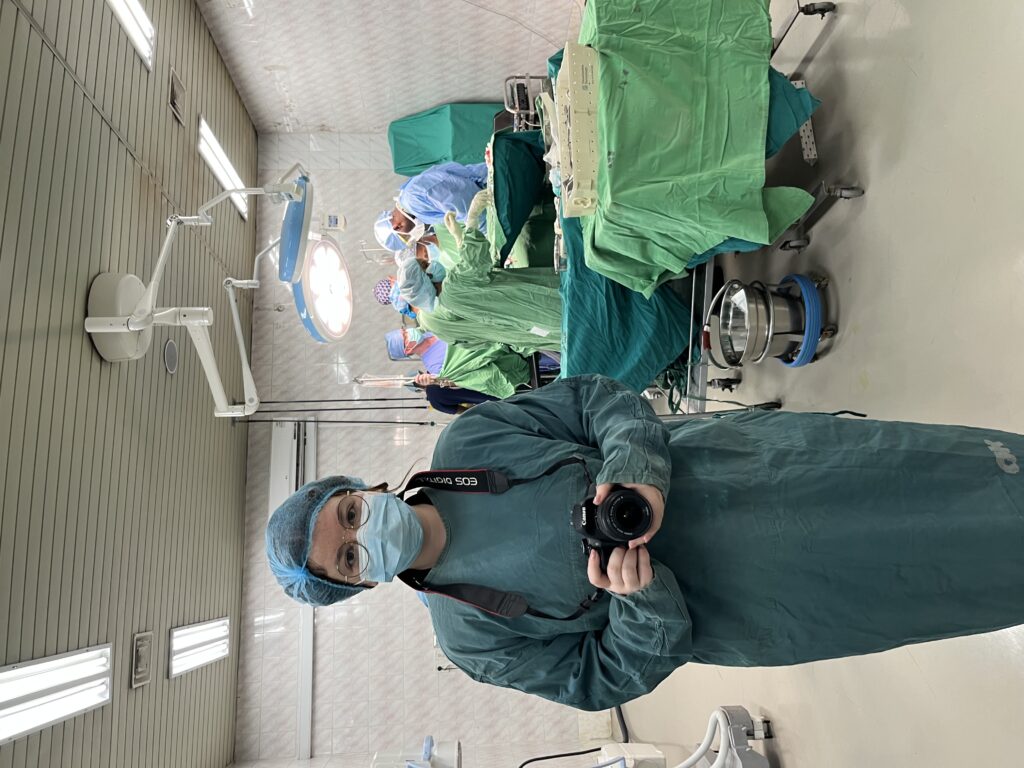
Much of my work took place in nonsectarian settings, which allowed me to think more deeply about what Jewish responsibility means beyond its most familiar boundaries. One of the clearest examples of this came during my placement in Ethiopia, where I supported JDC’s Spine Program and its annual “Dr. Ted Mission.”
Ethiopia has one of the highest rates of spinal deformities in the world, and specialized care is scarce. JDC responds not only by providing more than 50 free surgeries during the mission week, but by strengthening the system around them: identifying patients year-round, supporting families through complex care journeys, and training over forty local surgeons, nurses, and physiotherapists so that each year more of the work is done locally, sustainably, and with dignity.
My role sat between storytelling and systems support — documenting surgeries, interviewing families, gathering monitoring and evaluation data, and witnessing how the program creates not just medical outcomes but long-term capacity.
What struck me most was the philosophy underneath it. This wasn’t charity but partnership. I watched visiting surgeons pause mid-procedure to teach; I watched local doctors absorb skills that will outlast any mission; I watched a boy receive his first wheelchair and seem, instantly, less defined by limitation.
This work grounded my understanding of JDC’s mission: that Jewish responsibility is not confined by identity lines. It taught me that leadership, at its most honest, is the willingness to stand with people whose lives may look nothing like ours and to act as though their dignity is inseparable from our own.
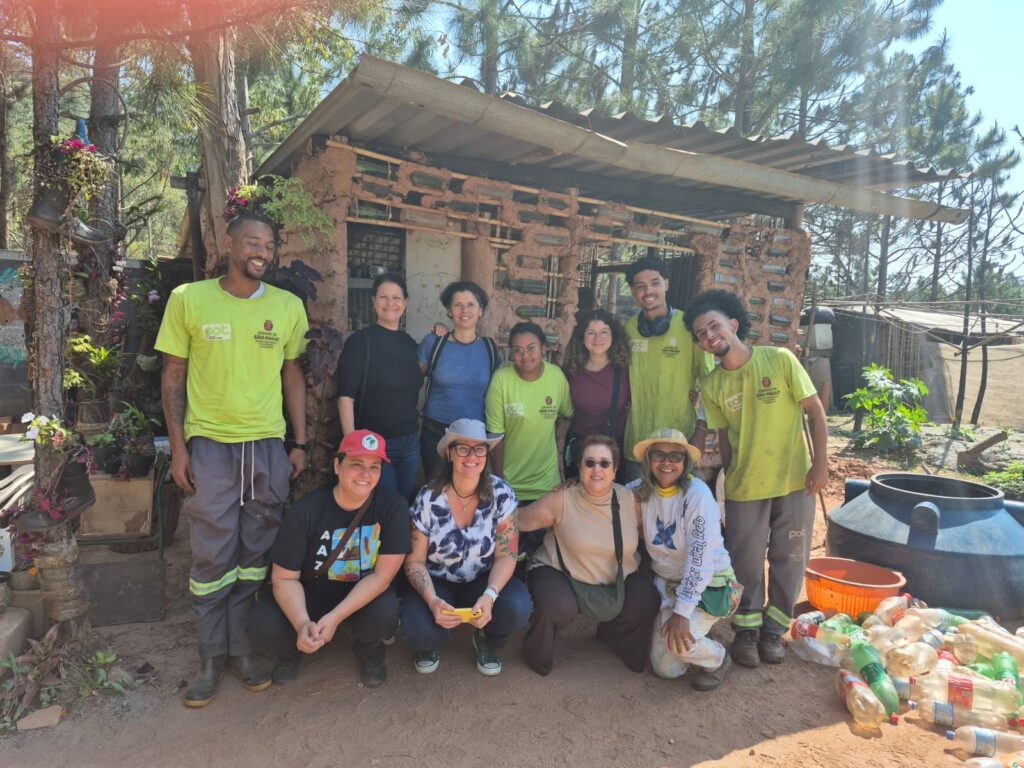
It became clear to me, not through theory but through practice, that nonsectarian work does not pull us away from Jewish values but in fact, it returns us to them. In spaces where people’s identities did not mirror my own, I saw Jewish ethics expressed with remarkable clarity: in the surgeon who chose to train local colleagues because partnership offers dignity where charity does not; in the farmers who spoke of soil as a living teacher; in the young volunteers who discovered that service can be a form of belonging; in the community leaders who quietly improved lives without expecting recognition.
These moments illuminated what I have always believed but had never articulated with such conviction — that our tradition is at its strongest when it is at its most expansive. When it sees the world not as a threat but as a shared landscape of responsibility. When it responds to suffering not with fear, but with presence.
Nonsectarian work did not dilute my sense of Jewish leadership; it clarified the integrity at its core.
As the year unfolded, uncertainty became a constant companion. This demanded a different form of resilience — a resilience rooted in clarity of purpose rather than confidence in any particular plan.
The leaders who influenced me most were those who embodied this kind of steadiness. They did not lead with bravado or certainty; they led with coherence. They were unafraid to question assumptions, unbothered by the unknown. They reminded me that leadership is rarely about being the most confident voice in the room. Often, it is about being the most grounded one.
As I reflect on the Fellowship now, I am struck by how much it transformed my sense of what leadership demands. It requires humility; the willingness to be taught by the world rather than interpret it prematurely. It requires precision; the ability to design systems that honor dignity rather than undermine it. It requires relational intelligence; the capacity to build trust and navigate complexity with honesty. It requires imagination; the courage to envision what does not yet exist. And it requires consistency; the quiet persistence to build frameworks that outlast one’s presence.
What makes this year triumphant, for me, is not only that I completed a series of incredibly meaningful placements or traveled across six continents, but that I emerged with a deeper understanding of myself as a leader and a clearer sense of the work I want to do in the world.
What makes this year triumphant for me is that I emerged with a deeper understanding of myself as a leader.
I now understand that in a world that is continually shifting, leadership is not the search for steady ground. It is the capacity to move with intention on unsteady ground; to remain principled, perceptive, and human even when the landscape refuses to stay still.
If there is a single thread that runs through this year, it is that leadership is not measured by certainty, scale, or volume. It is measured by attentiveness, alignment, and integrity — by the quiet decisions that shape whether our work strengthens people or merely administers to them.
The ground will continue to move. It always does. But perhaps leadership is realizing that the goal is not to find solid, unmoving earth, but to learn how to move with intention and integrity on the shifting terrain beneath us.
The RIG Fellowship gave me the clarity to stay human, perceptive, and principled in the midst of a world that is continuously remaking itself.
And that, I suspect, is the kind of leadership the future will need most.
If this year has taught me anything, it is that we each have a role in shaping the world that comes next. Not through grand gestures, but through the discipline of showing up with presence and refusing to withdraw from a world that needs us engaged.
We need to stand where it’s difficult, to care where it’s costly, and to lead where the ground is still moving.
I’m grateful for this incredible opportunity to engage with JDC’s incredible work and the people who are steadying a moving ground.
Thank you not only for sending me into a world in motion, but for trusting me to learn how to move with it.
Eryn Sarkin was the 2025 Ralph I. Goldman (RIG) Fellow in Global Jewish Leadership. Originally from South Africa and raised in Portugal, Sarkin’s diverse career includes work in policy analysis, human rights advocacy, and education, with experience in multiple countries, including the United States, Indonesia, Belgium, and Portugal. Passionate about global Jewish responsibility, Sarkin combines her love for creativity, education, and strategic communication to develop impactful programs and foster awareness on global platforms. She holds a Master’s degree in Religion, Culture, and Peace Studies from the United Nations University for Peace, where she attended on full academic scholarship, and has worked extensively in both the nonprofit and academic sectors.
Sign Up for JDC Voices Stories
Share


Share
Partners

Give With Confidence


