

World Bee Day 2026: Building Resilience, Community, and Livelihoods Through Ubuntu
Bees don't just produce honey — through one transformative JDC program, they also produce livelihoods for women in South Africa.
By The JDC Team | April 27, 2026
Bees are crucial for sustaining human food systems and global biodiversity. But that’s not all they do. For participants of the Ubuntu Beekeeping Project — the JDC Imagine More initiative with local Jewish community partners and the NGO Ripples for Change that trains South African women in beekeeping and how to launch and manage their own honey production businesses — these insects are key to their economic empowerment.
Ubuntu participants acquire the skills and resources to harvest honey, produce sellable products — including kosher honey sold to the Jewish community —and support themselves, their families, and each other. To mark World Bee Day, we sat down with Ubuntu program mentor Pertunia Nkalanga, 39, and participant Sibongile Mhlangu, 42, to hear directly how the initiative has changed their lives.
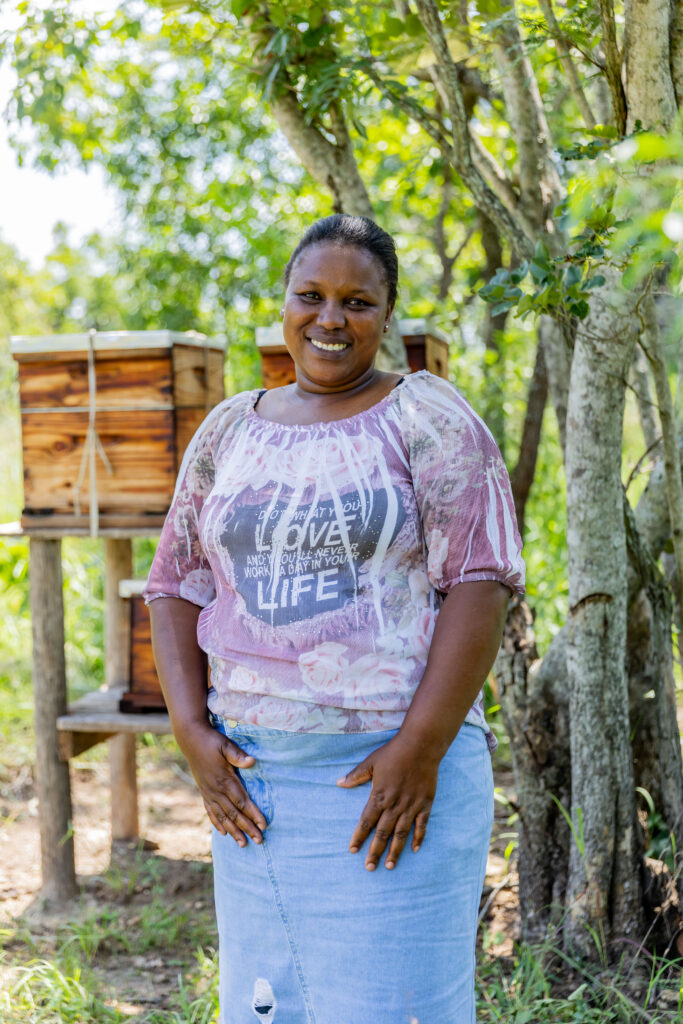
Let’s start by having you tell us about yourself and your community.
Sibongile Mhlangu: I’m a proud mother of three. I live in Kanyamazane, Entokozweni, a community where there aren’t many employment opportunities. That’s why I was excited about beekeeping — from the very moment Pertunia told me about Ubuntu, I knew I’d have fun working with bees.
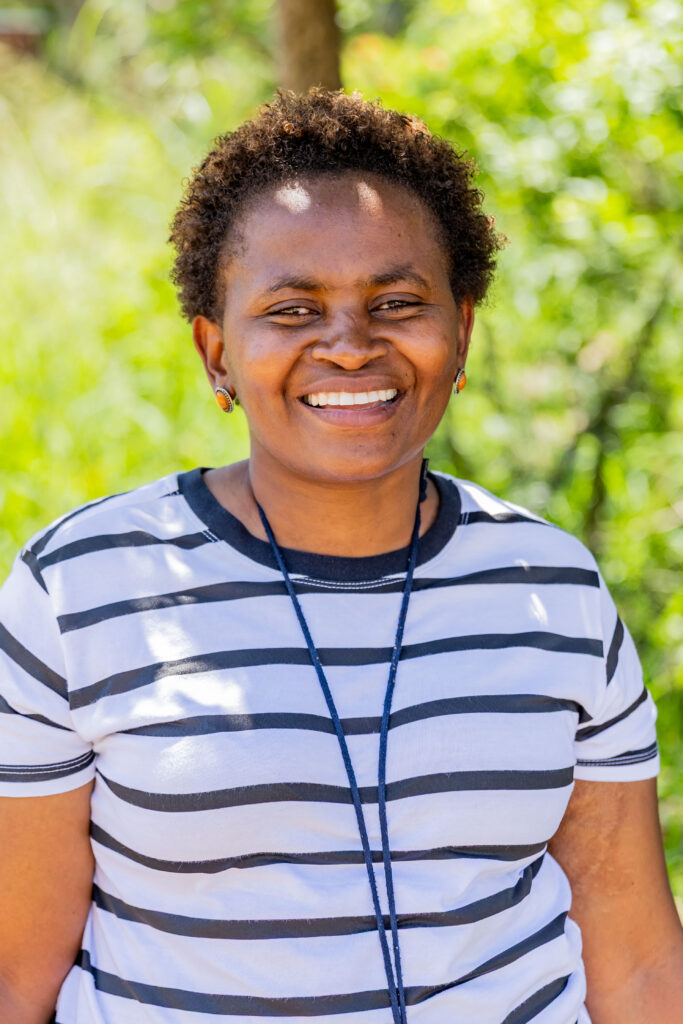
Pertunia Nkalanga: I was born in Mangweni Village in Limpopo, South Africa, the youngest of seven siblings, and spent the first 14 years of my life there. I studied public administration in college and then completed a course to become a nature tour guide. That’s what sparked my love for being outdoors — and for bees.
Today, I’m the mother of four children and a beekeeping mentor for 20 women from various townships around the area here in Kanyamazane, including the wonderful Sibongile.The communities around here face many challenges, including poverty and high crime rates. In this context, Ubuntu is a source of uplift and empowerment for these women.
Pertunia, what inspired you to become a mentor?
PN: I used to think giving back meant that you help only one person. If I saw a child without shoes, for instance, I’d think, well, I should buy him shoes.
Ubuntu expanded my concept of “giving back.” When you become a mentor, you’re helping people at scale — that one woman you take under your wing goes on to lift up so many others. In the process, they grow in confidence, too. It’s inspiring.
What’s the mission of Ubuntu, in your own words?
SM: Ubuntu is about so much more than the individual. It’s about togetherness. You commit yourself to the group and aim to create opportunities for yourself and others. Along the way, you get to know like-minded women facing similar challenges and create more effective solutions than you ever would’ve alone. It often makes us feel better just to talk about our problems and get guidance from each other. That’s why Ubuntu isn’t just about beekeeping — it’s about building relationships.
PN: I couldn’t agree more.The mission goes back to the word ubuntu, Xhosa for, “I am because we are.” We depend on each other. And as I mentor these women, I see that this program has also changed me in ways I couldn’t have even imagined when I began.
What skills and capabilities do you learn through the program?
SM: I’ve learned all about beekeeping, of course, like what food bees enjoy, how they smell water, how they collect nectar from flowering plants, and how to guide bees to the flowers to increase the chances of honey production.
This program has also taught me how to become an entrepreneur. With the honey I produce, I can make candles, lip balm, wood polish, and so much more. That’s all extra income.
Above all, I’ve learned how to work on a team, to collaborate.
PN: In addition to the candles and other wax products, we’re developing our own repellent, wood polish, and leather conditioner. The women also learn about managing their hives, as well as honey extraction and bottling, all in line with latest food safety regulations. They come away with all the knowledge and resources they need to create a thriving career.
Sibongile, how has Pertunia impacted your life personally and professionally?
SM: I wish every woman had a mentor like Pertunia. She’s a pro at motivating us and showing us how to farm bees and vegetables. She keeps me busy learning new skills, and I find her easy to confide in — she’s very open. She’s also patient; when you ask her questions, she never makes you feel like she’s repeating herself. She goes at your pace. You can ask her anything.
PN: For Sibongile and every other woman in the program,I see firsthand the impact that this program has on their day-to-day lives. They learn how to do things for themselves and not wait for someone else to help them. A lot of the things we create — candles, lip balm, etc. — don’t actually require many resources. But they do require innovation and creativity, and I see my mentees strengthening these skills through Ubuntu.
You mentioned earlier that many women in your community face challenges. How would you say that the Ubuntu program helps these women overcome these hardships?
SM: No mother wants their children to go to bed hungry. But that’s often the case for women in my community. Ubuntu helps us in ways that other projects don’t because it empowers us to work for ourselves, and that’s so much better than sitting at home and waiting for assistance. We gain strength from lifting ourselves up.
In the end, though, it’s not even about the income; it’s about working together as a community and supporting each other.

What’s the most enjoyable and rewarding thing about beekeeping for you?
SM: Harvesting is definitely my favorite part because I love honey and also appreciate that, after months and months of maintenance, this is the product of all our hard work. And then, of course, we get to sell the honey for money.
PN: Beekeeping doesn’t even feel like a job to me. I don’t have to go to an office! I can just be outside, manage my own time, and work at my own pace. What I love most is being out in nature.
Pertunia, what’s most rewarding about being a mentor?
PN: The most enjoyable part is seeing the women smile after they’ve harvested their first batch of honey. Seeing the hope in their eyes, them telling me that this program is going to change their lives — that’s the biggest thing for me.
But as we’ve said before, Ubuntu isn’t just about honey. It’s about the relationships we build along the way. I find it rewarding when the women sit down, share their problems, and come up with collective solutions. That is the program’s true strength.
I can say that Ubuntu has transformed my life. After receiving all the necessary equipment and business-skills training, I felt like I was taking control of my future. Here in my community and surrounding townships, the women need that feeling so much.
What do you want to say to those who donate to support the Ubuntu Beekeeping Program? What role do they play?
SM: Unfortunately, the challenges we face aren’t going to end today. That’s why I encourage anyone and everyone to support Ubuntu, because the more they give, the more women like me feel empowered to support ourselves and our families. With your generosity, we’re learning business skills and creating sustainable income pathways — and we pass those skills forward. Each woman changes the lives of many.
PN: I call our supporterssotho, Swati for “star.” You are the shining stars in the darkness we often find ourselves in.Maybe you’ve never been to South Africa and met the women on the ground. But I’m here to tell you how grateful we all are. Even if you lift up one woman, she goes on to help 20, 30, maybe many more people. I thank them, because even a small gift has a profound effect on us.
I want to thank JDC, too. If Ubuntu means, “I am because we are,” then these women “are” because JDC exists. They provide us the resources and expertise, and they are the ground on which we stand, our foundation.
We hope that JDC and their supporters will continue to be our shining stars — to light the way for these incredible women.
Pertunia Nkalanga, 39, is a program mentor for the JDC-supported Ubuntu Beekeeping Project in South Africa.
Sibongile Mhlangu, 42, is a participant of the JDC-supported Ubuntu Beekeeping Project in South Africa.
Sign Up for JDC Voices Stories
Share


Share
Partners


Give With Confidence


