

Despite Rising Antisemitism, This Dutch Jewish Leader is Unbowed
In a post-October 7 world, Achira Beck is the kind of bold Jewish changemaker we need — and JDC is there to support him.
By Achira Beck - Co-President, Dutch Union of Jewish Students (DUJS) | June 1, 2026
Antisemitism is rising across Europe, especially in Amsterdam, where Achira Beck — co-president of the Dutch Union of Jewish Students (DUJS) — has experienced it firsthand. In his role at DUJS, Beck, 28, helps lead the charge against the tide of hate sweeping his city. In this reflection, he paints a detailed picture of what antisemitism looks like today and how JDC empowers him and other young Jewish leaders to deal with its consequences.
I’m lucky I wasn’t in Amsterdam on November 7, 2024. Angry crowds were hunting down Jews in the streets. I saw images and videos afterwards, which was traumatic in itself. These center-city streets were the same ones I grew up on — the same ones, too, where Anne Frank hid. Watching the mayhem online, I was reminded of photos taken right before the Holocaust, before World War II, when the worst was yet to come.
I found myself thinking, “Is Amsterdam really my home?” I’d always been a proud son of the city, but now I had my doubts.
November 7 is now known as the “Maccabi riots,” when mobs attacked Israeli soccer fans and Dutch Jews. Though that day was terrible, antisemitism had been building up long before that autumn. This was just its most extreme manifestation in recent memory.
That steady and frightening rise of antisemitism is why I’ve made it my mission to give young Jews the space to build collective strength right here in Amsterdam.
To some, I don’t look the part of “Jewish leader.” In fact, with a father from Suriname, I don’t even fit their idea of what a typical Jew looks like, especially when I trade my kippah for a baseball cap. In recent years, I’ve felt that that’s a blessing. I want to walk the streets without people whispering behind my back or shooting me mean looks. I tell myself, “It’s been a stressful day. I’ll just go undercover.”
Though practical, being an undercover Jew is not a sustainable or desirable solution to rising antisemitism. Most of the time, I don’t care what others think — I don my kippah and walk around the city, proud and defiant, and I try to pass on that feeling to other Jews my age.
I grew up with a strong sense of Jewish community and the conviction that I had to give back, not only because it’s a duty, but a joy.
I was raised in a Modern Orthodox household in the center of Amsterdam, steeped in Jewish tradition and history. My mom worked for the Jewish community as a mashgiach, supervising kosher food production. The Portuguese Synagogue, which I believe is the crown jewel of Amsterdam, is right next to my childhood home, and my roots go back to Portugal on my father’s side. I’ve always found it meaningful to attend services there.
I wanted to create Jewish experiences that were just as soulful, but for my generation — that’s how my brother, some friends, and I started organizing Shabbat meals during the COVID-19 pandemic.
After everything began opening up again, the dinners died out, but someone from a Jewish student union said, “Why don’t you make these Shabbat gatherings official?”
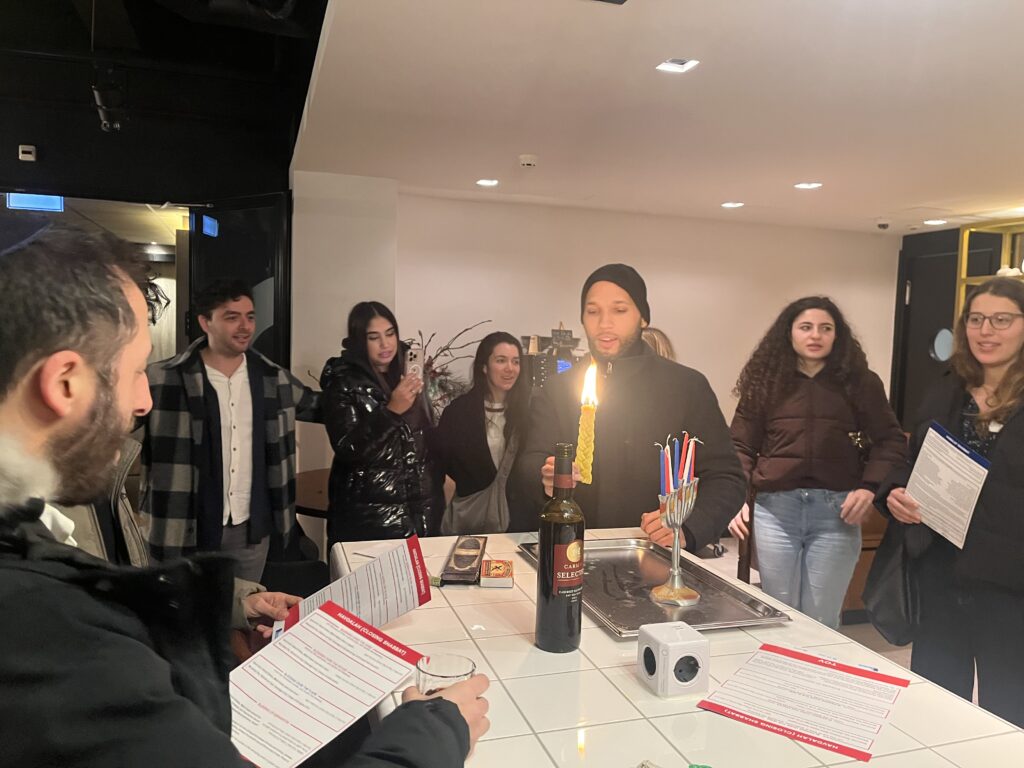
I thought, “Why not? I’ll do it.” That’s how I helped found the Dutch Union of Jewish Students (DUJS).
It soon became clear how badly DUJS was needed. After students graduate from our Jewish high school, there aren’t many spaces where they can interact with other Jews. And if you’re from a small town, it can feel scary and lonely just to exist — you may well be the only Jew around.
Our focus at DUJS is to give these Jews, ages 18 to 35, a place to come together, embrace their traditions, and discover their collective strength. Sometimes this might be as casual as grabbing a drink and talking about what it means to be Jewish today or as serious as a seminar on Jewish history. Everyone can find something that interests them.
October 7 changed everything about our work. We heard stories about students having trouble with their professors and classmates. They no longer felt safe on campus or during lectures, and they had become more isolated from their friend groups. We knew this was too big a problem to ignore.
We began to work on multiple fronts, starting from the top down, reaching out to university administrators about the situation. Some were friendly and open to communicating with us; others ignored us.
We also worked from the ground up. We felt it was more important than ever to set up Jewish student associations on campuses across the country. In some Dutch cities, there were only a handful of Jewish people; in others, we easily found young Jews who could create a formal organization.
I try to forget about what happened next. We got an article published in our school newspaper, which was then distributed to other campuses. Some copies were defaced with the words “Zionist scum,” and antisemitic images got sent through group chats. DUJS isn’t even explicitly pro-Israel. It felt clear we were being attacked simply because we’re Jews.
October 7 changed everything about our work — Jewish students no longer felt safe on campus.
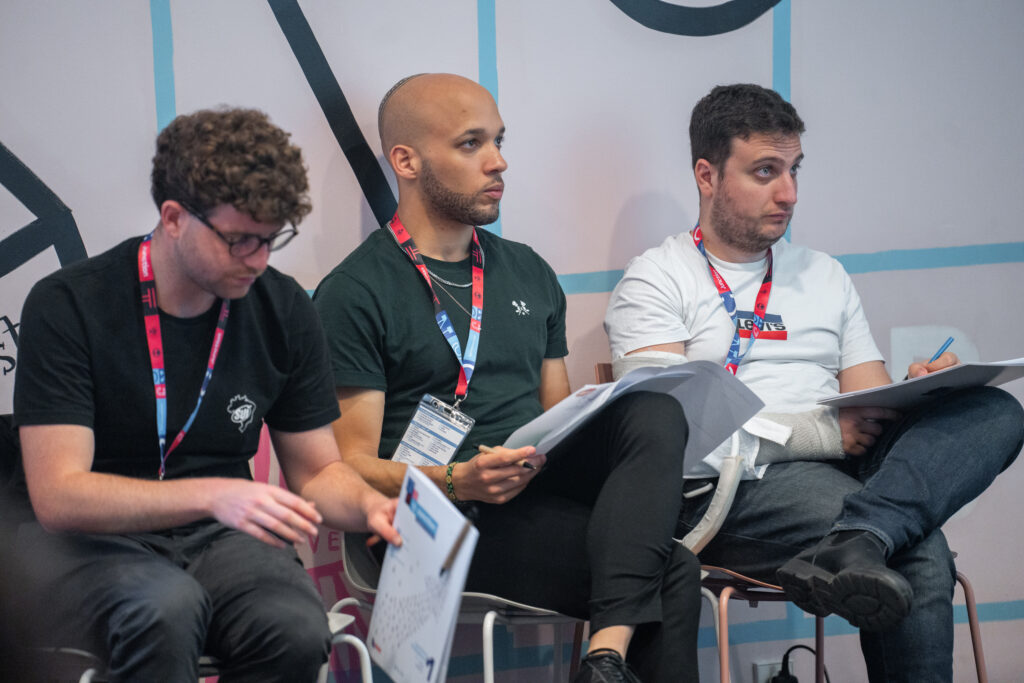
This could’ve broken me, but I was buoyed by the support of JDC’s Junction program — the pan-European initiative that empowers young Jews like me to take part in European Jewish life. I’d been attending their events for years, and in a sense, they had already prepared me for October 7 and everything that followed.
Right after the attacks, I attended a Junction Multipliers event. You could feel the grief in the air. Everybody was numb and tense. But then the JDC professional leading the event gave us a moment to share our feelings. I really needed that.
In everyday life, there are many things you don’t get the chance to think about. You don’t always ask yourself, “What are my values? Where am I headed?” But Junction — along with JDC more fully — asks you the most important questions, connecting you with Jewish changemakers and organizations committed to the same goal: strengthening European Jewish life.
As scary as it is right now in the Netherlands, we Jews have faced much worse in our long history. Antisemitism is a scourge, but it’s also an opportunity — a sober reminder that our Jewish community, traditions, and heritage will carry us through.
They’re the only things that ever have.
Achira Beck, 28, is a candidate notary and currently serves as the co-president of the Dutch Union of Jewish Students (DUJS). By volunteering with Jewish youth movements and being active in the Jewish student community, Beck’s goal is to strengthen Jewish life, especially among the younger generation. An Amsterdam native, Beck’s vision is to honor Jewish traditions and to chart a path forward while ensuring his Jewish community remains grounded in its spiritual roots. In his free time, he enjoys writing poetry.
Sign Up for JDC Voices Stories
Share


Share
Partners


Give With Confidence


