

In Ethiopia, Standing Taller with JDC
More than most, Kaleab Tadesse — JDC’s country director for Ethiopia — has lived a life of service. And though he is a role model for so many vulnerable people in his native Ethiopia, it was a difficult journey that led him here.
By Kaleab Tadesse - JDC Country Director, Ethiopia | September 18, 2026
“If you want to be happy for a day,” says Kaleab Tadesse, “go do something fun. But if you want to be happy for a lifetime, serve others.” More than most, Tadesse — JDC’s country director for Ethiopia — has lived a life of service. And though he is a role model for so many vulnerable people in his native Ethiopia, it was a difficult journey that led him here.
Tadesse had few options for treatment when he developed a life-threatening spine disease at a young age. But when he connected to JDC and Dr. Rick Hodes, JDC’s legendary medical director in Addis Ababa, Tadesse, 31, found a new lease on life. In this reflection, Tadesse walks us through his early life story and the groundbreaking work he helps lead in Ethiopia today.
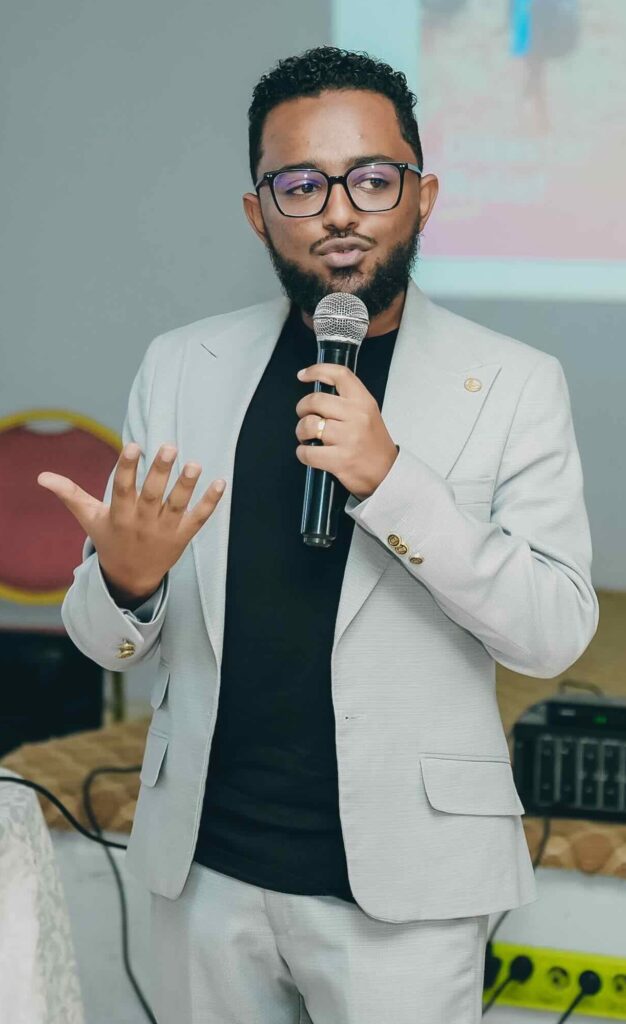
Imagine being told you had a disease for which there was no accessible cure or surgery, a terrible affliction that could potentially paralyze and kill you.
That was me as a teenager. I’d developed a spinal deformity and was subsequently brought to various specialists and hospitals in Ethiopia. The doctors got together, checked my X-rays, looked at my records, and after much discussion finally said, “There’s nothing we can do for you.”
Out of earshot, they told my parents, “Take him home and make him comfortable — let him wait for his inevitable hour to come.”
I was 14.
Ashamed of my condition, I lost all hope. I couldn’t just be a normal kid; I didn’t have any confidence in my body, and I became shy and insecure in public. I couldn’t speak in front of more than three people. While my classmates biked or played sports, I stayed by myself. I’d wear a lot of clothes to cover my deformity. Whenever my teacher asked me to give a presentation, I tried to avoid doing it — I’d just start crying.
I was on borrowed time. Of course, I was still developing. When you have scoliosis, your spine looks like an S, and as you grow, the deformity grows, too. Your body compresses with your spine, crushing your lungs, intestines, everything. You can’t eat much because you have no appetite. If you get pneumonia and have to be hospitalized, you’ll likely die because your lung capacity is so small. Not only that, but the curve pinches the nerves throughout your spinal cord, making you incontinent and unable to walk. All you can do is lie in bed.
That was the future I had to look forward to, a life expectancy of less than 30 years. Then one day a neighbor saw my back and said, “There’s a spine doctor they call the Angel of Ethiopia, and he’s at Mother Teresa’s mission.”
My parents and I went the very next day. When we arrived at the clinic, I saw lots of patients with the same deformity as mine, some in much worse condition. I had a 60-70 degree curve, but some of the patients had a 100- or even close to 200-degree curvature. I was shocked.
Then, a doctor came out and shook my hand. I didn’t have a good image of doctors at that point; I associated them with dejection and despair. But this man was different. He looked me in the eye and asked me my name. I forget what joke he told, but it really made me laugh. He was the first foreigner I’d ever met, and he said something no doctor had told me until then.
“There’s something we can do — we can help you.”
His name was Dr. Rick Hodes and he gave me hope.
It was decided I would go to Ghana for an operation. Dr. Rick helped arrange everything — transportation, accommodation, a passport. I was the first patient to be operated on at the newly opened FOCOS Hospital in Accra. Everything felt uncertain and unfamiliar. Ghana is a 5.5-hour flight from Addis Ababa, and it was my first time flying, nevermind being away from my parents. I had no idea if I’d return to Ethiopia with a healthy, straight spine. All I had were testimonies from other patients. It was a leap of faith.
All it took was seven hours to undo years of damage. The doctors put three titanium rods and sixteen screws in my spine. After I felt well enough to stand, I saw myself in the mirror. I could stand upright, straight. It was like I had been reborn.
After three months, I returned home. My parents and friends waited for me at the airport. Upon seeing me, my mother nearly fainted — her son had not only come back alive, but with a straight spine. It was the joy of the house and the neighborhood.
Now I looked at myself as a different person. My friends who could bike, run, and play sports, I was one of them now. I no longer had to cover myself with layers of clothes; I could go outside just wearing a T-shirt. I returned to school, completed my studies, and was elected class president. I became comfortable speaking at public events. And I didn’t forget those who’d helped me get here.
I carried such gratitude in my heart and I wanted to give back, so I reached out to Dr. Rick and asked if I could volunteer and assist him. I reasoned that, though I didn’t have a lot of money and thus couldn’t contribute financially, I could give something equally precious — my time. I knew a bit of English and could translate. I wanted to do anything and everything I could.
Dr. Rick was kind enough to let me volunteer, and so I did help with translation at his clinic and wrote up patient reports. I also met a lot of other foreigners throughout that time and greatly improved my English. During the summer, I even took a group of patients back to Ghana and translated for them, too.
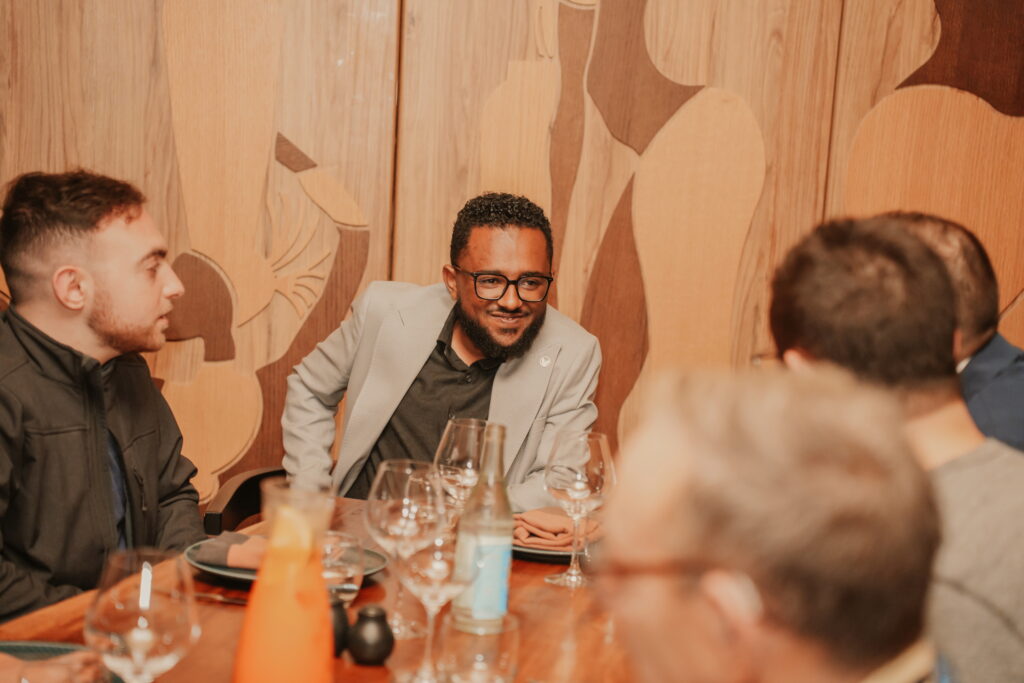
A few years later, I completed my studies and it was then that my life came full circle — I was hired as the medical program coordinator for JDC. I helped manage various teams, sending patients to Ghana, India, or wherever else they could receive adequate healthcare. A few years later, I became JDC’s country director for Ethiopia, the role I have today.
JDC’s work in Ethiopia encompasses three main areas: sustainable agriculture and food security, healthcare access for the most vulnerable, and disaster response.
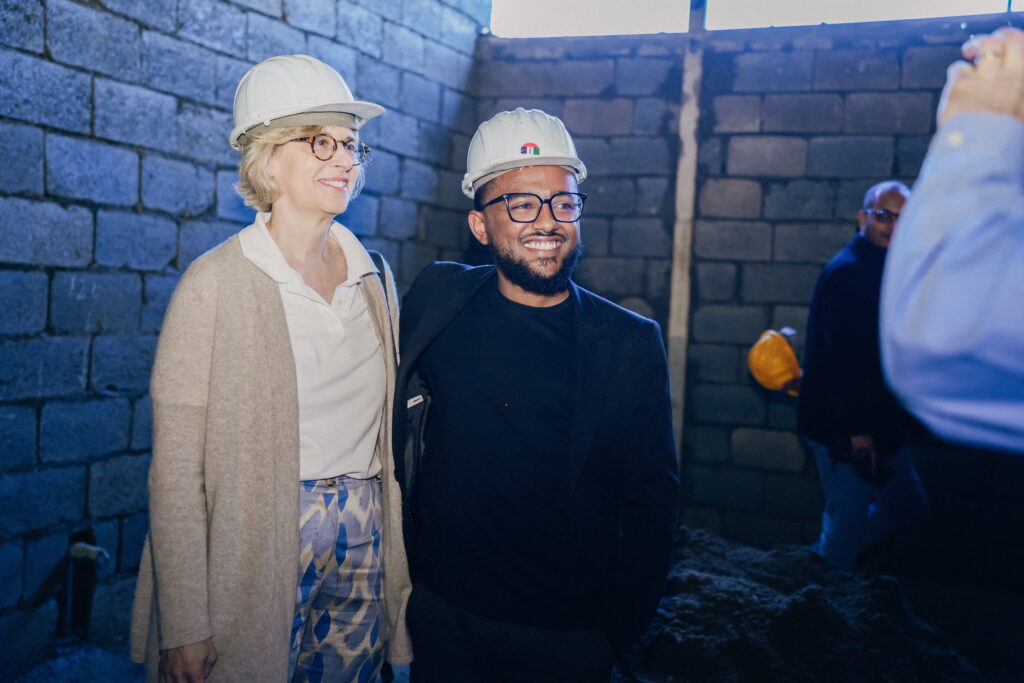
I lead a team of 22 professionals, six of whom are doctors, neurosurgeons, and orthopedic specialists. I also help manage TOV (Tikkun Olam Ventures), JDC’s development assistance project in partnership with the Ethiopian Ministry of Agriculture. TOV leverages Jewish philanthropy and mobilizes Israel’s innovative agricultural technology (AgTech) and expertise to transform the lives of smallholder farmers in developing societies. And I have the special privilege of overseeing the very program that saved my life — JDC’s spine center.
The healthcare needs in Ethiopia are vast. This is a country of more than 138 million people and over 80% of the population lives in rural areas as farmers. They have to walk for days just to get to a basic clinic where health providers often lack the resources to provide care. From there, patients are referred to city health centers that are days away on foot. Even if they make it to the city, the MRI machine often doesn’t work or the CT scan has a two-month waiting period.
All it took was seven hours to undo years of damage — it was like I’d been reborn.
Pregnant mothers die on the way to the hospital, alone — there are no ambulances in the countryside.
JDC aims to close these major health gaps. One of the crown jewels of our work is the recently launched Bring Back Hope Spine Center, the first of its kind in Ethiopia. We used to have to send spine patients like me to Ghana and elsewhere. Now they can stay at home with their families by their side. This cutting-edge facility boasts the latest medical equipment — two modular ORs, a physiotherapy center, a state-of-the-art OPD, and more — where those with deformities are treated by one of six JDC-trained spine surgeons.
This center wouldn’t have been possible without the visionary leadership of JDC Board Member Gary Segal — Bring Back Hope founder and chair — as well as the steadfast partnership of the St. Paul’s Hospital Millennium Medical College (SPHMMC) in Addis Ababa. Thanks to them and others, patients who once suffered from collapsed spines now stand taller, their lives extended and their confidence restored.
This is more than just a job for me: It’s what I was born to do. I wake up at 5.30 a.m. every day, arrive at the office in the early morning, and I’m often the last to leave. When I speak to the patients, I see myself in them, because I was one of them.
We used to import hope from abroad. But at the JDC spine center, we don’t have to do that anymore — we produce hope right here in Ethiopia. Each day, I’m passing that resilience and strength to those who walk in my footsteps.
Kaleab Tadesse, 31, serves as JDC’s country director for Ethiopia, where he provides strategic and operational leadership spanning specialized and primary health care, climate-smart agriculture, women’s economic empowerment, livelihoods, and emergency response. His work brings together government institutions, hospitals, universities, international NGOs, donors, and community partners to turn ambitious ideas into practical, locally rooted programs. He has helped advance the development of Ethiopia’s National Spine Center, expand pathways to complex spine care and specialist training, strengthen community-based health services, and scale agricultural models that improve farmers’ productivity, resilience, and income.
Born and based in Addis Ababa, Tadesse holds bachelor’s degrees in business management and marketing. He is a husband, father of twins, mentor, and active member of his church community.
Sign Up for JDC Voices Stories
Share


Share
Partners


Give With Confidence


