

In the Netherlands, Antisemitism is No Match for this Bold Jewish Leader
After witnessing the impact of antisemitism on her children, Olivera Story knew she had to take action.
By Olivera Story - Board Member, The Jewish Community of Nijmegen; Nijmegen, Netherlands | September 14, 2026
Olivera Story is part of a generation of changemakers who built Jewish life from the ground up after the collapse of socialist systems in the Balkans. When she experienced antisemitism in the wake of the October 7, 2023, Hamas attacks in Israel, Story, 40, turned to the very organization that had first equipped her with the tools to lead — JDC. In this reflection, she retraces the route that brought her from Skopje, North Macedonia, to her current community in the eastern Netherlands, and the numerous ways JDC helps her and so many others overcome the consequences of antisemitism.
My Experience of Antisemitism
One afternoon my daughter came to me and said, “I don’t want to be Jewish anymore.”
She was only 10 years old, and my first thought was, “I need to figure out where this is coming from.” I didn’t need to look far. October 7 had already happened, and a lot of conspiracy theories and negative media narratives among which the children’s news at the Dutch national tv which they watch at the public school daily were circulating. As a result, Jews were cast in a bad light, and some of my daughter’s classmates here in the Netherlands were bullying her about her identity. She concluded, “I don’t want to be a part of this anymore.”
As a trained psychiatrist, I have a psychological interpretation of antisemitism. Whenever there’s chaos in the world, antisemitism rears its ugly head. We call this process “externalization” — people need someone to blame for their anger and despair, and they often scapegoat us Jews.
Unfortunately, we’re in another one of those moments, and I hate that my daughter has been touched, even for an instant, by this poisonous ideology.
Her story isn’t unique. October 7 has transformed our Dutch Jewish community, and in these last two and a half years, there’s been one antisemitic incident after another. High school boys have been physically assaulted because their fathers were serving in the IDF. At our synagogue in Nijmegen, we’ve received threatening letters and strange people have come to our door.
We used to welcome everyone here. Groups from other faiths and organizations often visited us to learn about our traditions and history. We can’t do that anymore. Security is something we now take even more seriously, and our door, sadly, is effectively closed.
Though I know these changes are necessary, I still think it’s a pity. As Jews, we know how to take care of each other and preserve our culture. But I also think we enrich ourselves when we open our arms to the outside world.
The Road from Skopje to Nijmegen
I take the work of building Jewish community incredibly seriously because I myself was once disconnected from my identity. I come from former Yugoslavia, and though that country doesn’t exist anymore, I still carry that proud, resilient Yugoslavian spirit. Though I love my native home, that love is complicated. As a young Jew growing up under socialism, I was unable to express my Jewishness openly.
That’s why when I’m asked about my childhood, the first thing I think of is Szarvas, the JDC-Lauder international summer camp in rural Hungary. At Szarvas, I was surrounded by young Jews from around the globe, and the camp taught me about core Jewish values, like tikkun olam and Jewish mutual responsibility.
It was the one place I could just be Jewish, and I came away with friendships as strong today as they were decades ago. (In fact, I was in Serbia this past March to meet with my “Szarvas family.”)
These relationships are key not only for my personal well-being, but for the future of Jewish life. Szarvas didn’t just teach us about Jewish values; it taught us how to put those values into action. Many pathbreaking leaders were born there. And in my youth, at a time of great transition across Europe, those close-knit friendships were a foundation and a springboard for building Jewish life relevant for the 21st century.
As an adult, that work followed me from Skopje, my home city, to the Netherlands. When I got in touch with the Jewish community in Nijmegen, I thought, despite our differences of language and history: “This feels just like my Jewish community back in former Yugoslavia.” I knew I was safe, accepted, and that I’d finally come home.
My Dutch Jewish Home
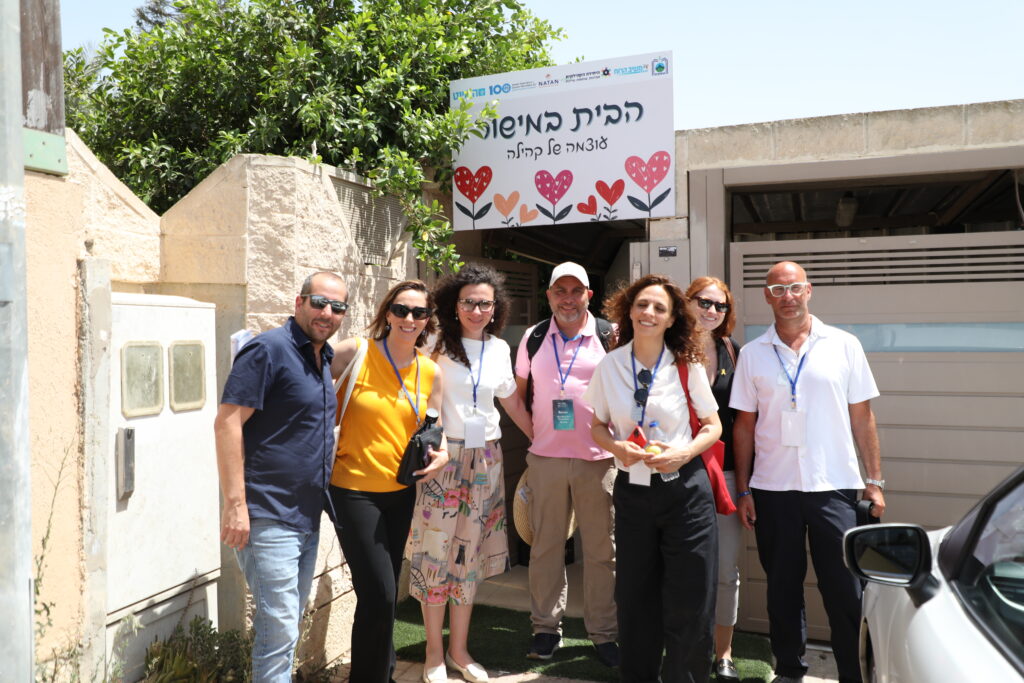
Nijmegen’s Jewish community is hundreds of years old and has a storied past. The parents of Karl Marx got married in the synagogue I attend, and we’ve had lots of other luminaries pass through. The community was nearly annihilated during World War II — only 13 to 20 people survived — but against all odds, they revived the community. Today, though we have 113 official members, more than 300 people come here, and they are mostly Jewish expats and students, including some Israelis.
I’m a mother of three small kids and I’m completing my degree to become a specialist psychiatrist at the university hospital in Nijmegen. In short, I don’t have a lot of time. But given my background, I feel like I need to contribute to local Jewish life.
That’s why I was honored and excited to be elected a Board Member of the Nijmegen Jewish community. In my role, I meet once a week with other Jewish leaders to discuss urgent topics and chart the best path forward for Nijmegen’s Jews. For years now, the two subjects at the forefront of everyone’s mind have been the situation in Israel and rising antisemitism.
Of course, the two are connected. Israel is everywhere these days. It’s in the news and it’s online, it is on the streets. We absorb this steady stream of information and express it as fear for our children’s safety. We all went to bed on October 7, 2023, with severe trauma and haven’t really woken up.
But I didn’t realize until my daughter told me she no longer wanted to be Jewish how deeply our children are being affected by rising antisemitism. They also bear the brunt of this impossible moment, and that raises the stakes of our work even more: What kind of environment can we build for our kids right now? How can we protect them?
Stronger Together
I believe that the best way to overcome life’s most difficult obstacles is through open discussion, whether that’s a one-on-one conversation or a community forum. When we verbalize what we’re feeling and hear other perspectives, we become less isolated and frozen in our fears.
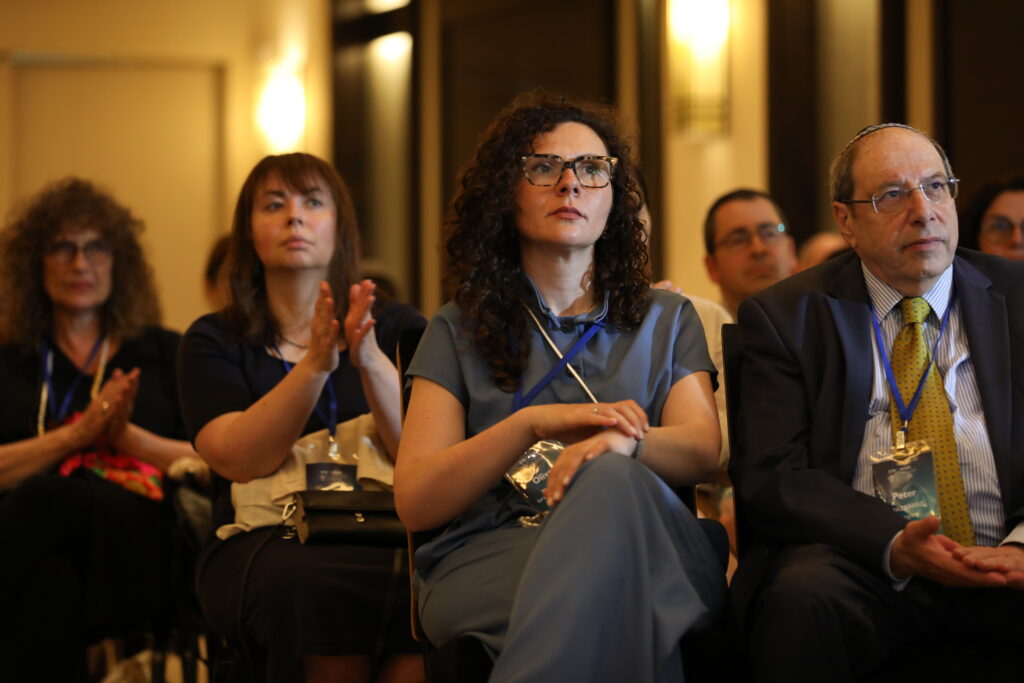
That’s why, in 2024, I joined 60 other European Jewish leaders from 26 countries at JDC’s Stronger Together gathering in Israel. At that time, I admit I felt confused. The negative image that Dutch media presented of Israel didn’t match the country I knew and love. I started doubting myself, asking, “Am I seeing things clearly? What’s even true?”
I knew I had to go to Israel myself, and Stronger Together was my chance to reconnect with an organization that had long been the backbone of Jewish life everywhere — JDC.
For decades, JDC has been a bedrock part of my life. They supported my community throughout the wars of the 1990s, they founded Szarvas, and they supported all the exciting Jewish programs I joined as a student. Across Eastern Europe and the former Soviet Union, they gave Jewish life form and shape.
I knew I could trust JDC, and at the Stronger Together conference, I’d get to reunite with the friends I’d made as a result of their efforts.
Right after I touched down in Israel, I realized I wasn’t alone in my self-doubt. Everyone went there with the same questions and concerns. But after seeing Israel firsthand, we realized we’d been unintentionally gaslighting ourselves. Buoyed by our direct, immediate experience of the on-the-ground reality, we said to each other, “What we see is what we know, and all this time we weren’t wrong.”
But we didn’t go to Israel just to dispel our doubts; we went there to build something new. The fact that Stronger Together gathered Jewish leaders from around the globe was an utterly priceless opportunity — a chance to share our experiences, learn from each other, and go back home ready to tackle the day’s most urgent issues.
I knew I could trust JDC, and at the Stronger Together conference, I’d get to reunite with friends I’d made as a result of their efforts.
My Vision For the Jewish Future
The world is changing and the needs of the Jewish communities are changing as well. Stronger Together was a major step in determining and addressing these emerging needs.
Unlike the antisemites who scapegoat us, I recognize the trauma I carry — my fear and uncertainty from the wars of my childhood and all the anxiety that’s been passed down through the generations. When something scary happens, like many Jews, my vision gets blurred; I become reactive, not strategic.
JDC creates the space where I and so many others can take a step back, take a breath, and make thoughtful decisions about the future we want to build.
For me, being Jewish isn’t a choice. I am proud of who I am, and I know that antisemitism doesn’t reflect my identity. In these hostile conditions, I feel the burden and responsibility of tikkun olam, but I also realize that I can’t repair the entire world. That’s too big a task.
I can help this one person. I can help my community. I can ensure my daughter can again declare her Jewishness with joy, defiance, and courage.
Olivera Story is a physician, researcher, and psychiatrist with a particular interest in old-age psychiatry, mental health, and the connection between clinical practice and research. Originally trained as a physician in Macedonia, she later moved to the Netherlands, where she completed a PhD focused on depression in older adults and continued her medical and psychiatric training.
Alongside her professional life, Olivera is actively involved in Jewish communal life and serves as a Board Member of the Jewish community in Nijmegen. Being part of a small but vibrant Jewish community is important to her, and she is committed to contributing to its continuity, safety, and future. She particularly values bringing people together, strengthening community life, and helping create a Jewish community in which different generations can feel connected and at home.
Sign Up for JDC Voices Stories
Share


Share
Partners


Give With Confidence


