

Uniting and Empowering Young Jewish Leaders in Europe
Across Europe, this innovative program enables young Jewish changemakers to lead with courage, purpose, and hope.
By Mike Mendoza - JDC Junction Program Director | October 22, 2026
Rising global antisemitism is a wake-up call for all Jews everywhere, especially in Europe, where Jewish student leaders face increased hostility on university campuses. Left shaken by unpleasant and sometimes dangerous encounters, these leaders need a safe place where they can step away, reflect, and gain strength from their peers.
That’s where Presidents Unite comes in — JDC’s senior student development partnership with the European Union of Jewish Students (EUJS). Through online and in-person forums, Jewish student union presidents from across the continent feel empowered to stand proud in their identities and continue leading.
In this reflection, Mike Mendoza — who serves as program director for JDC Junction, the program addressing the impact of antisemitism on young adults in Europe, Africa, and Asia — explains how Presidents Unite, and other JDC programs like it, equips rising Jewish changemakers with the tools to meet this difficult moment.
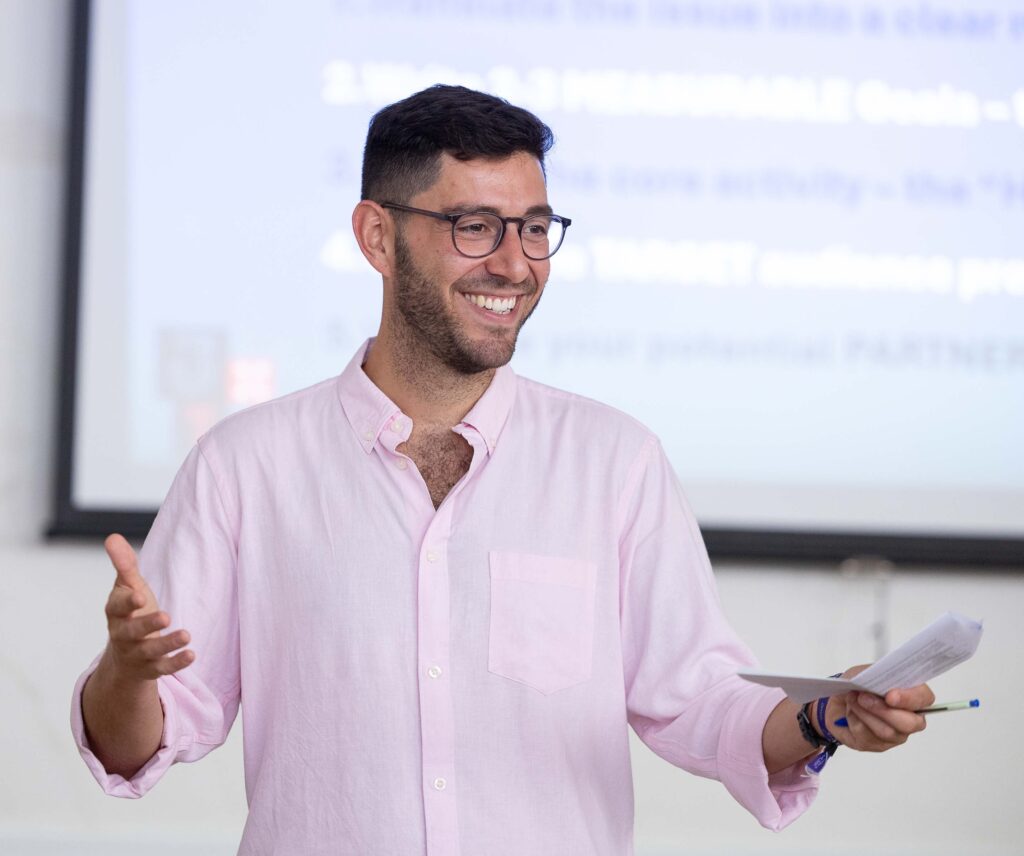
What does the reality look like for young European Jews look today?
Some feel they’ve had to become spokespeople for Israel simply because they’re Jewish. They’re asked to speak into a literal microphone and give an opinion on behalf of millions. “I wasn’t trained for this,” they think. “I don’t even know how to walk away from this situation.”
Sometimes, their fear is more ambient. When eating in a restaurant, they think twice before talking about what they did for Rosh Hashanah or what they’re planning for Chanukah. What if someone sitting at the next table — the wrong person — overheard?
Other times, the consequences are social. In small communities where one’s friend group is likely non-Jews, young Jews have lost many if not most of their relationships, leaving them completely isolated and alone.
Even in large university towns and cities, this hostility can reach a fever pitch that leaves them traumatized and disoriented. Jewish student union members showing up for a campus event are met with verbal threats and physical aggression. Some have had objects thrown at them while participating in talks, their home addresses shared online, and their social media trolled by haters.
What a difference 15 years makes. Back in the early 2010s, when I was at university in the United Kingdom, it wouldn’t have occurred to me to hide my Jewishness. In this new and volatile context, what are we at JDC doing to empower young Jews to stand strong and lead?
One answer is the Presidents Unite forum. JDC’s senior student development partnership with the European Union of Jewish Students (EUJS), Presidents Unite brings together Jewish student leaders from across the continent to explore some of the most pressing challenges facing young Jewish leaders today — personal well-being and burnout, leadership planning, strengthening relationships with their local Jewish communities, and building healthy, sustainable organizations.
At our second in-person forum, we convened 26 union presidents from 17 countries in Lisbon, Portugal. Through peer learning, practical workshops, and honest conversations, participants developed new leadership tools while building trusted relationships with fellow student leaders from across Europe.
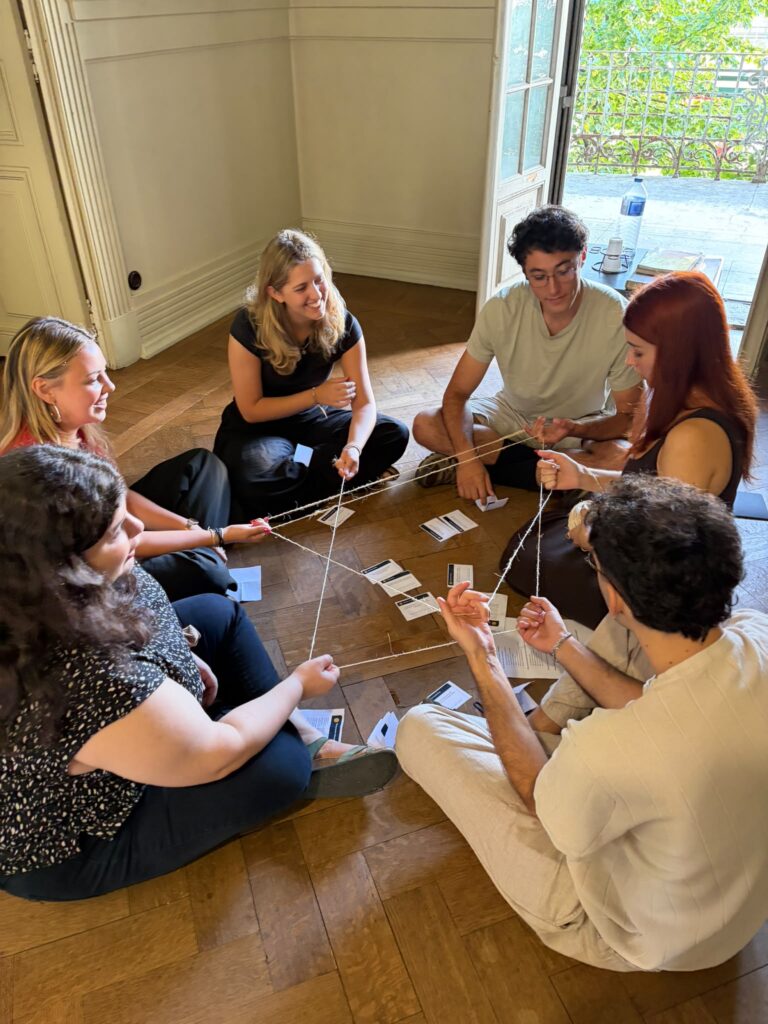
Why do we focus on student union presidents? They are the most public-facing figures of the Jewish student world, they have a broad reach, and they’re leading their unions at probably one of the most difficult times in modern Jewish history. They’re on the frontlines, our eyes and ears on the ground, and when we empower them, they’re then able to empower their fellow Jewish students. Right now, that’s as urgent a task as it’s ever been.
That’s why our forums are not only about discussing antisemitism — they are a chance to provide a quiet, safe space away from all the bluster and noise they’re exposed to on a daily basis. These young leaders get to reflect on their successes, glean ideas from each other, and also troubleshoot, talking through challenges they’re struggling with, whether that’s advocacy work or event design.
Each forum focuses on a different skillset. In the first forum, we placed a real emphasis on delegation. The presidents don’t need to always be the ones doing everything— in fact, they shouldn’t. Their union is better off if they can identify talented, driven people who can help carry out their mission.
In the second forum, we explored leadership handover. What do you need to prepare for this transition? We even had participants role-play incoming and outgoing presidents. When you’re about to become president, which questions should you be asking? What should you be curious about?
This forum also addressed working with partner organizations. Many partnerships are only as strong as the individual relationships between each of the organizations’ leaders. That’s why we did simulation work, having the participants pretend they were the CEO of an international organization meeting with their partner organization for the first time. How do you build trust? And what do you need to ask them?
These forums are a developmental space, but they’re also a reflective space. I want this experience to be a real gift for them — a place for them to decompress. They work so hard and they’ve taken a lot of heat from their non-Jewish peers; it should feel like a “thank you” for all their efforts on behalf of the Jewish world.
Our immediate next step is a three-month and a six-month survey that will help us understand how student union presidents are implementing what they’ve learned here. These insights will allow us to see what’s working and tweak our program, if needed.
I already see the ripple effects of our work. For instance, the Swedish student union wants to replicate a version of the Presidents Unite model on a smaller scale, for their regional member unions. Their forums will have slightly different content, of course, but still aim to foster leadership across the country based on the program we’ve given them — and that’s just the start.
I want this experience to be a real gift for them — a developmental space, but also a reflective space.
Participants who want more can attend the JDC Inspire forum, our new flagship European experience for young Jewish professionals, aged 24 to 36. This immersive event — which will take place in Kraków, Poland, from November 12-15 — will feature motivational workshops, networking sessions, soft-skills development, and fun social experiences. It’s an opportunity to forge lasting professional relationships, deepen your sense of belonging, and invest in your future.
More than anything, it’s a chance to gain strength from some of the most driven, talented young Jews across Europe and a catalyst for new ideas.
Growing up, I thought I understood the Jewish world. In my native London, I was surrounded by more than 100,000 Jews; my synagogue alone has just shy of 5,000 members. But my lens was narrow. After coming to JDC, I’ve widened my perspective — Europe alone contains such a range of Jewish life and customs. This has inspired me to consider what we could be, individually and collectively, if all of us came together.
I want durable student structures and seamless leadership pipelines. I want Jewish changemakers who are prepared to take on these roles. But my ultimate goal is quite simple — to help these young leaders feel a part of the global Jewish people, as I do through JDC, and know they aren’t alone in their efforts.
Mike Mendoza serves as program director for JDC Junction, the program addressing the impact of antisemitism on young adults in Europe, Africa, and Asia. A London native, Mendoza started off as Mazkir of his youth movement, RSY-Netzer, and went on to become head of family programming at Alyth Synagogue, the UK’s largest Progressive community.
Mike has worked professionally in the Jewish informal education sphere ever since graduating from university with a degree in Human Geography. How people navigate and engage with physical (and spiritual) place and space has always been core to Mike’s leadership.
Sign Up for JDC Voices Stories
Share

Share
Partners


Give With Confidence


