

On Tisha B’Av, This Holocaust Survivor Says “Never Again”
Elena Cretu was witness to one of humanity's darkest chapters — but today, she has a message of courage and hope.
By Elena Cretu - JDC Client; Chisinau, Moldova | July 6, 2026
Before she was old enough to even walk, Elena Cretu had escaped death multiple times. When she was born, she had entered the world during one of the greatest catastrophes in human history — the Holocaust. Decades later, struggling to survive on a meager pension, Elena has found care and Jewish community through the JDC-supported Hesed Yehuda social service center in her native Chișinău, Moldova.
As we approach Tisha B’Av, Elena, 86, looks back on her harrowing experience during the Holocaust and considers the many ways that JDC helps her thrive today.
The World I Was Born Into
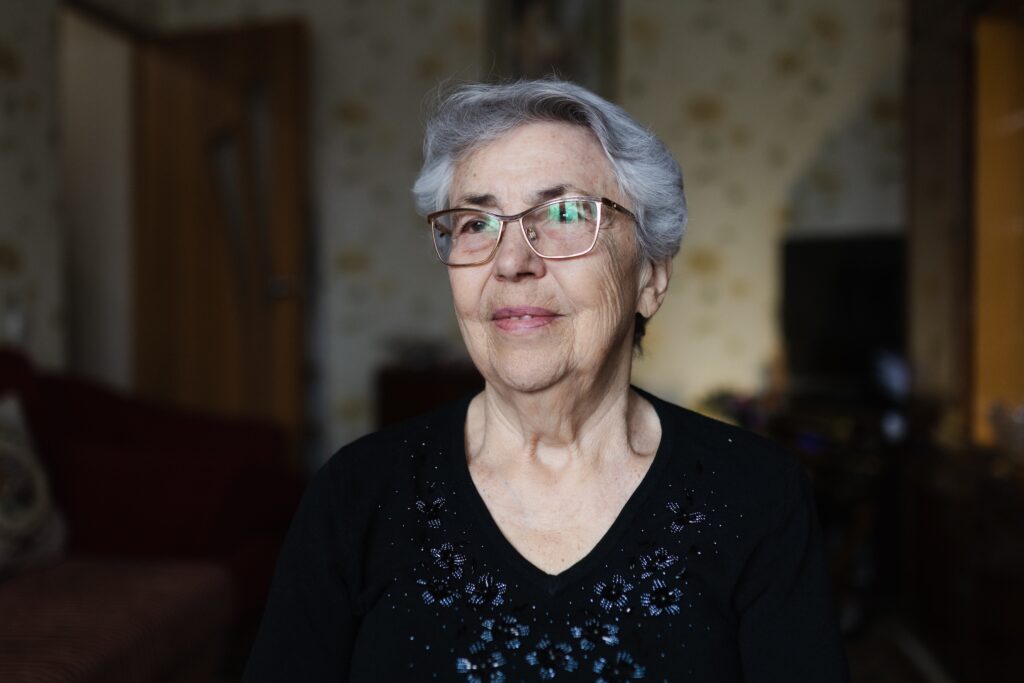
A month after I was born, the Nazis invaded.
We lived five meters away from a railway administration building. Though they attempted to bomb that building, the Nazis missed and destroyed our house. My grandmother’s body hung from a tree, thrown up into the branches by the sheer force of the explosion. Half her body was suspended there — we recognized her only by her wedding ring.
Right away, my father was taken to the front. My mother was left alone with me, her newborn.
She decided to flee. “I don’t know what happened to me,” she later said. “Either God pushed me or some other force pulled me forward.”
Along the way, we hid in ravines, fields, the forest, wherever. Some locals took us in, a family with six children of their own. When the Nazis came and forced all of us into a nearby barn, they moved into the hosts’ house. Together with the family, my mother worked as a farmhand, did the laundry, and cooked.
She had nothing to feed me with. Where could she get food? She was starving herself and didn’t have any milk to breastfeed.
That’s how I became completely sick. There was a period where I nearly died, screaming all through the night. My organs had started collapsing. Frantic, my mother carried me into the street.
“What’s going on?” a man asked. It was a Nazi officer.
Clearly, my mother was terrified; she thought he’d shoot us.
“Show me the child,” he said.
What else could she do? She showed me to him. After he examined me and saw the problem, he went to the house and brought back some medicine. He cured me.
Barbarity Without Limits
Decades later, I still don’t know how to feel about this. Yes, he saved my life. But on the other hand, I must state something so undeniable it’s now a banal truth: The Nazis were utterly evil. Full stop — end of story. My mother told me they tortured our people, sent us to concentration camps, and burned us, sometimes even alive.
Their barbarity knew no limits. There was that time in November when, cold and starving, some Jews went to the fields scrounging for frozen potatoes. Without mercy, the Nazis shot them dead. They gunned down members of my family, too. And then, of course, there was what happened to my beloved grandmother.
My mother and I had some near misses, too. There was one incident when Nazis were snooping around, searching for Jews. My mother scooped me up and stuck me in a haystack. She prayed I wouldn’t start crying. Thankfully, I stayed silent.
Then there was another time the Nazis conducted a raid. On the family’s property was a well, and in the well, a wooden bucket. Some locals placed me and my mother into the bucket — my mother weighed almost nothing by then — and lowered us down. I don’t know how long we hid there. When it was all over, they pulled us out.
Post-War Life and Adulthood
My memories begin after the war, from the very moment we returned to Chișinău. Because our house had been bombed, we lived in a wooden barracks, which is still there — literally a monument to our displacement. My father returned from the front wounded, and he eventually died at just 42.
Everyone helped each other then. Back from the front, my father bought a cow carcass — it was small, just a calf — and my mother used an axe to slice it up and handed out pieces to each family. There were many families, and they could at least feed their children with the broth.
Out of the ashes, we rebuilt our house on the remains of our former residence. And out of the ashes, we salvaged what we could of our Jewish identity. On Passover, my mother scrubbed the stove, washed it, and used it to bake matzah. She’d pour out a thin layer of dough and use a fork to make holes in it. All of us children surrounded her and ate it together.
Just because the war had ended didn’t mean we lived well. After giving birth to my brother, my mother had to go right back to work at the sausage factory. So, at age 10, I carried him all the way there so my mother could breastfeed him. When she wrapped him back up for me to take him home, she hid sausages in the blankets. That’s how we survived.
I attended the Moscow Financial Institute and worked my whole life at a savings bank — a beautiful building decorated with two lions. I started as a teller, counting money. Then, for more than 20 years, I worked as a senior auditor at the bank.
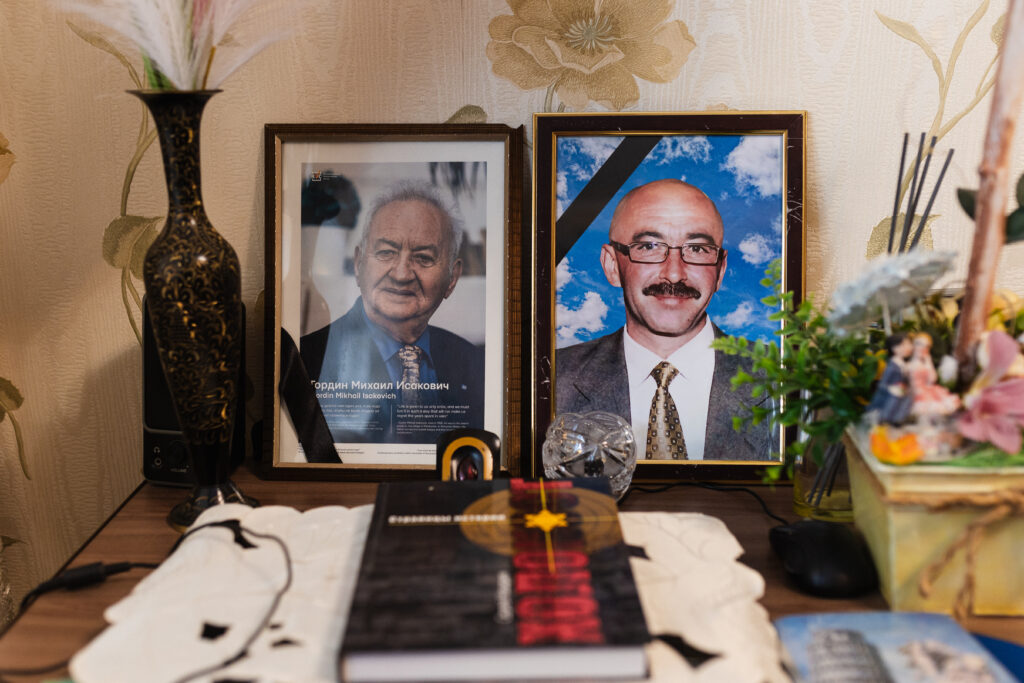
I also married and had children. My son Misha had some health complications as an adult, and after a serious operation, the doctor gave him four months to live. But I helped extend his life for another five years. Then he left me.
I lost my Misha. I couldn’t save him, and two years ago, I buried him. Even today, I sometimes feel it would have been better if God had taken me, and he could have lived.
The Situation of Elderly Holocaust Survivors
Despite having lost my beloved son, I’m grateful each day I’m still on this earth, though it’s not always easy.
Costs are only going up, and medication — which I constantly need — is the most expensive thing. A few years ago, pain-relief tablets typically cost $1.50. Today, they’re $10, an astronomical increase for someone living on my tiny pension.
Utilities like hot water and electricity are also exorbitant. Whenever I take a shower, I get in, soap up, and rinse off. I don’t want to waste a single drop of water. And when winter comes, my living situation becomes nearly unbearable. It’s literally freezing outside, and my bathroom isn’t even heated, so as soon as I enter, I start shivering. I have to wear an electric blanket even when I’m out of bed.
Still, at the end of the day, no one owes us. We must thank God and those who care for and sympathize with Holocaust survivors like me.
Out of the ashes, we salvaged what we could of our Jewish identity.
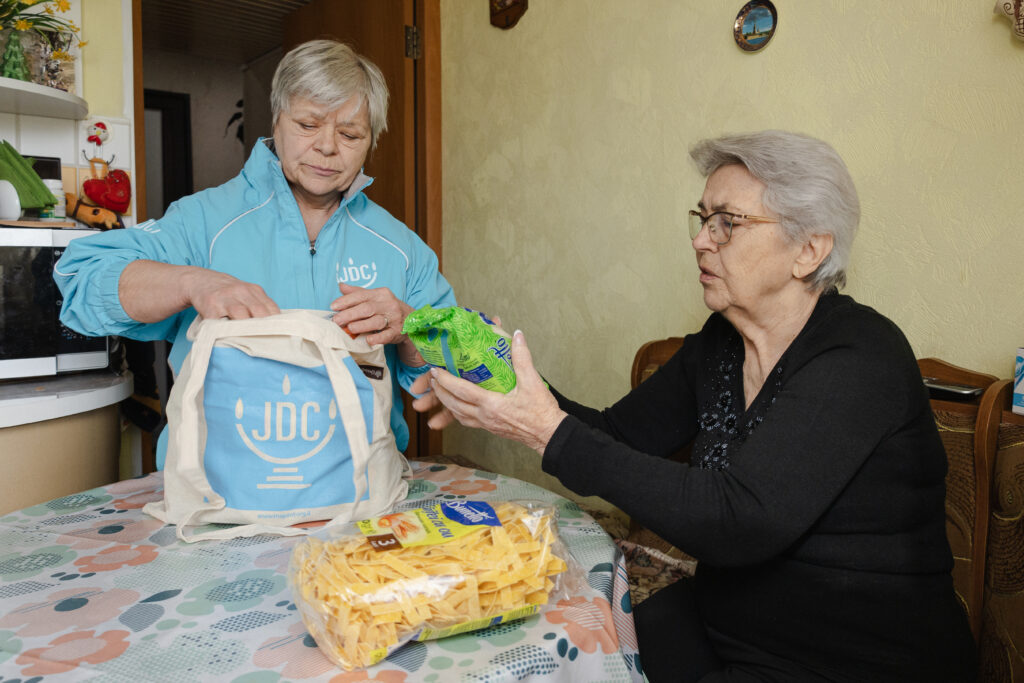
JDC is at the top of that list. Without them, I wouldn’t be able to pay for anything. I now have heat, medicine, and food. and it’s not just the basics, either. I have nutritious, protein-rich meals — a piece of turkey or salmon which I cure myself. They even give me herring, which I use to make my favorite food of all — forshmak.
Those Who Give Will Never Be Poor
JDC volunteers and staff are people with big hearts who do their work with passion. If they didn’t love people, they couldn’t work for this organization.
That includes Valya, my JDC homecare worker. I’m not as active as I used to be — in fact, I can’t even bend over. But with Valya at my side, it feels like anything is possible. I go for walks with her, we go shopping, and she brings me food and medicine.
But JDC hasn’t just given me physical nourishment — they’ve given me spiritual sustenance, too. It was through the JDC-supported Hesed Yehuda social service center that I reconnected with my Jewish heritage and traditions. For instance, I used to attend Torah classes, using my mother’s very own siddur and Torah to read and discuss.
It is written in the Torah that the hand of the giver will never be poor. I’m grateful to all those who support JDC and the Claims Conference, the organization’s partner in caring for Holocaust survivors like me. May God grant them health, peace, prosperity, and may they never know the violence and desperation Jews like me once endured.
As a Holocaust survivor, I know what brutality looks and feels like. It is vital that we Jews say “never again.” Many people still resent us — they hate that we’re intelligent, capable, and that, yes, we help each other.
But we’ll never stop. That’s the only way we’ve ever survived. Who, if not us? When, if not now?
Elena Cretu, 86, is a JDC client in Chișinău, Moldova.
Sign Up for JDC Voices Stories
Share


Share
Partners


Give With Confidence


